By Nichole Lindsey, Sean D. Connell, Emmanuel Katz, and Dominic McAfee
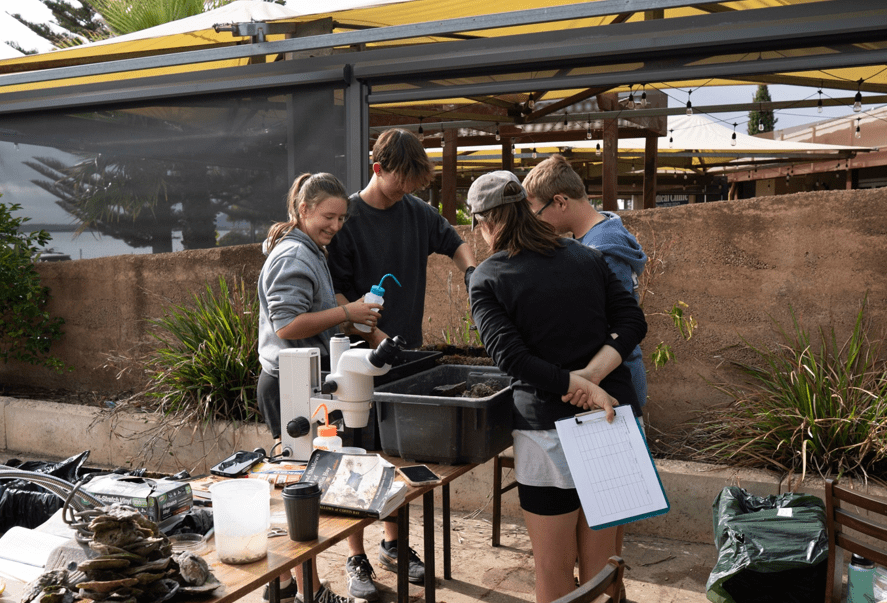
Across the world, efforts to restore nature are gaining momentum, but restoring the ocean requires more than ecological know-how — it depends on people. Marine ecosystems have often disappeared from public memory, and rebuilding them demands social connection, curiosity, and care as much as scientific expertise.
In this study, we explored how involving young people and local communities can generate both ecological knowledge and social license to restore marine ecosystems. We worked with high school students, residents, and government managers in South Australia’s Coffin Bay to test small oyster reef “restoration units” made from recycled shells. The students gained scuba diving certification, learned marine science methods, and helped deploy the units across eight sites. Within three months, native oysters had recruited in surprisingly high densities and there was a broad diversity of marine life colonising each restoration unit — evidence that reef restoration is feasible and can be achieved through community participation.
For the students, this hands-on experience provided new skills, confidence, and inspiration for future environmental careers. For residents, seeing the results firsthand strengthened pride and support for restoration, with more than 90% backing further reef recovery.
Our work shows that marine restoration can be a powerful social learning process — one that connects people to place, empowers youth, and builds shared responsibility for ocean health. By embedding communities within the science of restoration, we can regenerate not only ecosystems but also the human relationships that sustain them.
 Relational Thinking