By Ellen Cieraad and Jeff Dalley
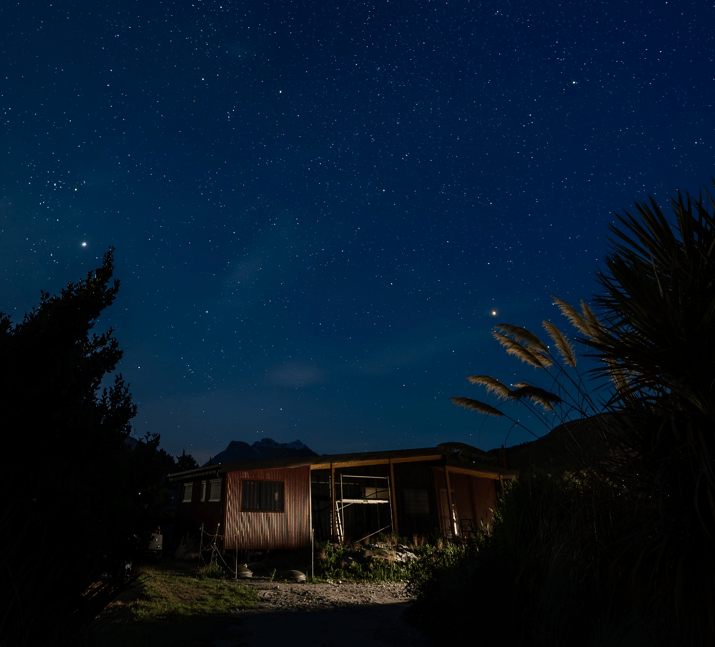
Artificial light at night provides many benefits, allowing us to extend our day into the night, and it can improve road safety, personal safety and reduce property crime including. This same lighting has also lead to the erosion of natural darkness, and of the various benefits that exposure to darkness provides. Yet we know little about how people perceive artificial light and darkness at night. We set out to understand how people value artificial light at night and natural darkness, and how they prefer light to be provided. We surveyed a nationally representative sample of New Zealanders, asking how important different benefits are (e.g. road safety, personal safety, orientation, recreation for light; and natural circadian rhythms of humans and organisms around us, astronomy and cultural practice for darkness). We then tried to predict these scores using demographics, urban–rural residence, time spent outside after dark, and beliefs about light and darkness.
People generally rated benefits of artificial light higher than those of darkness, especially for safety and orientation. Ratings for darkness were similar across benefits, suggesting people view darkness as a bundle of connected values. Two factors strongly predicted higher darkness ratings: believing darkness supports human wellbeing and frequently gazing at the night sky. Light-benefit ratings varied more and were harder to explain, except that overall, city residents tended to rate most benefits of light as more important than people in rural areas. In contrast, views on the value of darkness were similar regardless of where people lived.
We also tested preferences for how light is delivered. Many New Zealanders supported adaptive options, with 31–58% preferring lighting that turns on only when needed. New technology can provide the right light, in the right place, at the right time, while going a long way to protecting dark skies and human and ecological wellbeing. We cannot obtain all benefits of darkness and lighting simultaneously at any one place at any one time. Adoption of responsible lighting guidelines will retain the benefits of ALAN while increasing access to darkness benefits, but never to the full extent (e.g. natural rhythms of organisms near the light source will be compromised even at very low light levels). Thus, trade-offs will be required.
Overall, our study highlights that good night-time policy should recognise both the gains from artificial light and from darkness, and make the trade-offs explicit.
 Relational Thinking