By Jennifer C. Selgrath, Sarah E. Gergel, and Amanda C.J. Vincent
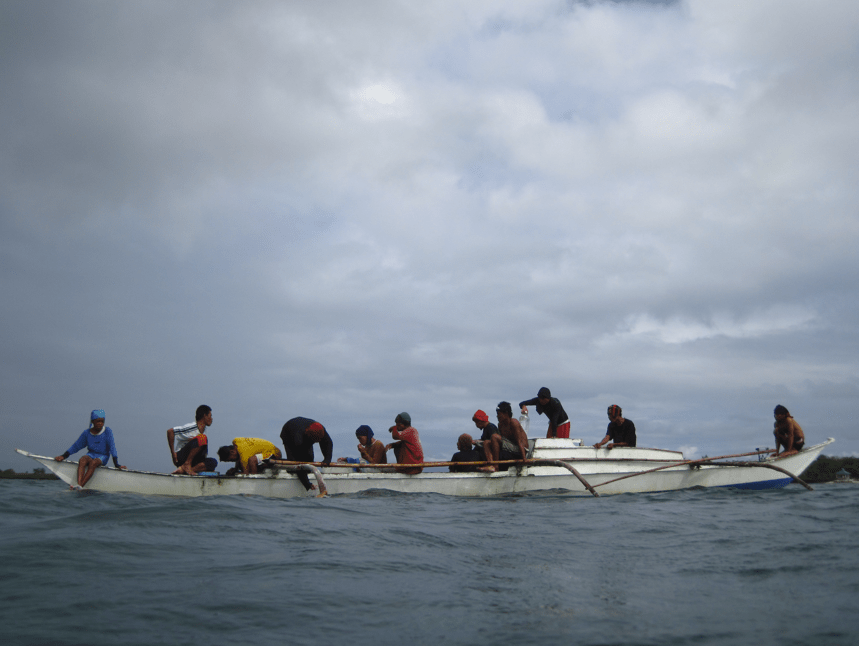
Coral reefs are among the most diverse and valuable ecosystems on our planet. People depend on coral reefs for food, coastal protection, jobs, and cultural connections. But reefs are under serious pressure. Many human activities – from destructive fishing practices to rapid coastal growth are damaging reefs. Our team wanted to understand how these human pressures interact with the natural features of the seascape to influence where corals thrive.
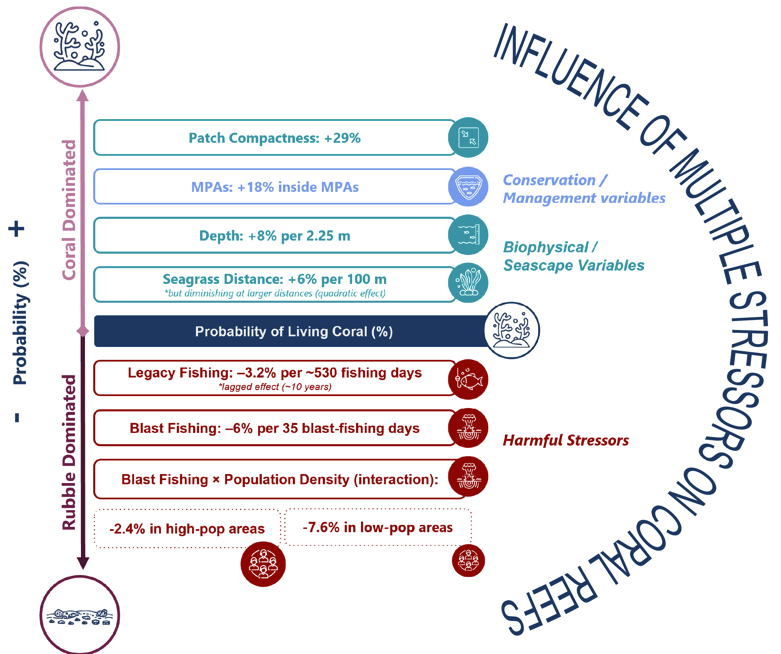
To do this, we worked with local partners in the Danajon Bank, Philippines which is one of only seven double barrier reefs in the world. We combined satellite-based habitat maps, participatory mapping, and long-term records of small-scale fishing to create models that helped us see which factors were associated with living corals – and which were associated with dead corals and coral rubble. We found that living coral was common in only about 30% of the reef area we studied. Reefs were more likely to support living coral when they were in deeper water, in marine protected areas, or in compact reef patches. These features seemed to give corals a better chance of persisting. On the other hand, destructive practices like blast fishing— using explosives to catch fish—greatly reduced coral cover. Regular fishing over many decades also reduced coral, but with a surprising twist: the effects of heavy fishing were still visible ten years later, meaning that damaging impacts can influence coral reefs for a long time after they stop.
Our findings highlight two important points. First, protecting coral reefs requires reducing destructive activities like blast fishing and increasing the sustainability of long-term fishing pressure. Second, it is just as important to safeguard corals in places with beneficial seascape features—like reef shape and depth—that naturally support coral survival. By combining ecological and social information, our approach shows how we can better understand and manage reefs that face many overlapping challenges.
Healthy reefs depend on smart management of human activities, protection of the natural conditions that help corals thrive, and strong institutions that can support these endeavours.
Visual Summary
 Relational Thinking