By Charlotte R. Hopkins, Esther E. Brooker, Kristy A. Adaway, Clare E. Collins, Clare Cowgill, Matthew C. Morgan, Charlotte E. Trotman, Dylan Thompson-Jones, Jonathan D. Bolland, Neil M. Burns, Africa Gómez, F. Blake Morton, Robert Bailey, Amelia Bateman-Young, Felicitas ten Brink, Richard K. Broughton, Jack H. Hatfield, Nico B. King, Charlotte Le Marquand, Louisa Mamalis, Chloe Mason, Marta Maziarz, Kieran P. McCloskey, Benjamin E. Miller, Niamh S. Morris, Tien T.T. Nguyen, Dean Page, Emma-Lee L. Peterson, Benjamin Pile, Ben Stainton, Darryl Villaret, India Stephenson and Lori Lawson Handley
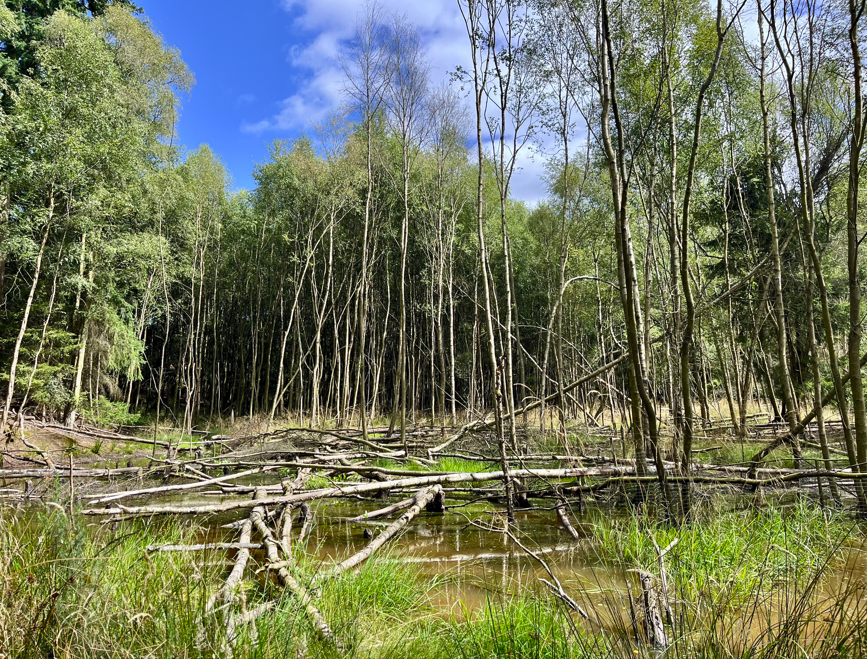
Rewilding is a nature recovery strategy that focuses on restoring natural processes and is nature-led, requiring decreasing levels of human intervention. Restoring ecosystem processes and function on a large scale is increasingly urgent and UK progress towards many of its biodiversity protection and recovery targets has been slow. Rewilding may help.
In our study we explored how academics, practitioners and young people view rewilding and how we can incorporate rewilding into current and future policy. To investigate opportunities for, and challenges to, including rewilding in policy, we conducted an in-person policy workshop that 46 people attended. These attendees had different perspectives but all had an interest in rewilding. We asked our participants what they thought would stop rewilding as an approach to ecosystem restoration, what they thought about the possibility of reintroducing species that had been lost from ecosystems, and what we could do to encourage rewilding as a tool for recovery nature.
Overall, our participants had positive attitudes towards rewilding. Our findings further revealed that they thought our current policies for conservation are not suitable for a rewilding approach. Our participants felt that current and future policy needed to be more flexible to allow for changing biodiversity. They also thought that communities should be included in rewilding projects and that engaging people in rewilding efforts was essential.
Based on our findings, we recommend following key steps to include rewilding in current and future policy:
• Allow conservation policy to be more flexible, allowing for ecosystem recovery without a fixed idea of what this should look like.
• Include rewilding in Nature Based Solution approaches, for example, flood risk management and climate change adaptation.
• Monitor and evaluate rewilding projects to inform evidence-based policy
• Include younger generations in decision making for the environment
 Relational Thinking