By Rachel Clive, Deirdre Heddon, Jordan Rydlewski, David Edwards, and Chris Fremantle
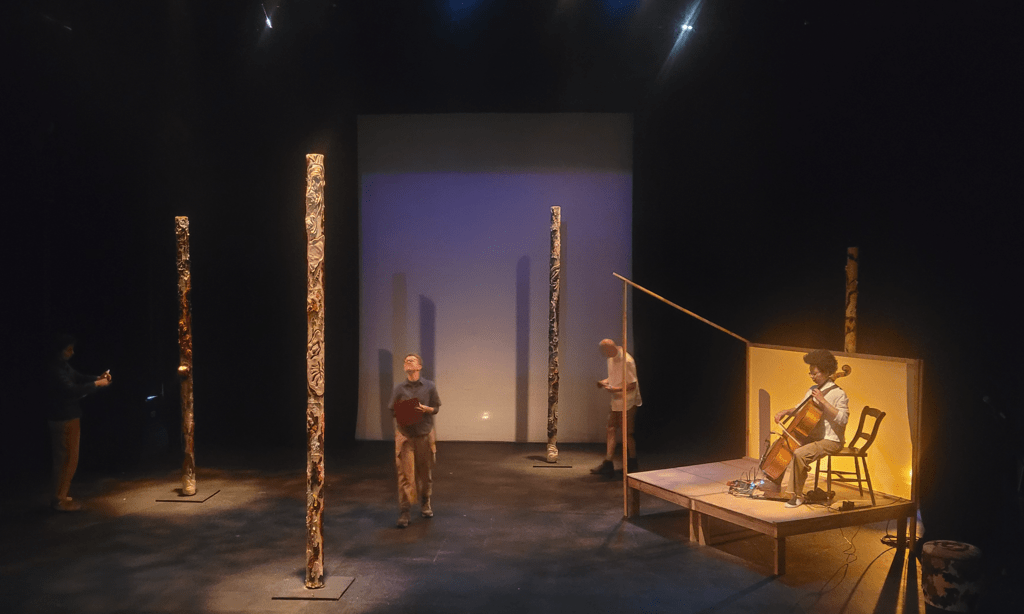
Forestry is an uncertain business. Many factors influence this uncertainty, including landscapes, weather, plants, animals, insects, economics, culture, politics and people. The uncertainties attached to forestry have become greater because of climate change. Trees and forests live a long time, and humans don’t know for certain what the climate conditions of the future will be, nor how the changing climate will affect different kinds of trees and forests. Despite these many uncertainties, those who work in forests must still make decisions today, including what they plant and how they manage the forests for the future.
There are divided opinions across the forestry sector about the best course of action. This can make decision-making even more uncertain and means that dialogue and collaboration can be difficult. However, foresters have told researchers that they would welcome more discussion about uncertainty. In response to this request, and to understand more about the uncertainties those working across the forestry sector face, we interviewed 30 people. Interviews included foresters working on the ground, scientists studying forests, and those who advise foresters on actions they might take. We used these interviews to create a play, Three Words for Forest (the play can be accessed here: https://youtu.be/i-Y7h_MmKFU?si=6yHaye_30rqpA1A).
Three Words for Forest shared with audiences the knowledge and views of the people we interviewed, using only their words. This is called verbatim theatre. The play presented a wide range of perspectives and expertise and deliberately avoided offering any single solution to the challenges. In making and sharing the play, we created open and safe spaces for listening to and considering multiple points of view. Reflecting on how we did this, we offer three approaches to working with uncertainty that may be useful in other fields: resist easy solutions; work with multiple perspectives; and experiment and stay open to change.
Research that crosses disciplines and champions lived experiences and different forms of knowledge can help people come together in new ways to learn from and with each other. Referencing the making of Three Words for Forest, and the feedback gathered, we suggest that theatre practice can lead the way in this kind of ‘transdisciplinary’ research.
 Relational Thinking