By Marion Jay, Gonzalo Cortés-Capano, Romina Martin, Julian Suntken, and Tobias Plieninger
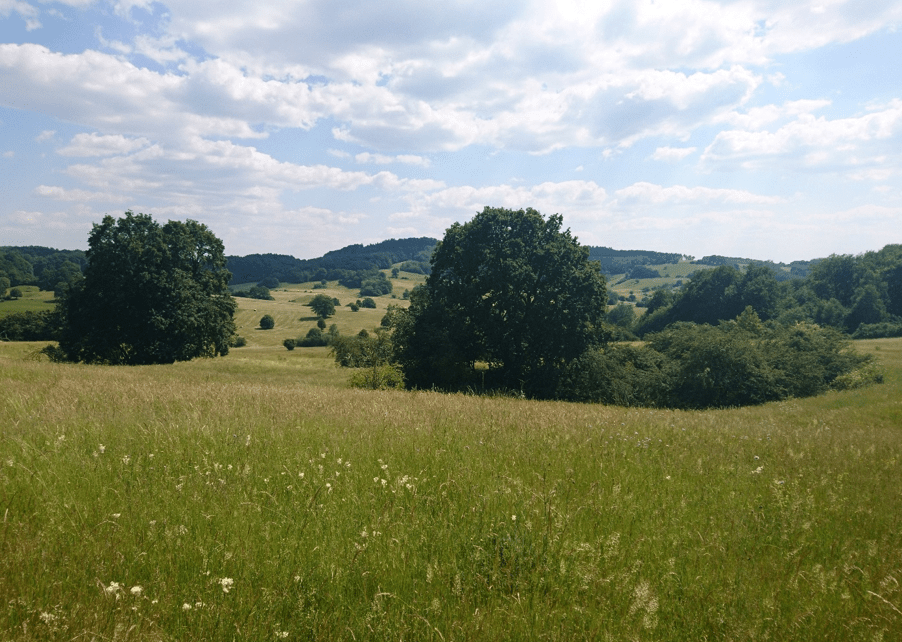
Protected areas, such as national parks and nature reserves, are a key strategy for conserving biodiversity. However, people often inhabit protected areas, and even when uninhabited, protected areas may be located near communities, leading to complex relationships between people and nature. Sometimes, these connections are positive, but they can also involve conflicts or a sense of disconnection from nature. To improve conservation efforts, it is important to understand the different ways people relate to protected areas.
Our study explores how people connect to these areas through seven dimensions: (1) material; (2) experiential; (3) cognitive; (4) emotional; (5) philosophical; (6) cultural; and (7) institutional. We conducted 38 interviews with people connected to five protected areas in Central Germany to uncover stories about their relationships with these landscapes. We found that human-nature connections are deeply intertwined, and five main themes emerged: (1) learning; (2) care; (3) regional heritage; (4) multifunctionality; and (5) collaborations. These themes highlight the importance of both material aspects, like land use, and non-material values, such as emotional and cultural ties. Our findings suggest that conservation strategies should strengthen all dimensions of connection, support collaboration, and recognize the diverse ways people value nature.
By fostering strong connections between people and protected areas, conservation efforts can be more effective and inclusive. Instead of isolating nature in conservation spaces, protected areas should be integrated into society, helping to build a sustainable future where people and nature thrive together. Narratives offer a powerful tool for guiding policies that reflect both ecological and social needs.
 Relational Thinking