By Yunrui Ji, Xuelei Wei, and Diqiang Li
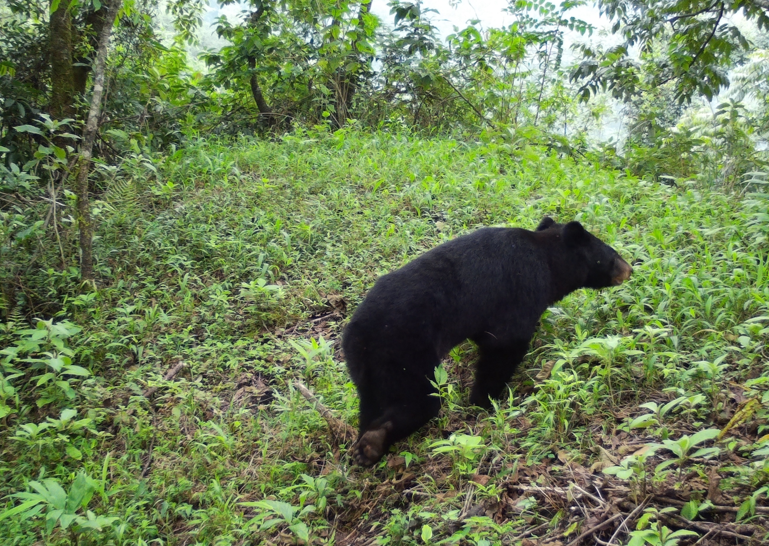
Living alongside growing populations of Asiatic black bears presents a daily challenge for communities in China’s Gaoligong Mountains. To understand what shapes people’s tolerance to coexist with these animals, we conducted in-depth interviews with over 200 local residents.
Our investigation uncovered a critical paradox: while most people expressed strong values supporting wildlife, their actual tolerance for bears was low. This significant gap between positive attitudes and negative realities represents a major threat to the human-bear coexistence in this region. So, what causes this gap? Our analysis revealed a complex interplay of factors. On one side, a “mutualism” mindset—seeing humans and wildlife as part of a shared community—fosters perceived similarity with and trust in authorities then tolerance. But on the other, the immediate and tangible impacts of conflict—property damage, safety threat, and the perceived lack of effective protection—exert a far stronger, negative pull. These daily risks effectively override people’s underlying positive values, pushing tolerance into a precarious state.
This finding delivers a crucial message to conservationists and policymakers: simply promoting pro-wildlife values is insufficient. The immediate priority must be a comprehensive approach addressing both objective conflict realities and subjective perceptions, including reducing risks, enhancing tangible benefits, and actively rebuilding public trust and mutualism orientation through demonstrated efficacy.
 Relational Thinking