By Iven Froese and Lasse Loft
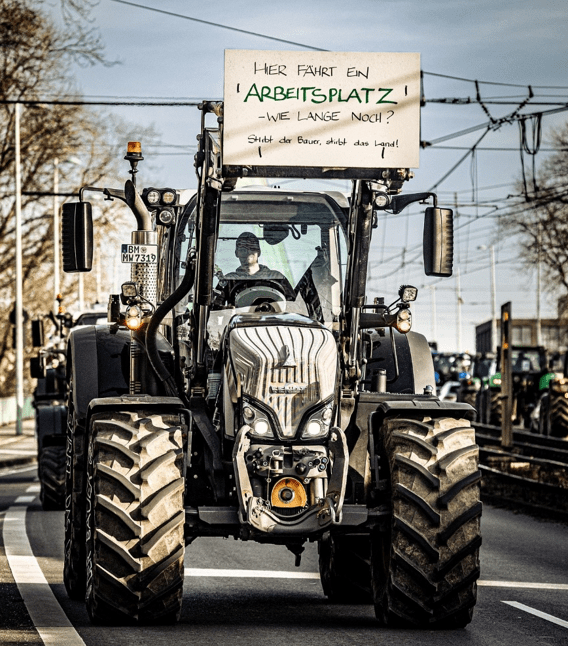
© Pixabay / doosenwhaker. URL: https://pixabay.com/photos/peasant-protest-farmer-demonstration-8495849/
Agriculture in Europe is crucial, not just for producing food, but also for protecting biodiversity – the diversity of life on Earth. However, the way we farm can either harm or help nature. Farmers make decisions based on their values and understanding of nature, whether they see it primarily as a resource, a partner, or valuable in its own right. These views can influence whether farmers adopt environmentally-friendly practices.
In our study, we examined agricultural policy documents from the European Union (EU) and Germany to understand how these policies represent nature. We used a method called Critical Discourse Analysis, which helps reveal hidden meanings and values in policy language. We specifically looked at four ways policies talk about nature: seeing nature as a resource for economic growth (Green Economy), promoting equality and sustainability by reducing consumption (Degrowth), focusing on caring relationships between people and nature (Earth Stewardship), and protecting nature for its own sake (Nature Protection). We call each of these a policy “pathway.”
We found that both EU and German agricultural policy texts mostly see nature through an economic lens, valuing it primarily as a resource that should be efficiently managed for human benefit. For example, policies emphasize economic incentives and technological solutions, like paying farmers for providing ecosystem services, such as clean air or water. However, the German policy also placed more emphasis on community connections and caring relationships between people and nature, such as supporting small rural farms and local traditions.
Our findings suggest that by primarily highlighting economic values, EU policies might overlook other crucial ways people value nature, like cultural connections and the intrinsic worth of biodiversity itself. Recognizing and including these diverse values in policy could lead to fairer, more effective conservation and agricultural practices. Our study highlights the need for a more inclusive approach that respects different values across Europe’s diverse cultures and landscapes.
 Relational Thinking