By Ian Alcock, David Sheffield, Piran White, Peter Coventry, Merryn Hunt and Miles Richardson
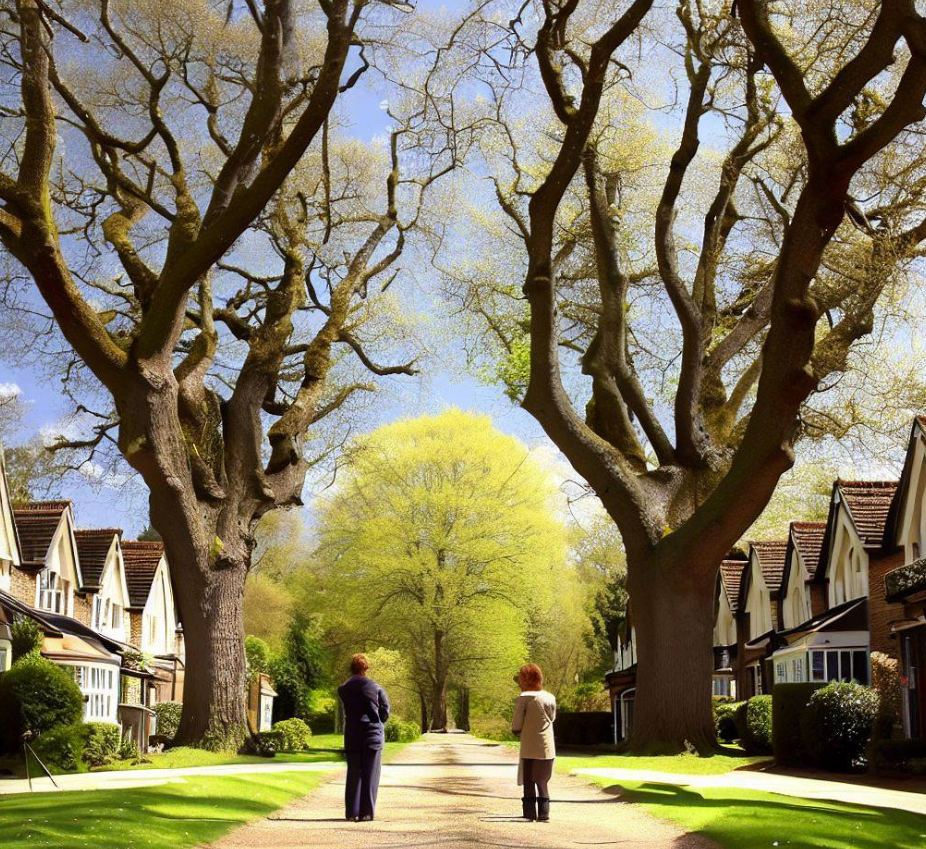
A treescape is the collection of trees and shrubs in an area. People who felt their local treescapes were ‘richer,’ with more and varied trees and hedgerows, had significantly better wellbeing and less psychological distress than people who did not feel this way about their local treescapes. This increase in wellbeing and decrease in distress was mainly due to people’s positive perceptions of their neighbourhood trees influencing their experiences of nature, making them feel more satisfied with the natural environment on their doorsteps, making them more likely to go out visiting nature, and making them feel more emotionally connected to nature.
Objective counts of treescape features – the actual density of trees and lengths of hedgerow in their neighbourhoods – were related to people’s perceptions of their local treescapes, with more trees and hedges around meaning people perceived that their treescapes were richer. But there’s more to the perception of a ‘good treescape’ than these objective realities, and we found that it was the perception of a good treescape, rather than the actual number of trees in the ground, which mattered for mental health. This may be because of the personal relationships people have with the trees where they live.
We used questionnaire data from over 1,000 people, asking them about how rich they thought their local treescapes were, as well as asking them about their wellbeing, life satisfaction, happiness, stress and anxiety. Then we looked at the greenspace and treescape features around their homes, using data from other sources like satellite mapping. This allowed us to look at the pathways from their neighbourhood nature exposures to their mental wellbeing and psychological distress, accounting for other things that we know affect mental health, like socio-economic status. Our findings support those who argue for the importance of community sentiments in treescape management policies, because the perceptions people have about their neighbourhood trees are related to their wellbeing.
 Relational Thinking