By Laura Smith, Samuel Williams, Julian Pepperell, Ian Tibbetts, Sheridan Rabbitt, Bonnie Holmes and Victoria Martin
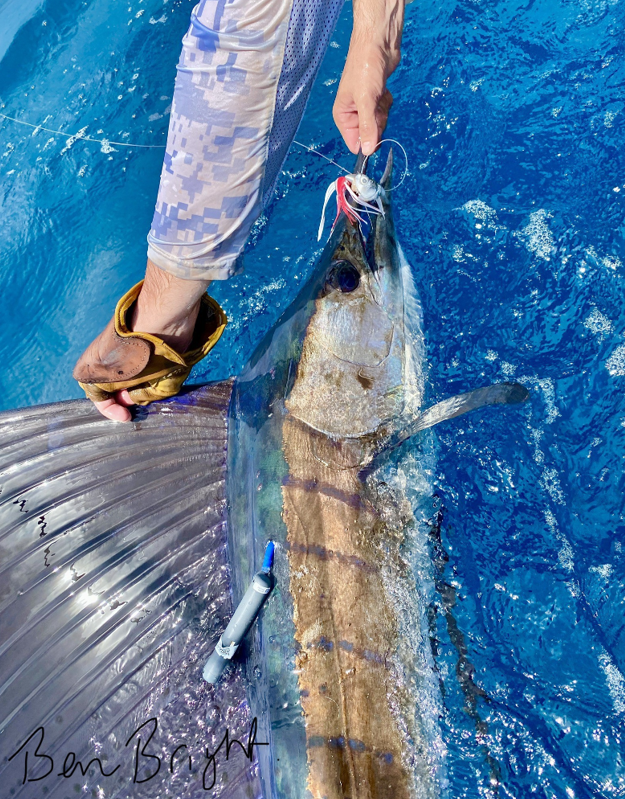
Billfishes, such as the marlins and sailfish, are popular in recreational fisheries because of their large size, speed and impressive fighting abilities. However, these fish are difficult to study, some populations are threatened by extinction, and we need to know more about them. Recreational fishers, including game fishers, are ideal citizen scientists as they can collect data, tag fish and provide physical samples. Their participation as citizen scientists can provide meaningful engagement in research and management because they have valuable local knowledge and skills.
It is important to understand what motivates fishers to participate in research to when gathering information about recreational fisheries using citizen science. The purpose of this research was to determine the drivers and barriers to participation in research on billfish by game fishers in Australia, and to explore ways to improve participation.
To achieve this, we surveyed Australian game fishers to explore their levels of participation, assess their motivations and concerns, and examine their perspectives on billfish research. The Game Fishing Association of Australia (GFAA) distributed the survey to its affiliated clubs via email and via Facebook through relevant channels for the Australian game fishing audience.
We received 153 responses from across Australia, mostly from experienced game fishers, of whom 84% were current club members. Survey respondents were highly motivated to participate in research on billfish, with 93% stating that they intended to participate in research activities in the next two years. There is already strong participation in research as 63% had participated in research activities in the past, which mostly involved conventional tagging. Of these participants, 32% had taken more than 100 trips for research and 61% had participated in the previous 6 months.
A third of survey respondents had not previously participated in research activities, which is largely owing to a lack of awareness of available opportunities. In addition, those who had participated were overall very positive about their experiences, but less positive about the communication they received. Therefore, better communication and engagement is needed to both recruit and retain participants in citizen science. This communication should be targeted and consider the motivations and concerns of participants.
Most respondents (79%) had no concerns about participating in research. However, of those who expressed a concern, the most common issue was the potential for data to be misused (9%). The drivers of participation included maintaining the good reputation of game fishing within the wider community (88%), learning more about billfish (86%), and contributing to billfish management (78%) and research (76%).
We present three key recommendations for citizen science programs on billfish in Australia. Our recommendations are broadly applicable for increasing recruitment and retention of participants in other citizen science programs, especially those involving recreational fishers. These include: (i) increasing collaboration between government, research, and fishing organisations; (ii) improving communication with and engagement of participants in citizen science programs; and (iii) employing more current and emerging technologies to deliver citizen science programs.
 Relational Thinking