By Alienor L.M. Chauvenet, Cassandra Wardle, Diane Westaway, and Ralf Buckley
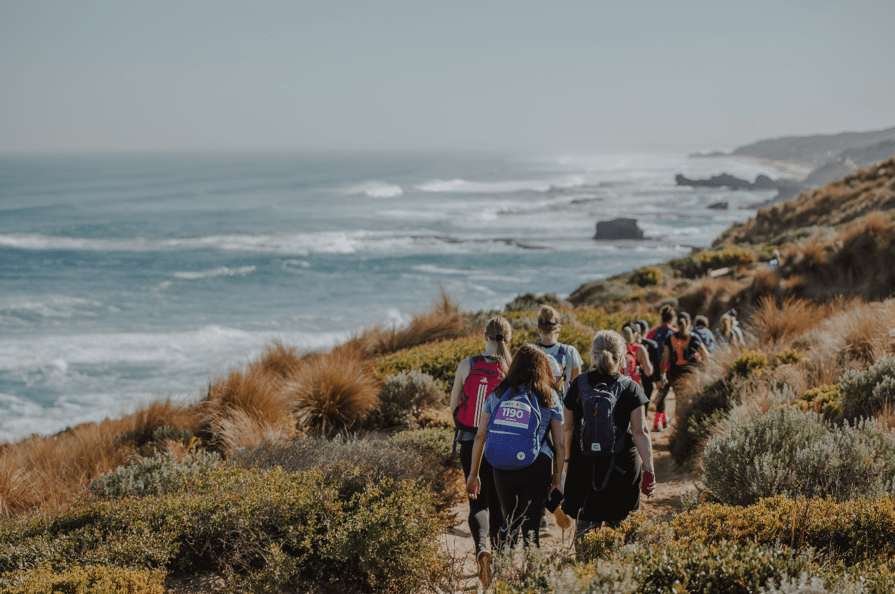
Protected areas, such as national parks, forests and wildlife reserves, are used to protect biodiversity from threats worldwide. Many of them are also used for recreation and tourism. People visiting these parks also receive benefits that reduce healthcare costs and improve individual productivity. Countries, such as China and the US, are starting to bring park-based therapy programs into mainstream mental healthcare. This potentially has a multi-trillion-dollar annual value worldwide. The current research on nature-based therapy, however, is mostly in settings that would not be defined as nature from a conservation perspective (e.g. gardening, hospital grounds), and there is little work on the duration of the effects of nature-based therapy.
In this project we analysed the mental health benefits of a nature-based therapy program that focuses on walking in national parks, forests or bushlands. Participants sign up with a team (4 people) to a twelve-week program that culminates in a final long walk in a national park. During the program, they are encouraged to train with their team, for at least 5 hours per week and in nature. We used an experimental approach with control (not part of the program) and treatment (part of the program) groups, whose mental wellbeing was measured before the program started, directly after the final event, and twelve weeks later. We also collected information on socio-demographic factors and training habits for both groups. We wanted to understand 1) how much the mental health benefit from nature itself is, 2) how long it lasts, and 3) what is its economic value.
We found that the nature-based therapy program we tested improved the mental wellbeing of participants during the program. While following the prescribed training also improved the mental wellbeing of the control group, the increase was much smaller than the treatment group, demonstrating the value of the program itself. Moreover, training in nature (compared to elsewhere) not only gives the highest mental health benefits, but also doubles the duration of the effect from six to twelve months after. We calculated that this program could deliver US$2,700 worth of free mental health services to participants.
 Relational Thinking