By Alaa Aldoh, Raul Ungureanu, Sofia Popescu, Alice Eldridge, Christopher J Sandom, and Charlotte L Rae
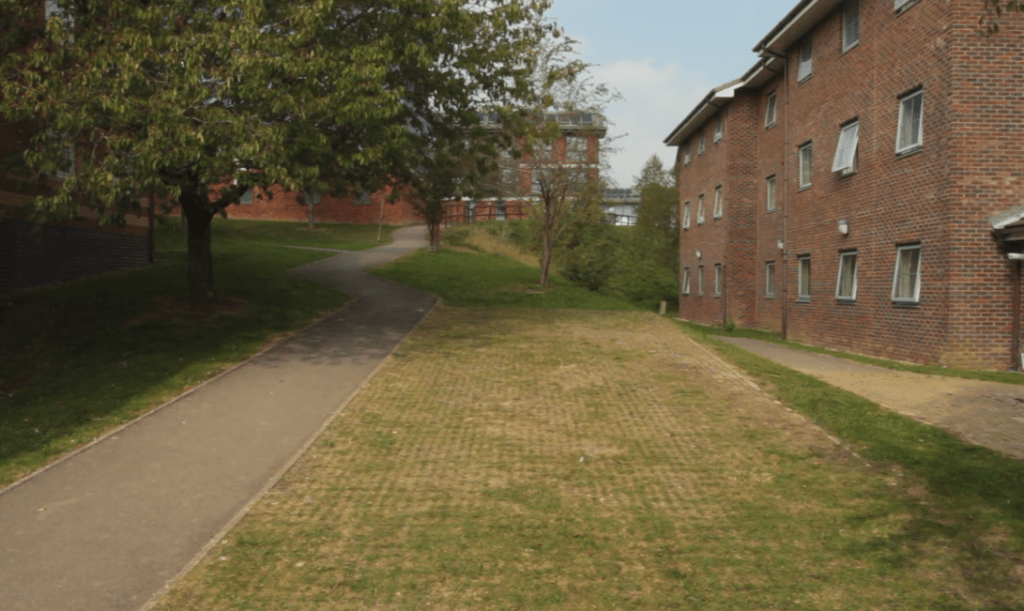
Spending time in nature is beneficial for our health and wellbeing. We know this from our personal experiences and mounting evidence from research. It’s less clear how mixed environments, where natural and urban features overlap, influence our mood. To investigate, we showed 294 university students video clips from their campus featuring different combinations of greenery, buildings, natural sounds (like birdsong), and urban noise (like highway traffic). Participants rated how they felt in terms of positive and negative emotions while viewing each clip.
We discovered that the combination of what people see and hear makes a big difference. Natural sights paired with natural sounds were linked to better overall mood. Paradoxically, adding urban noise, even in visually green spaces, increased negative affect and reduced benefits of nature exposure. Our findings highlight that noise pollution can undermine the restorative benefits of natural settings, especially in places with the most abundant greenery. Urban planners and regulators should carefully consider soundscape regulation, and measures to reduce or counteract noise pollution.
People’s personal connection to nature also mattered. Those who felt more related to nature experienced stronger emotional responses—both positive and negative—depending on what they saw and heard. Additionally, people with higher anxiety were particularly sensitive to the benefits of nature exposure, reporting more positive outcomes than who with lower baseline anxiety. Nature-rich environments may therefore be especially beneficial for people who feel a strong bond with nature or feel particularly anxious. By understanding how multisensory environments influence mood, and individual differences in responses to different environments, we can optimize nature-based interventions and design urban spaces that promote wellbeing. Future research and practice should consider the gradients of natural-urban environments, as well as the multisensory dimensions of different environments.
 Relational Thinking