By Zolo Admettons, Mattia Bessone, Josué Ausse Baraka, Josué Engombe Botomia, Espérance Miezi, Bénédicte Nsilu, Jonathan Nkamisha Mukole,Michel Opelele Omeno, Jean Semeki Ngabinzeke, and Barbara Fruth
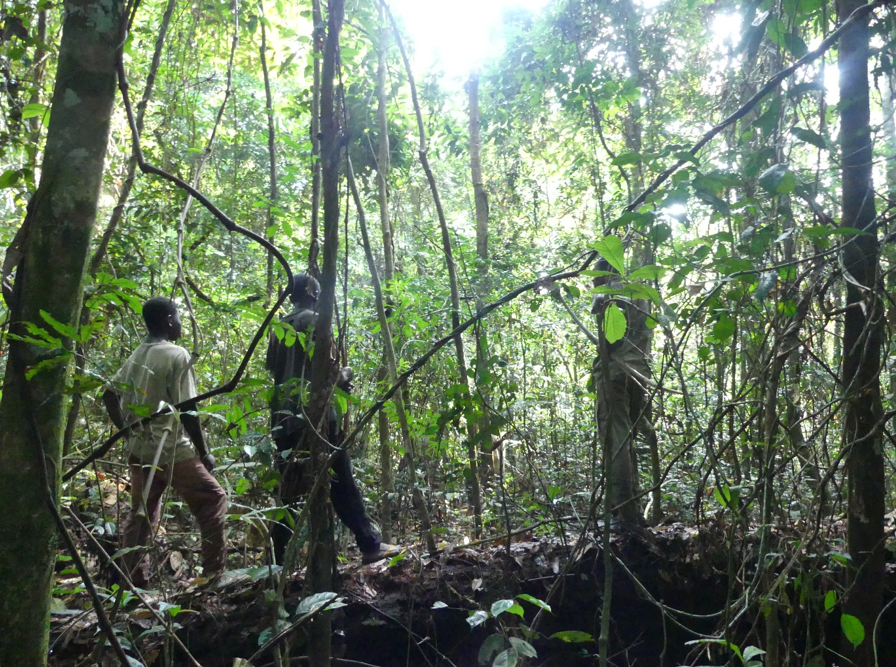
For thousands of years, wild animals have been an essential source of food for people in tropical regions. People call this “wild meat,” or ‘bushmeat.” This is still the case in tropical rural Central Africa, one of the most biodiverse regions on Earth, where millions of people depend on wild meat and other forest product for their nutrition and livelihoods.
Today, as the human population in the region grows, larger proportions of people live in urban areas. The increasing demand for wild meat opens economic opportunities for rural hunters, who abandon their traditional hunting practices for more effective tools, like metal-wire snares and guns. But these new tools also have negative effects. Today, overhunting for commercial purposes is among the main threats to biodiversity and people’s livelihoods in the region.
However, wild meat is not the only forest-sourced food for communities in Central Africa. Apart from domesticated meat and farmed vegetables, people also consume fish, insects, mushrooms and wild fruits and vegetables. Unfortunately, researchers rarely consider these food sources, limiting our understanding of how rural communities fulfil their nutritional requirements when resources are seasonal or limited.
In our study we quantify the relative contributions of different food sources to villagers’ diets, and explored the cultural, social, and economic factors that amplify their dependence on wild foods in the periphery of Salonga National Park, in the Democratic Republic of Congo.
Despite our study area being a major wildlife hotspot, people purchased wild meat more often than procuring it themselves, indicating an increase in commercial hunting. Accordingly, apart from the households of hunters, who can procure wild meat for their family, it is the higher-income families that consume wildlife more often. However, while wild meat is a year-round food source, it only contributes 18% of the daily protein intake that the World Health Organisation recommends. Dietary recommendations are met only in seasons when fish and caterpillars are available and easily accessible, also to lower income households.
Our case study exemplifies that in rural Central Africa, where both local and commercial alternatives are absent or negligible, a long-term equitable access to forest products is key to maintain the millennia-old balance between people and nature necessary for the livelihood security of present and future generations, particularly of the most vulnerable.
 Relational Thinking