By Kaylin R. Clements, Julie Sabattis, Jennifer K. Chapman, Phil P. Krening, Marc L. Fruitema, Kelly D. Martin, and Jennifer N. Solomon.
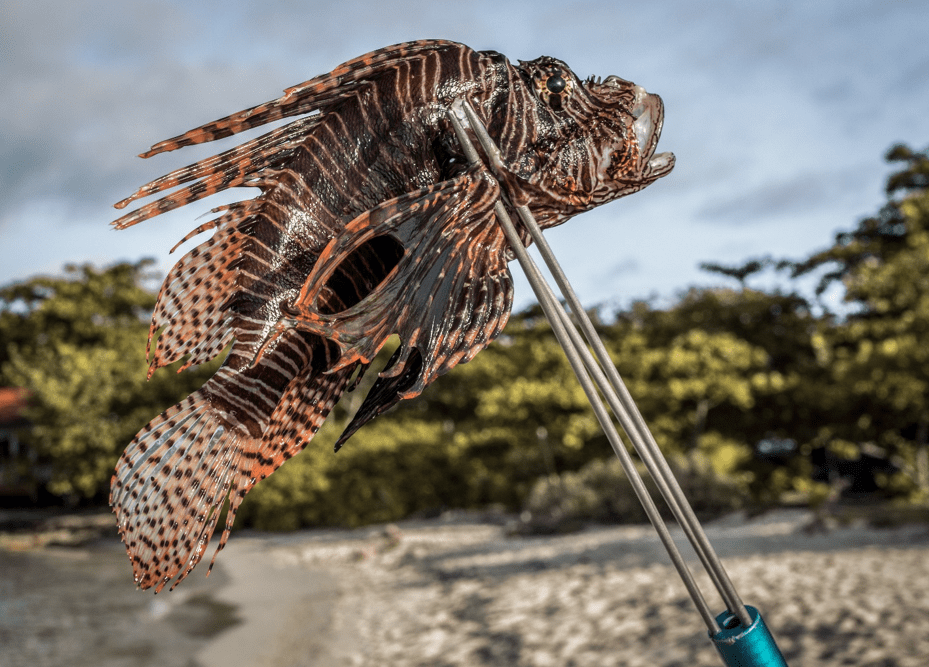
Humans introduced the invasive lionfish, originally from the Indo-Pacific, to the Western Atlantic in the 1980s. The lionfish has since spread rapidly throughout the Caribbean, Gulf of Mexico, and up and down the east coasts of North and South America. Lionfish reproduce constantly, face little threat from predators in invaded regions, and consume juvenile fish that are important for local species, coral reef health, and fishers. Lionfish are also infamous for their many venomous spines, which can cause painful injuries if they puncture human skin. Though lionfish are venomous, they are not poisonous and are safe to eat. In fact, lionfish meat is white, flaky, and delicious, and has been compared to snapper and grouper. Conservation efforts in Belize have focused on a lionfish market as a key strategy for controlling the lionfish invasion. Of course, for a market to be viable, consumers must be willing to eat lionfish.
In a nationwide survey of Belizeans and foreign tourists we found that just fifteen percent of Belizeans and 16% of tourists had tried lionfish, but 50% of Belizeans and 74% of tourists would be willing to try it, suggesting a large opportunity to grow the market. We also measured people’s knowledge and attitudes about lionfish. Belizeans and tourists typically know lionfish are invasive and are bad for the reef and fishers’ livelihoods. However, almost half of Belizeans believed lionfish were unsafe to eat, which discourages them from consuming it. In fact, the odds of being willing to try lionfish increased by 150% among Belizeans and 97% among tourists if they knew lionfish is safe to eat. Nearly half of Belizeans also believe lionfish cannot be handled, which is problematic considering Belizeans typically prepare their own seafood as compared to tourists who eat at restaurants. However, through strategic outreach to correct misperceptions, including educating Belizeans on safe handling and communicating that lionfish is not only safe to eat but also healthy and tasty, there is significant opportunity to increase consumption of lionfish in Belize. Lessons learned from this study can be applied to similar efforts to encourage consumption of lionfish throughout the invaded range, including the Mediterranean Sea. Additionally, our findings point to the importance of considering the role of public consumers in supporting invasive species management.
 Relational Thinking