By Friederike Riesch, Malte Möck, Peter H. Feindt, Niko Balkenhol, Suzanne T.S. van Beeck Calkoen, Katarzyna Bojarska, Nina Gerber, Sven Herzog, Maria Zetsche and Johannes Isselstein
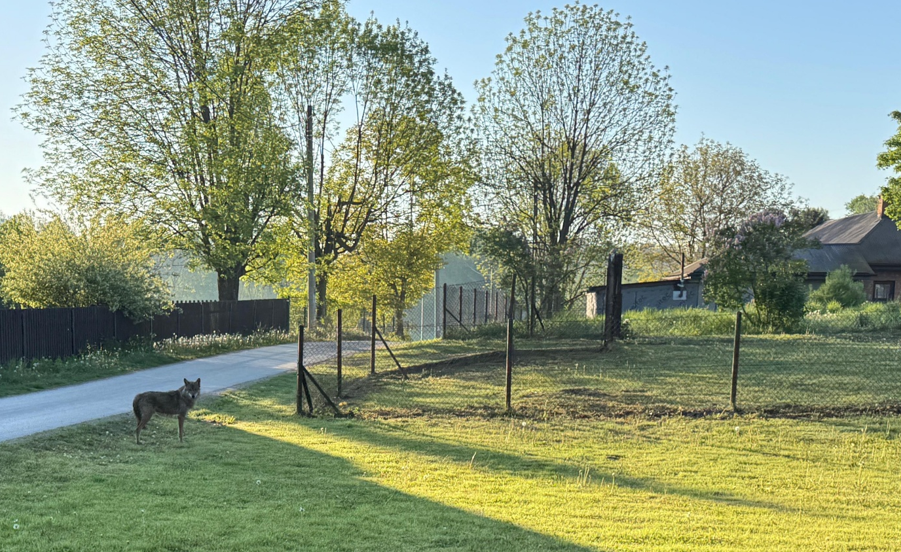
Grazing livestock can be easy prey for large carnivores, such as wolves. Therefore, where grazing livestock and wolves are to coexist, it is essential for the farmers to protect their animals against predation. To foster livestock protection, we need to understand why owners want to take particular protection measures or do not want to do so.
In 2022, we sent an online questionnaire to livestock owners in Bavaria, Germany, where wolves are returning after decades of absence. We wanted to understand why farmers decide for or against certain livestock protection measures. We used a theory that says that in planning one’s actions, three things matter: (1) one’s attitude towards the behaviour; (2) the social pressure to do it; and (3) the feeling of being in control of doing it. We also studied whether farmers’ worry about wolf attacks influenced their intention to use livestock protection measures.
353 farmers completed our questionnaire. Most participants reported that they find livestock protection very hard. Special fences that keep wolves out of pastures were the most popular measure. Taking a closer look at four measures (livestock protection measures in general, wolf-deterring fences, dogs that protect livestock and more indoor housing), we found that the social pressure from peers was always the most important factor in the farmers’ decision for or against a measure.
Farmers with small livestock, namely sheep or goats, were more willing to use protection measures than farmers with large livestock, such as cattle or horses. Farmers living in areas where financial help to install wolf-deterring fences was offered were more likely to want to take this measure. However, the possibility of financial support did not increase farmers’ willingness to use protection dogs.
For policy-making, our results indicate that positive examples of the co-existence of livestock and wolves could help spread the idea of livestock protection, because farmers rely on what other farmers think. Offering financial support can help but might not be enough if a protection measure is too labour-intensive or does not fit in with farmers’ lives.
 Relational Thinking