By Henry Bartelet, Gillian Paxton, Stewart Lockie, Vincent Backhaus, and Lokes Brooksbank
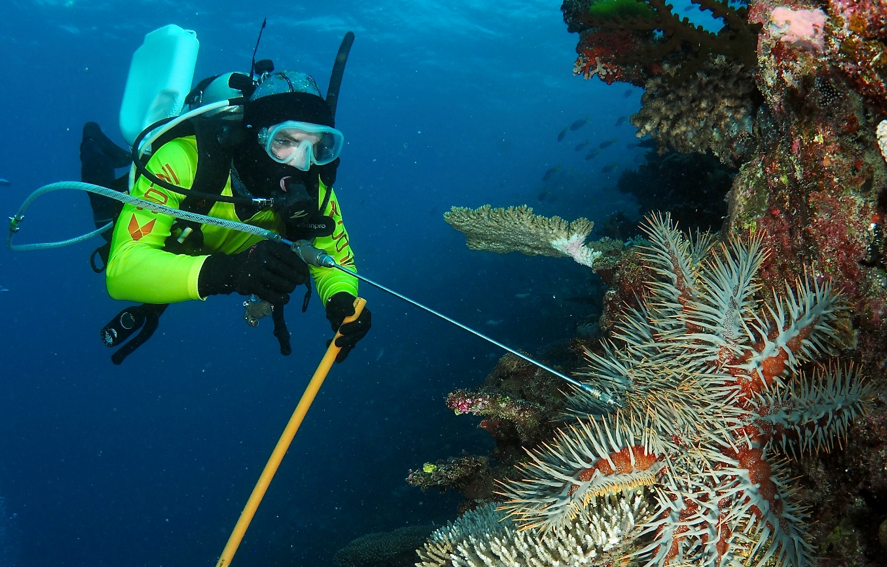
Outbreaks of crown-of-thorns starfish (COTS), a native predator of coral, have occurred on the Great Barrier Reef (GBR) since at least the 1960s. Reflecting the significant ecological and environmental impacts of these outbreaks, lethal pest control methods were introduced more than ten years ago to maintain COTS populations at a sustainable level. Although these control programs have been in place for a long time and have expanded in recent years, little is known about how people living near to the GBR perceive COTS and the lethal methods now in use.
Intending to explain the consistent but tentative support for COTS control that we observed in national and regional surveys of Australian residents, we held 117 interviews involving 140 participants either living or working within the GBR catchment. We asked participants about their knowledge and perceptions of COTS and their management on the GBR. Based on these interviews, we identified four major prerequisites for ‘social license;’ that is, for the acceptability of lethal COTS control. GBR community members considered: (1) ethical responsibility towards both the GBR and native species; (2) the knowledge and rationale behind the control program; (3) management effectiveness; and socioeconomic benefits as primary topics affecting their acceptance or otherwise of COTS control. GBR community members also stressed that Reef Traditional Owner rights and responsibilities should be considered in a way that does full justice to the unique rights, interests and knowledge of the First Peoples of the GBR.
Our findings provide valuable insights into our understanding of how local communities perceive environmental management programs, especially in relation to the lethal control of native species. The four primary points for engagement we identified also highlight that social license is not a binary or once-off exercise in gaining approval but an ongoing process that requires more deliberate and active participation by society and communities.
 Relational Thinking