By David Kreuer, Jessica Stubenrauch, Florian Bortic, Dorothea Schwarzer, Augustin Berghöfer and Heidi Wittmer
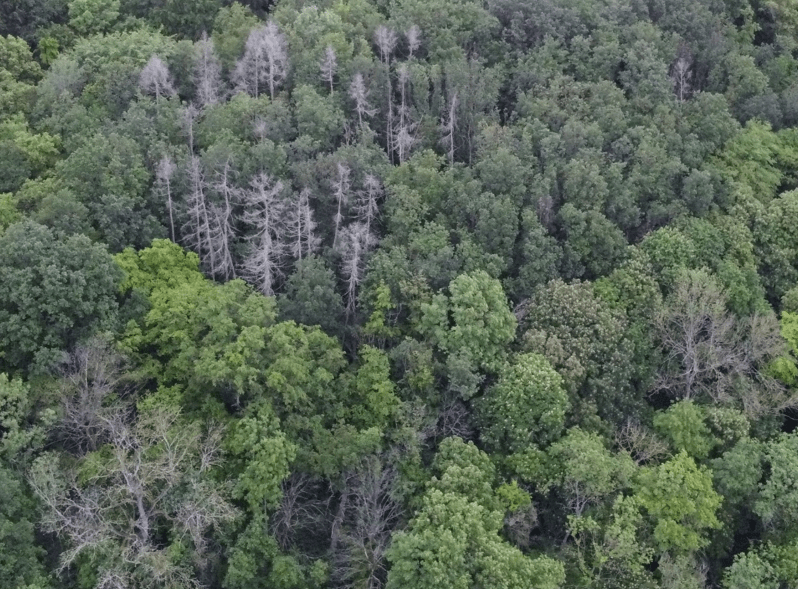
This paper presents the outcomes of an expert survey about the deep crisis of Germany’s forests. Today, 80 percent of individual trees within the most common species – spruce, pine, beech, and oak – are unhealthy. Following several very dry summers, many trees have died, especially in spruce monocultures. Given the current crisis, a big question is how forests in Germany should be managed in the future, when climate change is expected to increase. What social and political conditions are needed? Forests should adapt to climate change, become robust and diverse, and are expected to serve many conflicting interests. How best to fulfil these demands is much discussed and remains unclear. Different groups argue about who is right, slowing down progress.
We show how to find common ground between opposing camps so that a crisis can become an opportunity for positive change. Three points are central: (1) increase cooperation, for example among forest owners in cooperatives; (2) promote thinking and action across sectors, for example by integrating land use issues outside the forest sector; and (3) build bridges between adversaries, for example through a good communication strategy and increased public participation.
Our findings are based on the ‘Policy Delphi’ method, which brings together the ideas of many experts in a systematic way. This highlights conflicts, but also unexpected opportunities for working together. We asked 64 experts and stakeholders to identify promising ways forward out of the forest crisis. The relevant pathways they propose can also be applied outside the forest sector and beyond the German context. Our dialogue-based approach demonstrates how a critical environmental situation could lead to transformative change that benefits both ecosystems and people.
 Relational Thinking