By David O’Brien, Elana Bader, Jeanette Hall, Sean Hoban, Gernot Segelbacher, Sibelle T. Vilaça and Deborah M. Leigh
Nature-positive describes the concept of stopping and reversing biodiversity loss in an equitable manner. Biodiversity is comprised of ecosystem diversity, species diversity and genetic diversity. While genetic diversity was included in early definitions of nature-positive, it has been omitted from some more recent framings. In this article, we discuss how this oversight jeopardises the success of nature-positive.
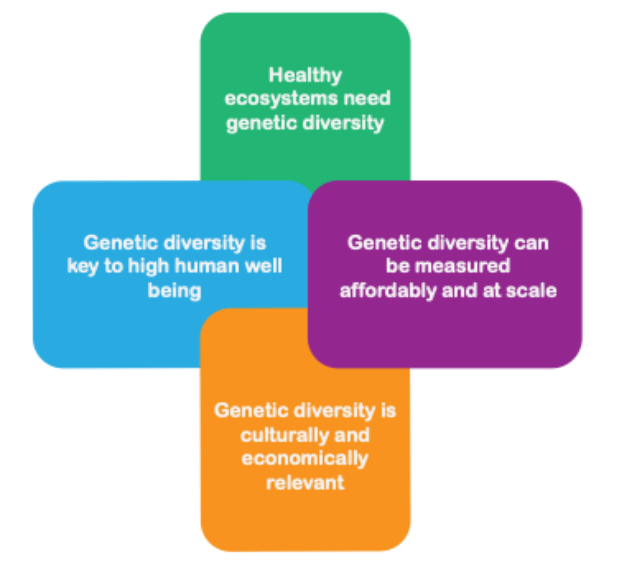
At the heart of the link between genetic diversity and nature-positive, is its link with resilience. Genetic diversity is vital for ecological resilience because it underpins variation in response, natural selection and adaptation, and the maintenance of long-term fitness. Thus it is vital to protect to ensure we maintain robust ecosystems in the future.
With advances in genetic and genomic technologies, as well as the international adoption of non-molecular genetic indicators, previous barriers to the generation of genetic diversity data have been overcome. It is now both possible and beneficial to incorporate genetic diversity in biodiversity assessments for nature-positive globally. Moreover, the increasing ethos of co-designed science and benefits sharing in the field of genetics could support nature positive’s aims of a just transition.
This paper provides examples of genetic diversity’s role in nature-positive, how new developments signal that it should not be erroneously excluded due to methodological concerns, and how society would benefit from its inclusion long term.
 Relational Thinking