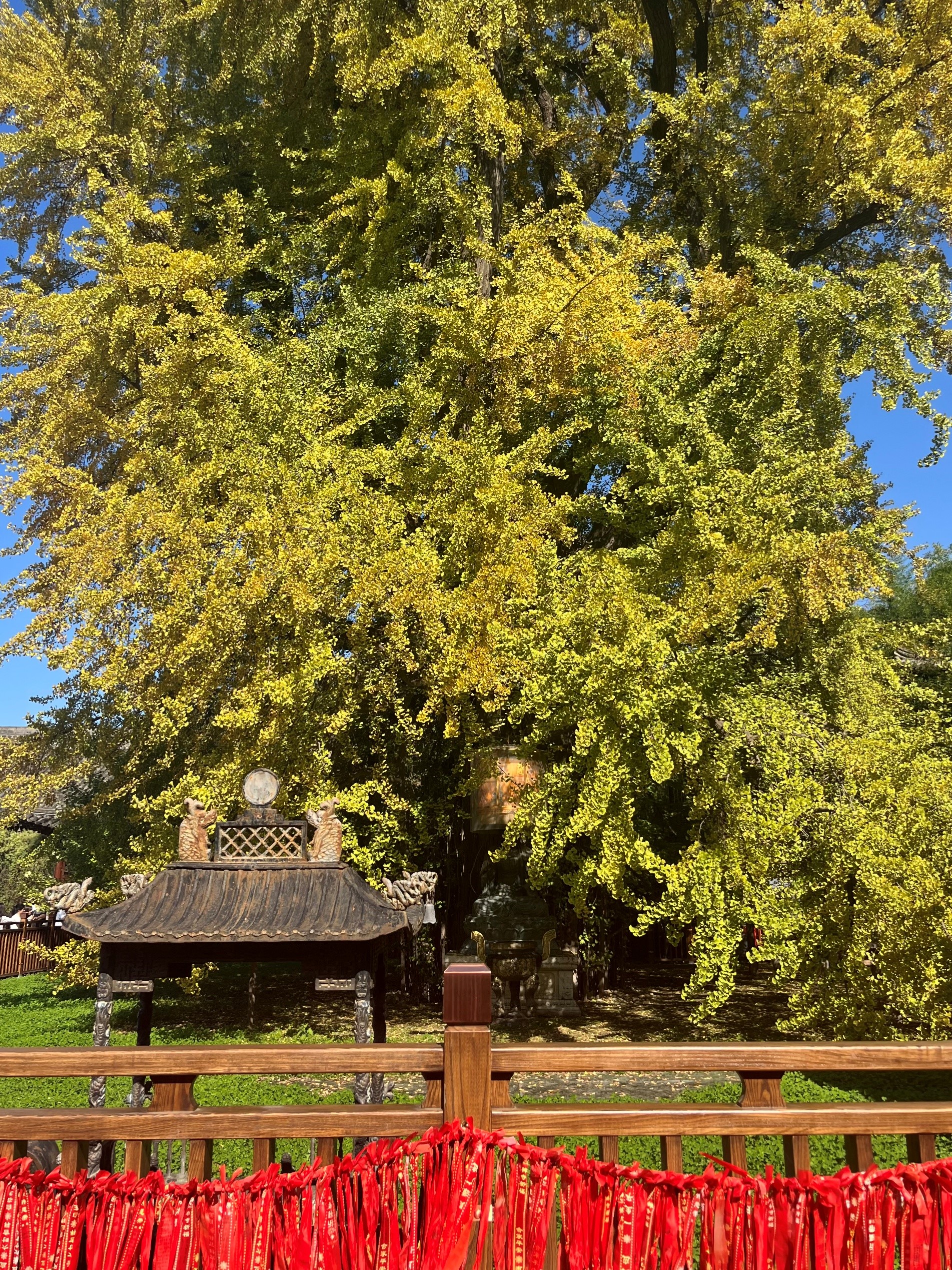
Photo credit: Cheng Jin.
By Cheng Jin, Siwei Hu, Lihua Zhou, Li Huang, Yingji Pan, C.Y. Jim, Kun Song, Jesse Minor, and Yongchuan Yang.
Imagine you’re on a long migration and you need to bring those plants on which you rely. But as you travel, the weather changes, and your plants can’t grow in the new places. What do you do? You find new plants that provide the same benefits the ones you used before. This is what happened with Buddhism as it spread from the Indian subcontinent to China.
Our study examined 246 temples across China to understand how Buddhism chose its religious trees (we call them Buddhist tree species or “BTS” for short) and how these choices affected the local plants. We found that as Buddhism moved into different climate zones in China, the original trees from Indian subcontinent gradually became unsuitable for local environmental conditions. So, the monks had to find local trees that could do the same job. These local trees had to look similar and serve the same religious purposes.
We discovered that appearance, evolutionary relationships (phylogeny), and religious uses all influenced the choice of BTS. When environments were favorable, Buddhist temples tended to select local trees that were closely related and had a similar overall appearance to the original sacred species, including aspects such as tree form, bark texture, and organ morphology. In harsher conditions, especially areas with extreme winter cold, they chose more distantly related trees that shared specific features like similar leaves or fruits. Interestingly, these distantly related substitutes offered a greater variety of religious uses than their closely related counterparts. This suggests that as environmental challenges intensified, it became harder to find trees that looked and were related to the original ones. The monks had to focus more on the religious use versatility when picking new trees. This process helped Buddhism spread across China and also changed the local plant life.
 Relational Thinking