To celebrate Pride Month 2025, we are excited to share a series of blogs and podcasts highlighting useful articles and resources for LGBTQIA+ ecologists and researchers. In each post, the authors behind these resources explain what they are, how they came to produce them, and why they are important.
by Abagael Pruitt, PhD (she/her)
Read the full article (‘You are welcome here: A practical guide to diversity, equity, and inclusion for undergraduates embarking on an ecological research experience‘) in Ecology and Evolution here.
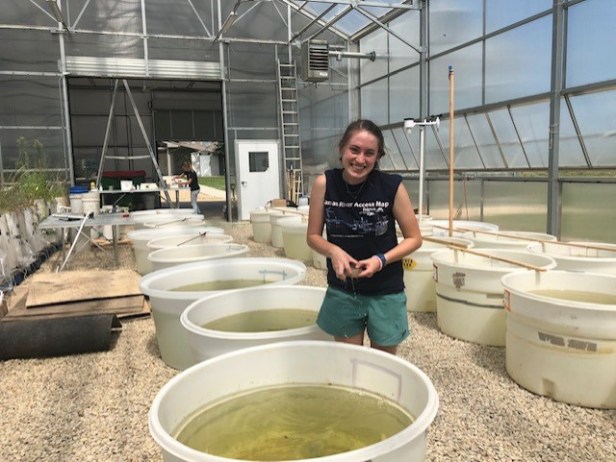
Photo by Dr. Amy Burgin.
How the manuscript began
This article came about as part of a whole-lab effort. We were looking for something new to do during lab meetings and thought that writing a manuscript together could be a great way for everyone to get involved in something meaningful. I was an undergraduate at the time, and this ended up becoming my first peer-reviewed publication. From the start, we wanted to create something useful for undergraduates just beginning ecological research. Originally, we included sections on things like how to analyze a standard curve, pipette properly, and weigh samples, but the paper started getting really long. Then COVID hit, and since we weren’t in the lab as much, we shifted our focus toward more universal aspects of research life. We began to focus more on the things we wished we had known when starting out, focusing on insights drawn from our personal experiences in the lab rather than just technical how-to guides. Once we made that pivot, the writing process became much more focused.
Takeaways
The main takeaway we hope undergraduates get from our paper is simple but powerful: you belong. STEM fields have a long history of excluding or pushing out individuals from underrepresented backgrounds. Our goal was to create a resource that not only encourages all students to pursue ecological research, but also helps them feel supported and prepared as they enter these spaces. In the article, we include a curated table of resources focused on diversity, equity, and inclusion (DEI), offering support and information for students navigating their early research experiences. We also dive into topics like how to communicate effectively with advisors, stay safe during fieldwork, and recognize and cope with imposter syndrome, all of which are common but often unspoken challenges that can discourage students from staying in science. In addition to supporting undergraduates, we also provide a table of actionable suggestions for mentors with steps they can take to create more inclusive and equitable research environments. Our hope is that this guide serves as a bridge between students and mentors, making the research experience more welcoming, safe, and meaningful for everyone involved.
Personal lessons learned
I learned a lot writing this paper. I was especially involved in the field safety section, and since then I’ve played a large role in making sure the labs I’m involved with have a code of conduct. Applying to grad school at the same time as writing this article, I was able to better consider questions about communication styles, mentorship approaches and lab culture, which I then could ask about in interviews, helping me better understand the working environment of the placement. This work also pushed me to reflect on my own imposter syndrome and think about how important being a part of a lab that is DEI-forward is to me. The thing that surprised me the most while writing it was probably how many of these issues, like feeling isolated in the field, not knowing how to bring up concerns, or questioning whether you belong, were shared experiences across so many people. We found information about these different issues for undergraduates scattered across a lot of different sources, but there wasn’t really one place that brought it all together. It was really rewarding to help consolidate it into a single, accessible guide that we hope can support people starting their research journeys.
Supporting LGBTQIA+ Scientists
This article is especially relevant to LGBTQIA+ ecologists because it acknowledges that our identities can shape how we experience fieldwork, mentorship, and lab culture. Creating inclusive, supportive research environments benefit everyone, especially those from marginalized communities. Since writing this article, I haven’t had much time to explore this topic more deeply, but I’ve often wondered how useful it’s been to others. We’ve been cited a few times, which is really exciting, and I hope it’s been genuinely helpful. One thing I’ve done since then is create a “laboratory etiquette” document for undergrads starting in my current lab, inspired by the guidance we outlined in the paper. From what I can tell, that’s been useful. Our undergraduates seem to feel more confident in emailing and communicating with us. If others have created similar resources or used the article in their own labs or programs, I’d love to hear about it.
I know firsthand that having mentors who respect your identity and being a part of a lab culture that embraces diversity makes a huge difference in whether you feel comfortable and confident in your work. Having that support not only helps you thrive personally, but it also fosters a more creative and inclusive scientific community where everyone’s contributions are valued. I feel incredibly lucky to have LGBTQIA+ mentors and allies who have supported me throughout my journey, and to be part of professional communities like the Society for Freshwater Science that actively value and promote diversity and inclusion. As a LGBTQIA+ scientist myself, there is one piece of advice I can give to others: Find a laboratory that supports you as your whole self. Your science, communication, and collaboration will be stronger because of it. You belong here, and you deserve support!
 Relational Thinking