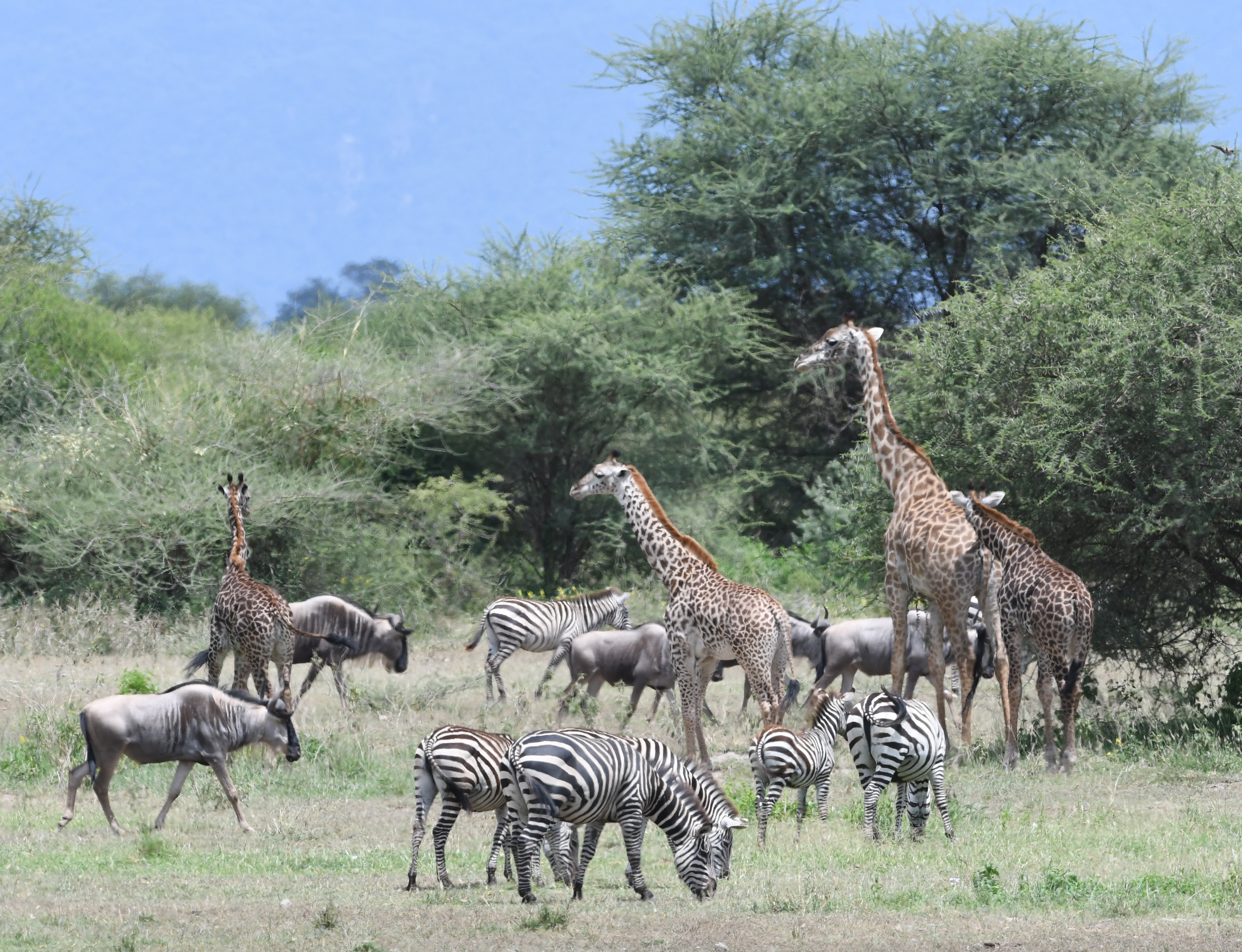
Photo credit: Christian Kiffner.
By Justin Raycraft, Reilly Becchina, Danielle Bettermann, Stephen Koester, Elana Kriegel, Kiana Lindsay, Edwin Maingo Ole, Emily Ramirez, Bryan Spizuco, and Christian Kiffner.
In northern Tanzania, many rural communities live alongside wildlife. While interacting with elephants, zebras, hyenas, and other large mammals is part of their daily life, it also presents unique challenges. To monitor wildlife populations, and develop maps that help inform residents about wildlife-related risks such as crop raiding or livestock predation, local observations could provide valuable data across large areas and time spans. But for these observations to be useful, we need to know if people can accurately identify different species.
To assess this, we interviewed 680 people from 25 villages across northern Tanzania and showed them photos of 17 wild mammal species. We wanted to know how well people could identify each animal species and what factors affected their ability to do so. We looked at a range of factors, including variables related to the person (e.g. age, gender, education), to the species (e.g. body mass, conservation status) and to the environment (e.g. how far people lived from protected areas)—to see what might explain differences in identification skills.
Most people could correctly identify the animals, especially large species like elephants or giraffes. Men were about three times more likely to correctly identify the species compared to women, and surprisingly, people with more formal education were slightly less able to accurately identify the species. Other factors, like living closer to national parks or in areas with more human development, did not seem to influence identification skills.
Our results show that rural residents in Tanzania are generally skilled at identifying wildlife species, making them valuable partners in research and conservation. Recognizing and integrating their knowledge and daily observations can strengthen inclusive monitoring and co-management of human-wildlife interactions, and promote more sustainable human-wildlife coexistence.
 Relational Thinking