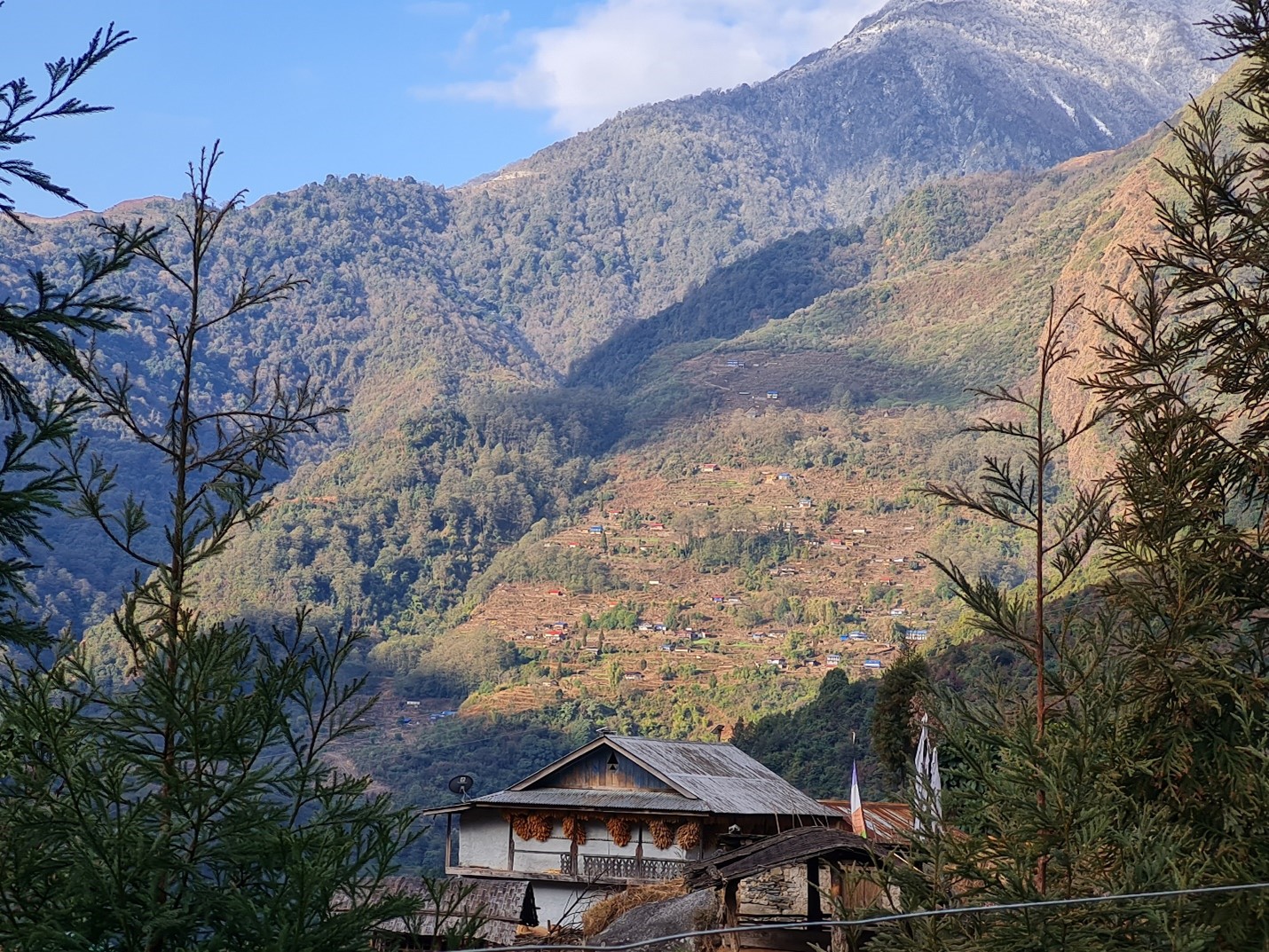
Credit: Biraj Adhikari
by Biraj Adhikari, Noëlle Valérie Schenk, Nakul Chettri, Markus Fischer, Graham W. Prescott, and Davnah Urbach.
We wanted to understand how people in eastern Nepal see the contributions of nature in their daily lives. We were interested in learning how different factors, like where people live, their level of education, and their economic situation, influence the way they value nature.
To explore this, we spoke to numerous communities living in different kinds of environments—from lower plains to higher mountainous regions. We asked them what they thought about how nature helps them, from providing food, water, and medicine to offering cultural and spiritual benefits. We combined numerical data with personal stories to get a complete picture of their perceptions.
Our research shows that while people value nature for its regulating roles—such as maintaining water cycles, preventing soil erosion, and supporting habitats for biodiversity—they also place equal, if not more importance on the material contributions it makes, like providing fuelwood for cooking, as well as non-material benefits, including providing a sense of place. Additionally, people’s connections to nature also depend on where they live. For instance, indigenous farmers and herders in mountain communities prioritized nature for its contributions in providing food and income through the sale of spices, medicinal plants, and husbandry products, whereas communities residing near sites of sacred significance like religious forests prioritized nature for its cultural value. We also found that factors like the socio-economic situation and gender of our interviewees can lead to differences in how the interviewees see the contributions the various contributions of nature.
Our study suggests that global conservation strategies, which often prioritize isolated goals like protecting biodiversity, could be more effective if they consider the unique, place based contextual values and needs of local communities. For example, protecting forests could serve to preserve habitats while also to ensure that people can sustainably harvest resources and maintain cultural practices tied to those forests. We hope that this study will encourage policy makers and conservation practitioners to listen closely to local voices, so that efforts to protect nature are inclusive, just, and beneficial to the communities that depend on it.
 Relational Thinking