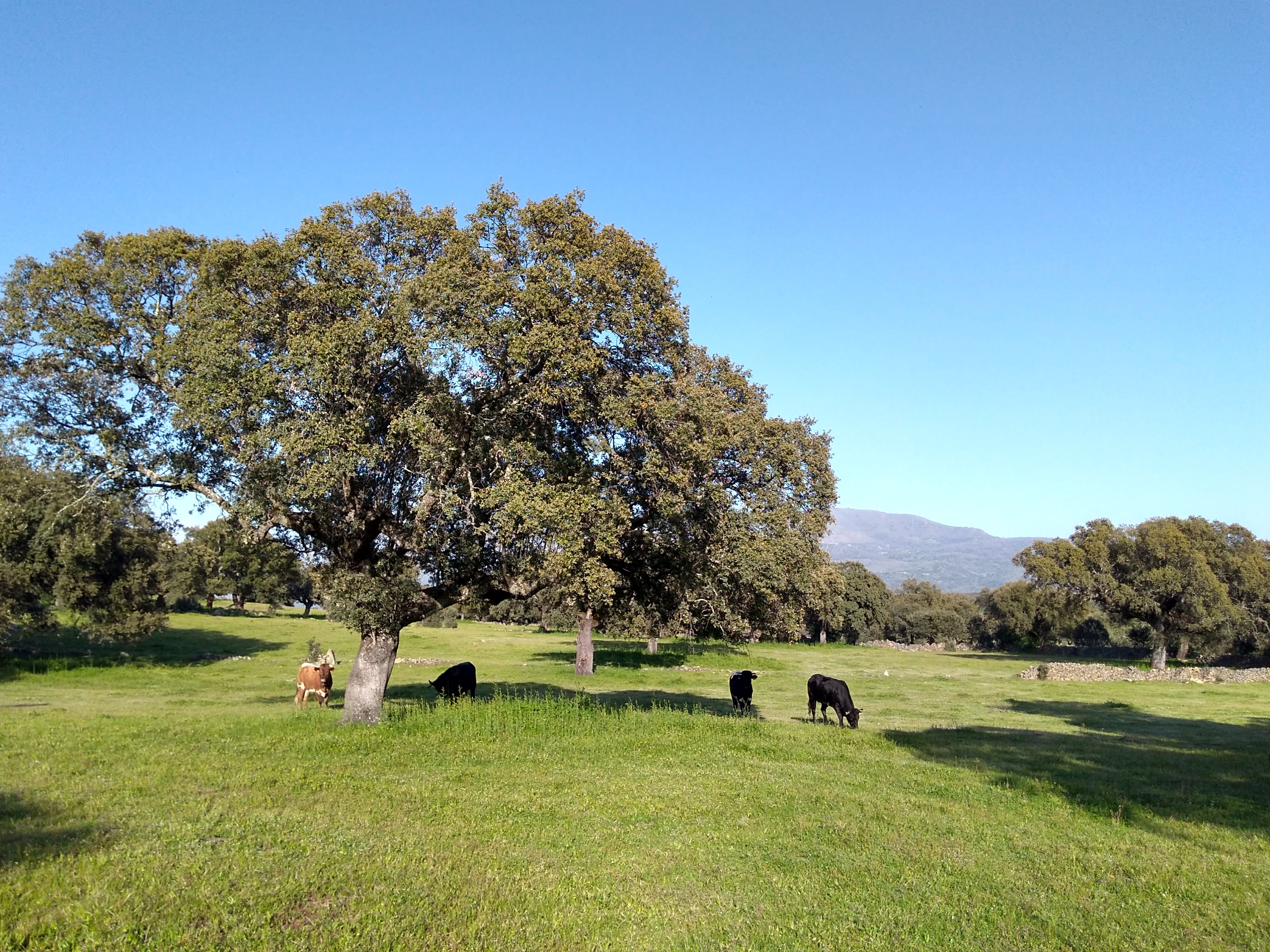
Photographer credit: Elsa Varela
by Elsa Varela, Marion Jay, Lukas Finzberger, Chaima Mobarak, and Tobias Plieninger.
High Nature Value (HNV) farmlands represent approximately 30% of farmlands in the European Union. These are areas where agriculture supports either a high species and habitat diversity or the presence of species of European conservation concern, or both. At the heart of HNV farming is low-intensity use of fertilizers and pesticides, machinery, and livestock levels, the presence of large areas of semi-natural vegetation, and a mosaic of diverse land uses in the farming landscape. However, all over the European Union, processes of abandonment or intensification of their agricultural practices triggered by multiple drivers threaten HNV farmland.
Central to creating more resilient HNV farming systems is a better understanding of their social and ecological dynamics, a clarification of the role of innovations, and the development of solutions to their multiple challenges. Our study synthesizes the existing knowledge on the assessment of biodiversity and ecosystem services, the social-ecological drivers of change, and the innovations developed around HNV farming systems.
Our results show that grasslands were the most researched HNV farming type and that interests in biodiversity form a central motivation for studying HNV farming systems. Despite the scarcity of studies jointly assessing socio-economic and biophysical dimensions, we argue such approaches are of utmost importance for the conservation of HNV farming systems. Since their maintenance depends on the landholders managing them, understanding their reasons underpinning their willingness to undertake certain practices and/or uptake innovations will be crucial for the maintenance of HNV farmlands.
Direct drivers of land-use change in HNV systems relate mostly to abandonment and intensification processes while the Common Agricultural Policy is the main policy driver that influences land-use decisions throughout Europe and its funding poorly adapted to low-input or small-scale farming as it is particularly emblematic for HNV farming systems.
Technical innovations are key to reduce the labour requirements and the likelihood of abandonment in HNV farming, as well as to avoid the negative effects of intensification. Social, institutional, and marketing innovations such as product innovation in niche markets, strengthening collaboration among farmers and increased public support are needed to transform HNV farming systems toward long-term viability.
 Relational Thinking