By Matthew Colloff, Russell Gorddard, Claudia Múnera Roldan, Bruno Locatelli, Sandra Lavorel, Sandrine Allain, Enora Bruley, James Butler, Titouan Dubo, Ojongetakah Enokenwa Baa, Alberto González-García, Lou Lécuyer, Michaela Lo, Jacqueline Loos, Ignacio Palomo, Emeline Topp, Améline Vallet, and Gretchen Walters.
Widespread, severe impacts of climate change require increased ambition, effectiveness and scale of activities to adapt to changes in ecosystems and societies. But efforts have been criticised as too slow, too few and too incremental. We examined details of 16 adaptation projects to understand the how and why of possible approaches to improve how people think about and act on adaptation.
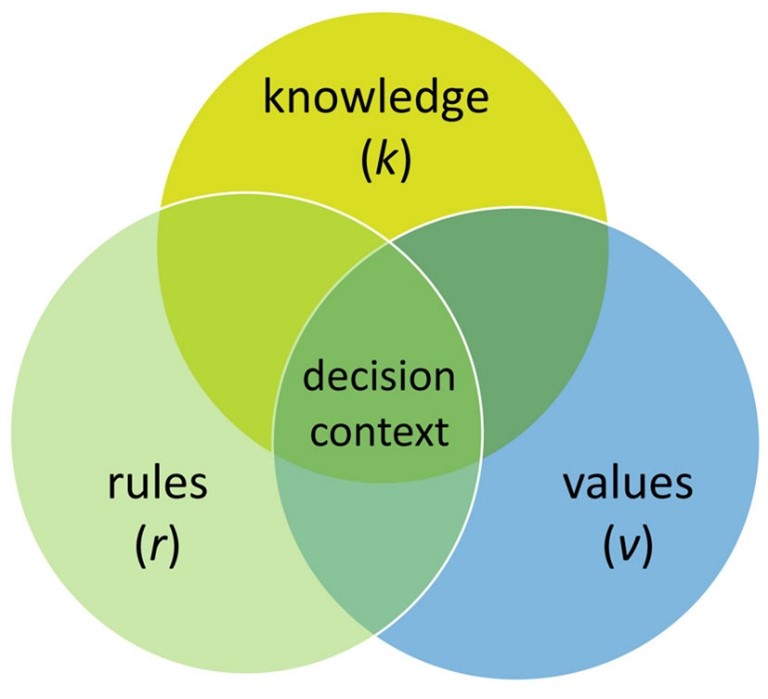
We analysed the processes, structures and practices by which decisions are made and implemented within each project. We assessed if the values, rules and knowledge used by decision makers to determine adaptation actions had shifted to enable new options and approaches. Such shifts are characterised by the introduction of new values, rules and knowledge and the discarding of old ones that are no longer fit for purpose.
We found social processes, such as collective learning-by-doing, and building capacity to anticipate and accept the future were apparent in those adaptation initiatives where the decision context for adaptation had changed. Such changes included how initiatives were organised and run (governance arrangements), the scope and extent of the adaptation challenges they addressed and whether participants were actively included in decision-making.
Projects that used new governance arrangements to address discrete issues (‘problem-governance’) or systemic issues (‘systems-governance’) scored highest for changes in the decision context. Projects using existing management practices to adapt to discrete problems (‘problem-management’) scored moderately. Those using existing management to address multiple, systemic issues (‘systems-management’) scored low, with changes to the decision context impeded by existing rules.
Adaptation projects are not static – they change over time: small scale ones may become more systemic and require systems-scale governance. Doing system-scale governance is difficult and expensive and requires a focus on capabilities for social learning and what works to achieve change. Small-scale local projects dealing with a discrete problem may have governance arrangements that are appropriate for the scope of the problem, whereas ones focussed on systems issues tend to require novel governance. Our findings do not mean some adaptation initiatives are more effective or transformative than others, just that their scope and governance arrangements are different. There are a diversity of arrangements that work. What is important is to align the adaptation approach to the nature of the challenge.
 Relational Thinking