By Stephanie Januchowski-Hartley, Ioanna Giannoulatou, Joelle Evans, and Sian Howells.
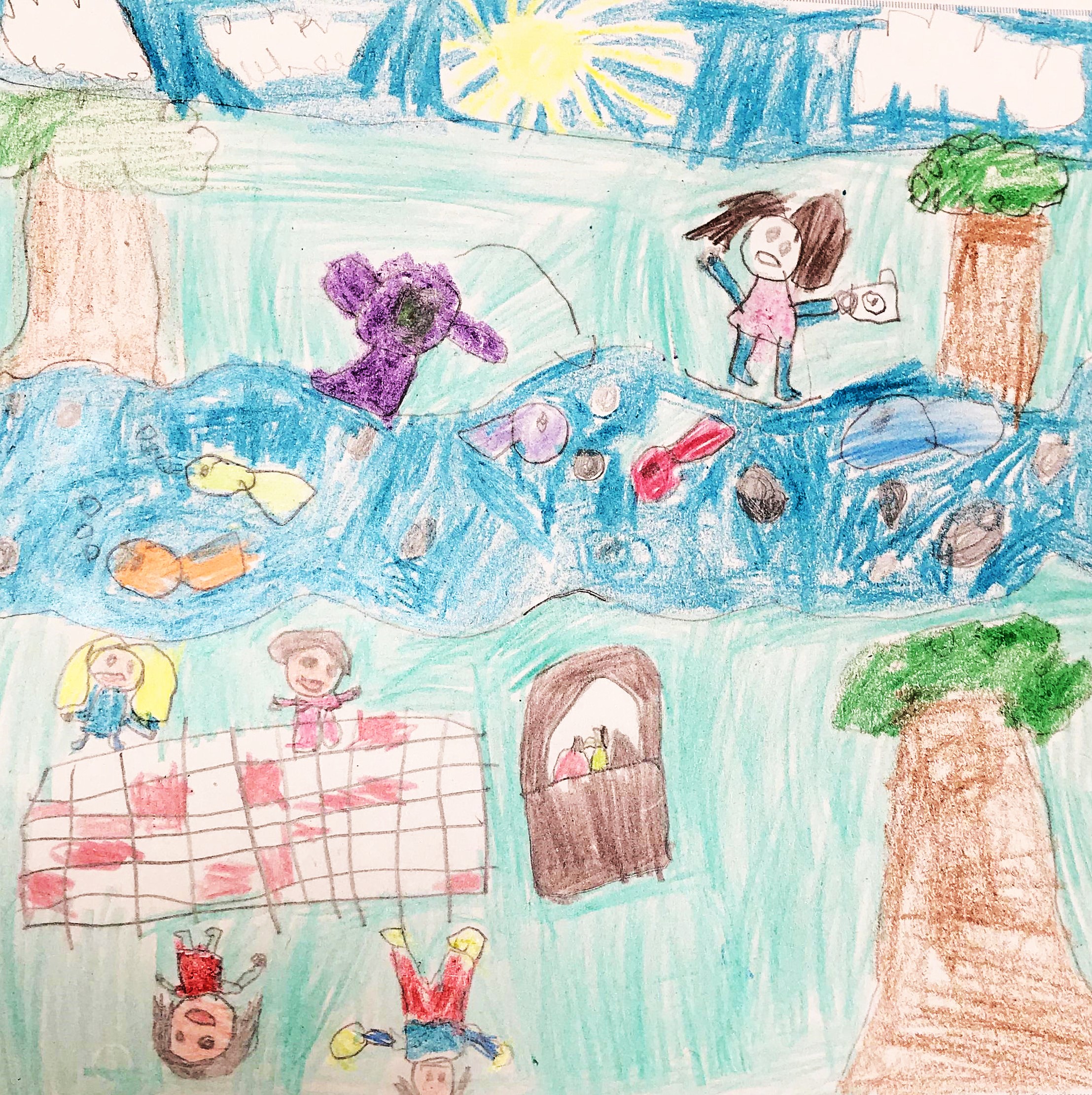
In this article we share a combined place- and arts-based method to environmental education. Our method centred on making three visual media (a book, banner, and glossary) to raise river awareness for and with young children in Wales, UK and encouraged them to communicate about river places that have meaning to them. Loss of species and ecological function in the world’s rivers and other inland waters threatens to erode the diversity of ways that people know and utilize inland waters. Artistic educational activities such as drawing and writing can raise young children’s awareness of their local rivers and encourage them to communicate about the meanings that they hold for rivers and can empower them to enact change. We share our own process of making and sharing the three visual media for environmental education, starting with the design of Jac’s River Adventure book through to two unanticipated visual media that we designed and used for further engagement about rivers with children, teachers, and broader publics, thanks to inspiration from one classroom’s response to Jac’s River Adventure book. We highlight the importance of fiction and non-fiction to diversify pathways to environmental knowledge and nature connection, the need to anticipate teacher and student engagement beyond initial environmental education activities, and that online environmental education for classrooms challenges relationship building.
 Relational Thinking