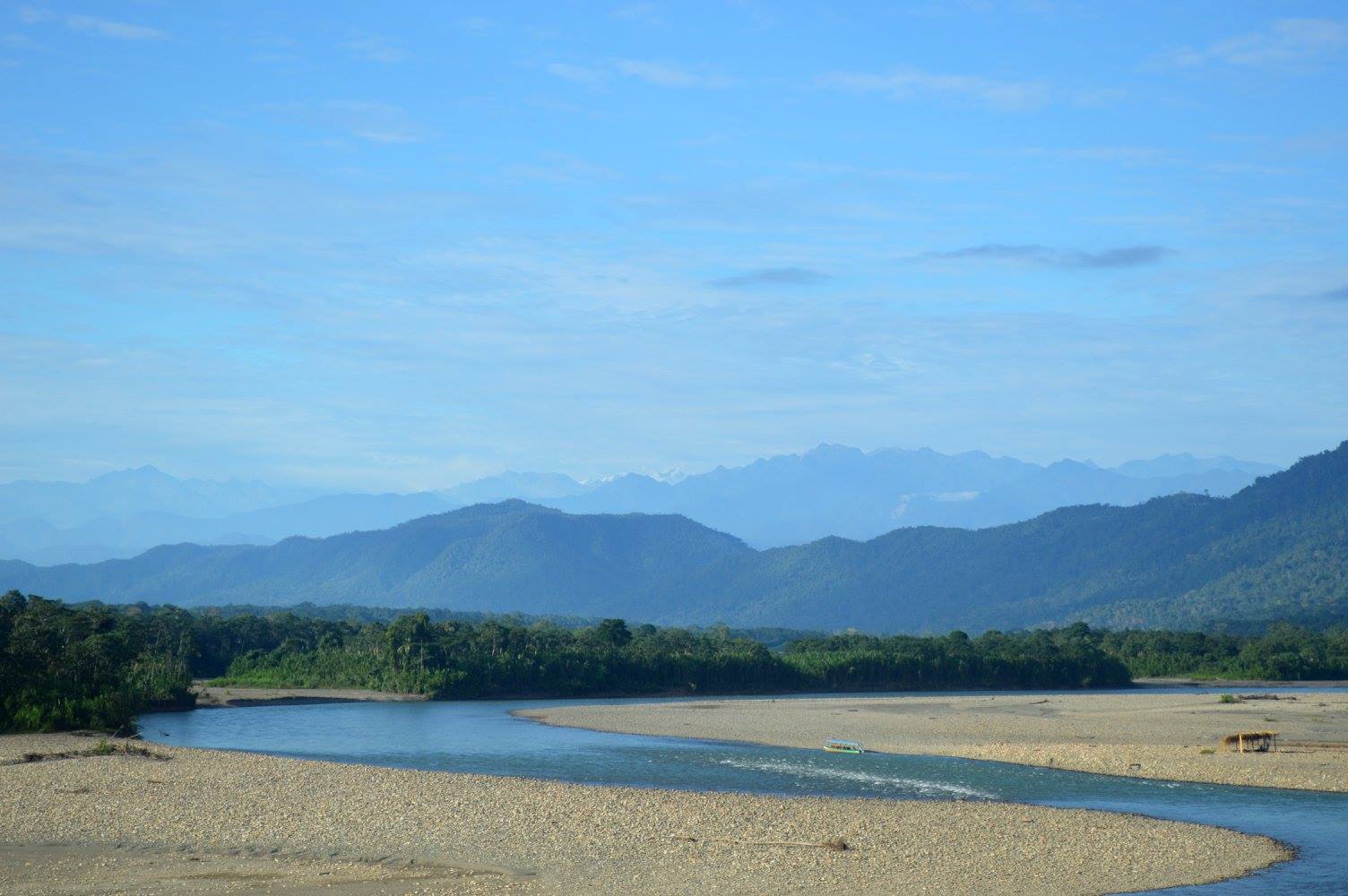
Photograph by Eduardo Salazar Moreira.
By Eduardo Salazar Moreira.
Do conservation experts belong in wilderness?
Conservation experts are emotionally attached to the natural landscapes and living beings they work to protect. However, some expressions of this attachment can be problematic when they exclude the people who live in conservation spaces. These problematic elements are often hidden by portrayals of conservation as inherently positive and of conservation experts as people whose work is guided only by scientific knowledge and technical criteria. With this article, I contribute to critical analyses of the ways conservation has been done so far by analysing the emotional attachment that conservation experts who work in the Manu National Park have for this protected area in the Peruvian Amazon. Even if Manu has been inhabited by several Indigenous groups for centuries, the idea of wilderness, which represents the absence of people as the ideal state of nature, continues to influence the way conservation experts see this space. To understand this influence and its implications further, I analyse online interviews with conservation experts who work in Manu, archival material about Manu, and my own experience working for conservation organisations in Manu.
My analysis reveals that these experts often view the Manu National Park as a sacred space that they belong to. Their sense of sacredness renders the forests of Manu into a place that must not be intervened in any way that is not focused on keeping it untouched, while their sense of belonging portrays conservation experts themselves as the rightful protectors of this sacred natural landscape’s imagined state of wilderness. Therefore, the Indigenous people of Manu, whose livelihoods and cultures are embedded in nature, are excluded from conservation experts’ notion of what this place should be. These elements of conservation experts’ attachment to Manu reveal key reasons behind the persistent exclusion of Indigenous people from conservation spaces and conservation management. Reflecting upon these problematic ideas and considering the reflections of conservation experts who challenge their colleagues’ exclusionary views should be incorporated as a common and deliberate part of doing conservation to build more inclusive and fair ways to protect nature.
 Relational Thinking