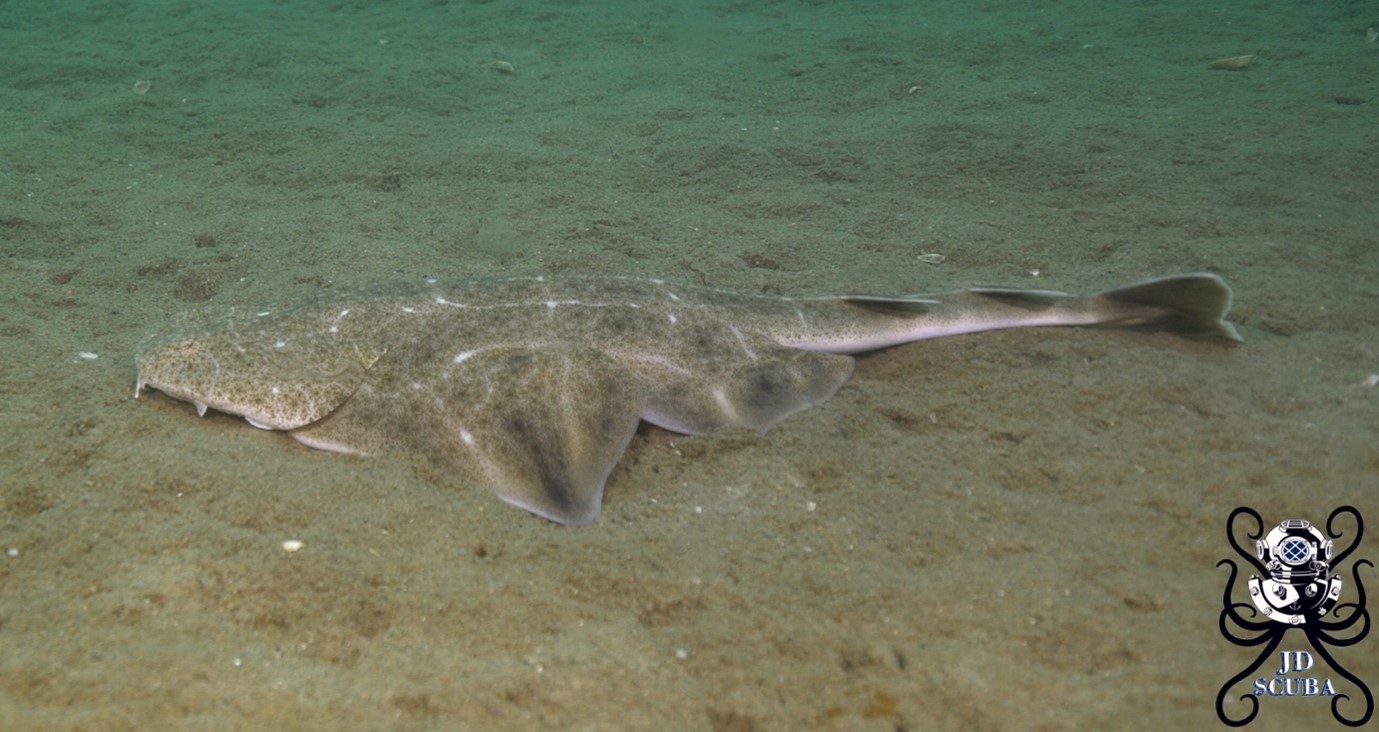
Photo Credit: Jake Davies
By Francesca Mason, Jake Davies, Surshti Patel, Ben Wray, Charlie Bartlett, Michael Davies, Rowland Sharp, Carl Worrall, Jim Evans, John O’Connor, Sarah Davies, Alice Chamberlain, Charlotte Pike, Kathryn Whittey, Claire Collins, Matthew Gollock, Joanna Barker, and David Curnick.
The experiences of dozens of fishers have revealed hidden narratives behind Wales’ changing sea fisheries and a rare species of shark – the angelshark. These firsthand accounts, spanning decades, have provided valuable new data, highlighting the importance of fishers and scientists working together to better understand the marine environment.
While fishing in Wales dates back centuries, detailed records of fish catches can be challenging to find or interpret. Modern record-keeping was only introduced to fisheries in the late 20th century, with records of sharks being an even more recent development. Luckily, researchers in Wales have made significant strides in collating and analysing data on the rare and endangered angelshark by working closely with local fishers, to share knowledge and perspectives.
Through conversations with fishers, the study collected historical accounts and important details about encounters with this elusive shark were shared, with the aim to understand how changing fishing practices may have shaped the number of angelshark records over the years.
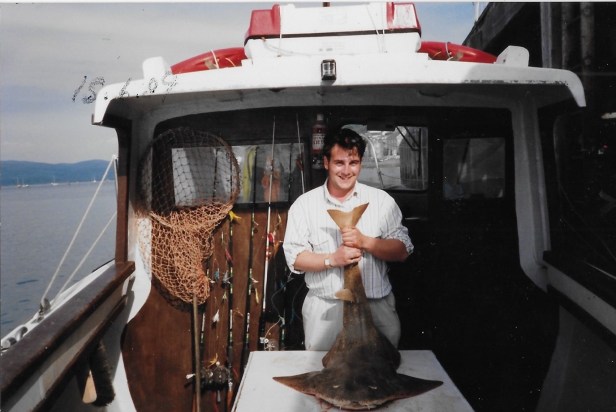
Photo Credit: Charlie Bartlett
The findings suggest that reported declines in angelshark populations in Wales may be overestimated, as changes in fisher behaviour and circumstances likely contributed to reduced encounter rates. Fishers noted that angelsharks were often caught while targeting another species – the thornback ray – whose perceived declines in the 1980s/90s led to shifts toward other species and fishing methods less likely to encounter angelsharks. Additionally, the decline of charter fisheries in Wales further reduced opportunities for angelshark records.
This work highlights the importance of scientists working closely with fishers and local communities, and the cultural significance of angelsharks in Wales. The project’s success has led to the development of a 5-year Action Plan and the expansion of research through Project SIARC (Sharks Inspiring Action and Research with Communities). Findings are published in People and Nature.
 Relational Thinking