In celebration of the shortlisted papers for the Rachel Carson Prize 2024 for Early Career Researchers, we’re delighted to introduce you to some of our shortlisted individuals and papers.
Valentino Marini Govigli (he/him)
Read Valentino’s shortlisted paper: ‘Exploring spatial and temporal resilience in socio-ecological systems: Evidence from sacred forests in Epirus, Greece‘.
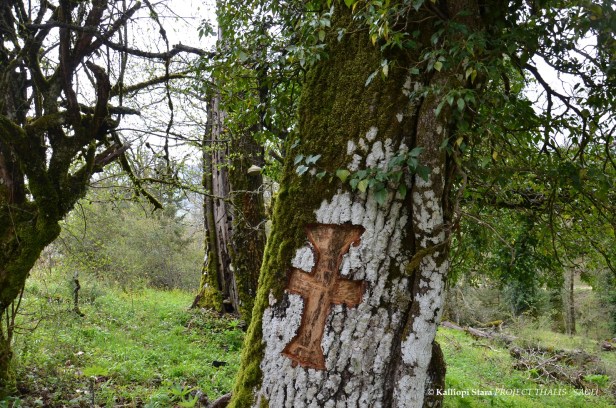
Credit: Kalliopi Stara.
About the paper:
What is your shortlisted paper about, and what are you seeking to answer with your research?
When we speak of nature, we often view it through either ecological or social lenses. Yet, many natural systems are the intertwined result of centuries of interaction between both. This is particularly true in the Mediterranean basin, where human–nature relationships are deeply rooted. Sacred forests are one example of socio-ecological systems that require assessment using both ecological and cultural data. This research, part of a broader multidisciplinary project on Northern Greece’s sacred forests, examines their persistence over time and space. Our aim is to provide practical guidance for forest conservation managers seeking to protect these unique cultural and ecological landscapes.
Were you surprised by anything when working on it? Did you have any challenges to overcome?
Conducting fieldwork in such a sensitive cultural landscape was truly fascinating! Our team engaged with both the ecological environment—facing challenges like extracting tree cores from 300-year-old veteran oaks, often hollow and 80 cm in diameter, within dense, shrubby Mediterranean terrain—and the socio-cultural layer, as these forests are sacred to local communities and require respectful handling. Daily surprises were common, but what fascinated me most was the age of the trees. Some individuals dated back to the 17th century, revealing the deep and enduring connection between people and nature in these unique landscapes.
What is the next step in this field going to be?
One research area we have yet to explore is enhancing the conservation potential of these sites, now recognized by UNESCO as intangible cultural heritage. While the ecological value of these well-preserved ecosystems is widely acknowledged, their cultural preservation is increasingly threatened by rural depopulation and the erosion of traditional customs. As a future research activity, I aim to engage all community members in a participatory decision-making process to identify the best management strategies for these forests—strategies that honour their communal origins and help protect and enhance both their ecological and cultural significance.
What are the broader impacts or implications of your research?
Our work has important implications for both policymakers and land managers. We offer insights into the temporal and spatial dimensions of socio-ecological resilience in sacred forests of northwestern Greece, revealing distinct waves of tree establishment linked to historical socio-economic shifts. This information is key for shaping future forest conservation strategies, given the strong ties between regional socio-economic processes and forest structure. Moreover, the varied spatial responses of these forests to external societal changes should guide communication and management efforts—ranging from public awareness campaigns to promote cultural resilience, to active, landscape-scale interventions aimed at strengthening ecological resilience.
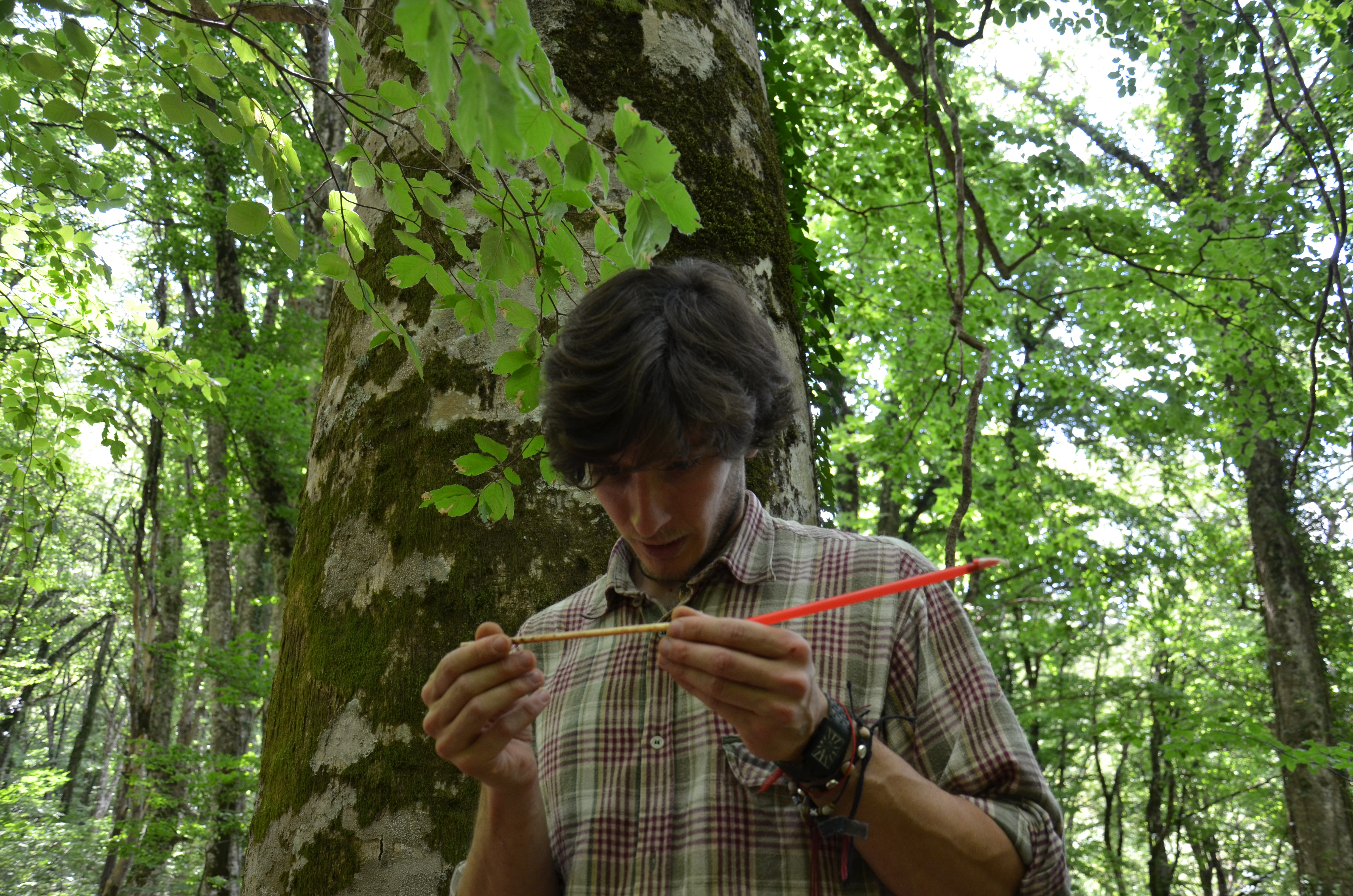
Credit: Kalliopi Stara
About the author:
How did you get involved in ecology?
I came to ecology after broadening my academic background—originally rooted in environmental economics—by pursuing an MRes in Ecology and Environmental Management at the University of York. I felt that economics alone was insufficient to fully understand the complex interactions between humans and their broader environment. I was then fortunate to secure a PhD position at the University of Ioannina (Greece), where I immersed myself in forest and cultural ecology, and successfully completed my PhD focused on assessing and modeling the socio-ecological dynamics of sacred forests in Northern Greece.
What is your current position?
I am currently a Junior Assistant Professor at the Department of Agricultural and Food Sciences at the University of Bologna, Italy . My research focuses on socio-ecological systems, the socioeconomics of agro-forest goods and services, intangible ecosystem services assessment, and multi-actor engagement.
Have you continued the research your paper is about?
Yes, I am currently exploring participatory methods to collaborate with local stakeholders in defining consensus-shared management practices for preserving both the cultural and ecological features of sacred forests. Additionally, I continue to work in studies focusing on assessing spiritual values of ecosystems across various settings in Italy and worldwide.
What one piece of advice would you give to someone in your field?
My work would not be the same without the guidance of the late Prof. Oliver Rackham. Walking with him through the sacred forests of Epirus taught me that a sacred landscape is never simply natural or cultural—it is a delicate interweaving of both.
My advice to future cultural ecologists is this: always read between the lines (or the branches) of a landscape, and recognize both ecological and cultural processes equally!
 Relational Thinking