In celebration of the shortlisted papers for the Rachel Carson Prize 2024 for Early Career Researchers, we’re delighted to introduce you to some of our shortlisted individuals and papers.
Elizabeth Carlen (she/her).
With her co-first author Cesar Estien (he/they).
Read Elizabeth’s shortlisted paper: ‘A framework for contextualizing social-ecological biases in contributory science data‘.
About the paper:
What is your shortlisted paper about, and what are you seeking to answer with your research?
Our paper, A Framework for Contextualizing Social-Ecological Biases in Contributory Science Data, examines how contributory science platforms like eBird and iNaturalist provide valuable geolocated biodiversity data but are shaped by social and ecological biases. These biases can distort species distribution patterns and influence conservation decisions. To address this, we introduce a conceptual framework with four key filters—participation, detectability, sampling, and preference—that shape biodiversity data collection. Using data from St. Louis, Missouri, we demonstrate how these biases can lead to misinterpretations and inequitable conservation efforts. Our research seeks to identify and mitigate these biases, ultimately promoting more accurate and inclusive biodiversity monitoring.
Were you surprised by anything when working on it? Did you have any challenges to overcome?
One of the biggest surprises was realizing just how pervasive biases are in contributory science datasets and the many ways they form—such as the preference for documenting charismatic species over common ones and the tendency to record observations more frequently in green spaces than in urban areas. Communicating these biases effectively was also a challenge. A breakthrough came when our coauthor, Tali Caspi, proposed a filtering system concept, illustrating how the actual species pool gets “filtered” into a reported species pool due to various biases. Our coauthor Simone Des Roches then translated this idea into a compelling summary graphic. Another challenge was coordinating discussions among our 14 coauthors—getting everyone on a call at the same time was no small feat!
What is the next step in this field going to be?
The next step in this field is developing methods to overcome biases in contributory science datasets. Following this research, a computer science group at Washington University in St. Louis reached out to collaborate on using large language models to predict areas with gaps in contributory science data. We are now working together to identify these gaps and will ground-truth our predictions by collecting field data on species presence and absence. In the long term, this approach aims to systematically identify and correct data gaps, improving the accuracy and reliability of biodiversity data for research and policy decisions.
What are the broader impacts or implications of your research?
Our framework highlights the risk of misinterpreting local biodiversity data due to participation biases in contributory science platforms like iNaturalist and eBird. For example, in St. Louis, Missouri, biodiversity data may suggest that the southern part of the city has higher biodiversity, potentially leading policymakers to prioritize conservation efforts there. However, our framework demonstrates that this pattern likely reflects participation bias rather than actual ecological differences. By identifying these biases, we provide a tool for local governments and policy agencies to make more informed, equitable, and data-driven decisions. Our work urges decision-makers to critically assess biodiversity data sources and consider participation patterns before allocating resources, ensuring that conservation and urban planning efforts are based on a more accurate understanding of biodiversity distribution.
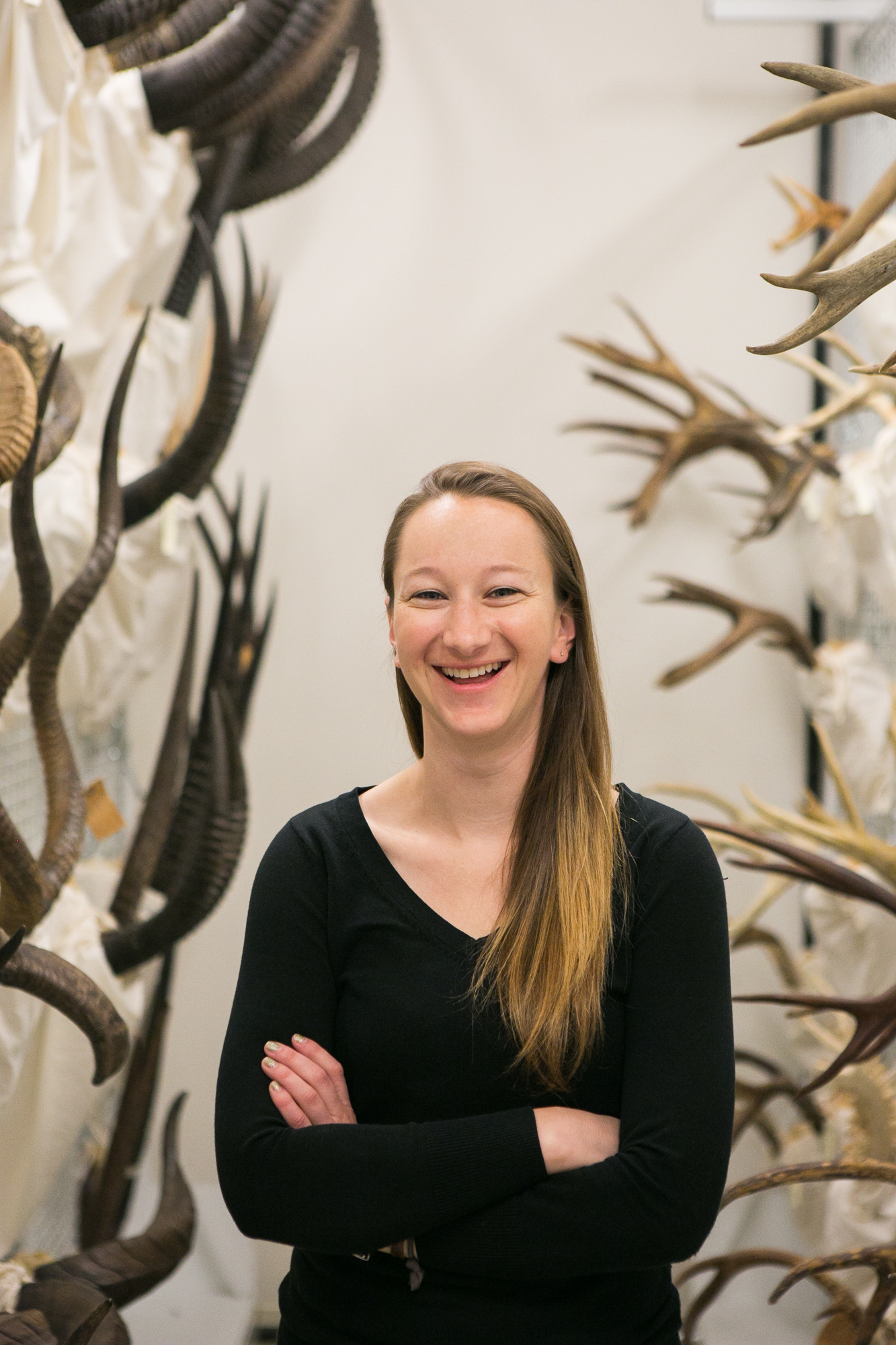
About the author:
How did you get involved in ecology?
Elizabeth (she/her): I’ve always wanted to be a biologist and work with animals, but growing up, I thought the only path was becoming a veterinarian. It wasn’t until I got to undergrad that I realized I could pursue a career studying wildlife and even get paid to be outside doing field research. My passion for ecology truly took off when my mammalogy professor, Dr. Francis Villablanca, noticed my enthusiasm—especially for fieldwork and searching for mammals. He mentored me, helping me find opportunities to gain hands-on experience in wildlife research. His support shaped my career, and now, I strive to do the same for my mentees by guiding them toward opportunities to build their skills and knowledge in ecology.
Cesar (he/they): After I switched majors from engineering to biology, I didn’t necessarily know what that route would entail. For one of my biology labs, my TA, the now Dr. Jessica Cusick, posted an ad looking for volunteers to watch videos of brown-headed nuthatches leaving the nest and it sounded interesting so I applied! I fell in love with animal behavior and all the environmental variables that could shape it. From there, I worked in many positions trying on different ecology ‘hats’ to see which one excited me the most, from marine and plant ecology to song learning and cognition. My senior project – looking at the relationship between microplastic concentration and sea urchin reproduction – cemented my interest in understanding how humans are altering the ecologies of many species.
What is your current position?
Elizabeth (she/her): I am currently a postdoc with the Living Earth Collaborative and the Biology Department at Washington University in St. Louis.
Cesar (he/they): I am currently an urban ecologist with Second Nature Ecology + Design.

Have you continued the research your paper is about?
Elizabeth (she/her): Yes! I am continuing this research by working on projects aimed at making contributory science more accessible and reducing biases in contributory science datasets. I’m currently developing outreach initiatives to address these challenges and improve data equity. Stay tuned for more updates!
Cesar (he/they): After this piece, I, along with Dr. Carlen Dr. Schell, published a follow-up piece titled “Examining the influence of sociodemographics, residential segregation, and historical redlining on eBird and iNaturalist data disparities in three U.S. cities” in Ecology and Society investigating more about how contributory science, specifically iNaturalist and eBird, varies with different social factors, including race, income, and historical redlining. Beyond this, I have discussed with communities how tools like iNaturalist, or other forms of contributory/participatory science, can be used as a form of education as well as agency/empowerment that can give communities the data needed to advocate for resources or interventions in their neighborhood to improve their neighborhood’s ecology.
What one piece of advice would you give to someone in your field?
Elizabeth (she/her): Don’t be afraid to quit—or rather, to pivot. It may seem counterintuitive to say ‘quit sooner’, but not every research question can be answered at a given moment. Sometimes, we lack the time, funding, or resources to tackle a project effectively, yet fear of failure keeps us pushing forward at great cost. I’ve learned that recognizing when to step back or shift directions isn’t a sign of failure—it’s a strategic decision that allows me to use my resources wisely and return to important questions later in my career when the timing is right.
Cesar (he/they): Try everything you can! People often assume that scientists always knew their career path from the start, but that’s not always true. I discovered my research focus after exploring various fields, which not only helped me identify what I didn’t want in a future role but also refined my questions and interests. Every opportunity is a chance to learn more about what you like, and don’t like!!
 Relational Thinking