In celebration of the shortlisted papers for the Rachel Carson Prize 2024 for Early Career Researchers, we’re delighted to introduce you to some of our shortlisted individuals and papers.
Voluntary land conservation as a pathway to restore, maintain, and protect meaningful relationships with nature, people, and more-than-human beings.
Rocío López de la Lama (she/her). Social scientist, School of Public Policy and Global Affairs at The University of British Columbia. rocio.lopezdelalama@gmail.com
Read Rocío’s shortlisted paper: ‘Not in it for the money: Meaningful relationships sustain voluntary land conservation initiatives in Peru‘.
About the paper:
What is your shortlisted paper about, and what are you seeking to answer with your research?
Voluntary land conservation is often associated with incentives or compensation, such as tax exemptions or reductions. This is the case in several countries such as the U.S., Australia, and South Africa, where even though landowners might have intrinsic motivations for engaging in voluntary land conservation, they are also supported by government or NGO programs.
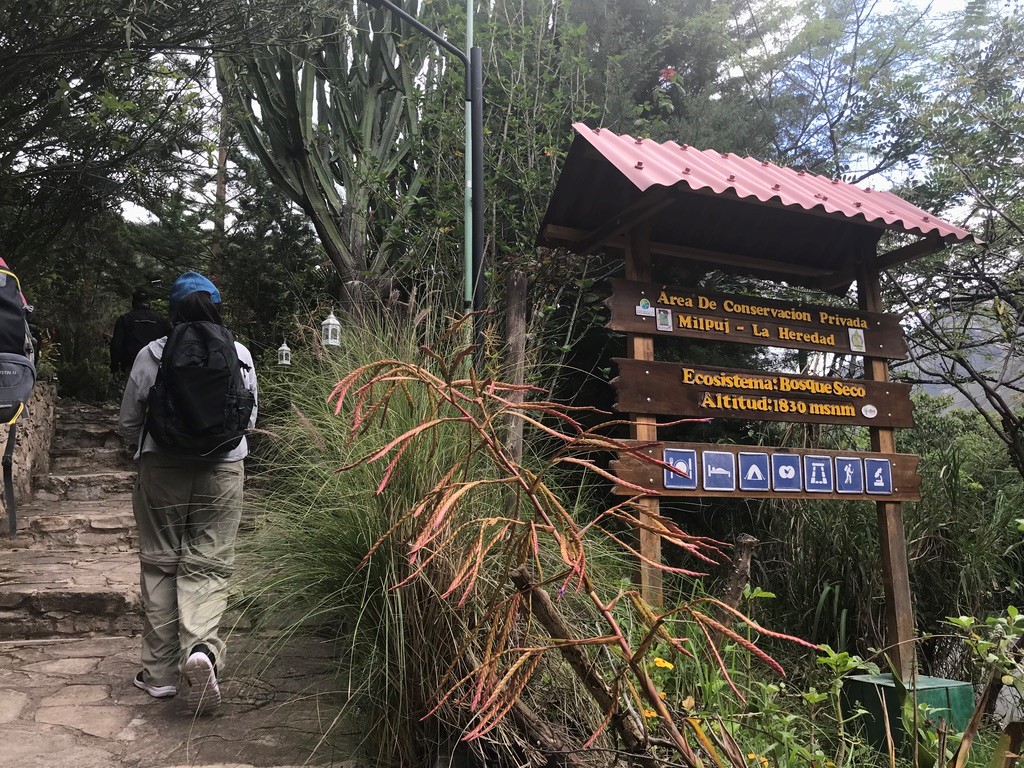
In Peru, my home country, conservation faces many challenges (listing them is beyond the scope of this blog)—yet there are individuals voluntarily protecting nature without any government incentive or NGO support. This is where relational values come in. In this paper, I used the relational values framework to explore the meaningful relationships that landowners cultivate with their land, with other people, with more-than-human beings, and with nature as a whole. Viewed through the relational values lens, voluntary land conservation without external support or incentives becomes entirely logical. For these landowners, conservation is not an end in itself, but rather a means to sustain dynamic, reciprocal, and long-lasting relationships.
Were you surprised by anything when working on it? Did you have any challenges to overcome?
Originally, this research was meant to be carried out through field visits across Peru, visiting privately protected areas (PPAs) led by individuals, campesino communities, and Indigenous Peoples. But when COVID-19 hit, my long-awaited fieldwork season ended abruptly. After some panic, I decided to focus on individual landowners and reach out to them online. Although internet access was limited, WhatsApp in Peru goes a long way! Many were eager to share their stories — their journeys setting up conservation initiatives were profound and inspiring.
What surprised me most when re-listening to interviews was how deeply intertwined relational values were. Meaningful relationships with family (past, present, and future generations), with specific species, or with spiritual beings — everything was connected. I also discovered that the PPAs were just a small fraction of their broader scope of care. These perspectives profoundly transformed my own understanding of voluntary land conservation, showing it as an act of care that transcends boundaries.
What is the next step in this field going to be?
Relational values are increasingly recognized as powerful leverage points for sustainable conservation and even systemic transformation. They challenge the Western tendency to reduce nature to quantifiable ecosystem services and instead validate relationships, worldviews, and cultural perspectives as legitimate motivations for protecting nature. I believe that as this field grows, we must honour its roots: ensuring that relational values research remains grounded, participatory, and co-created with those on the front lines of both environmental degradation and conservation. I’m excited to see relational values increasingly inform transformative change research and transdisciplinary approaches — and I believe we are just beginning to tap into their full potential.
What are the broader impacts or implications of your research for policy or practice?
My research shows that people care deeply about nature and don’t need financial incentives to protect it. These landowners — neither wealthy nor privileged, often children of Andean immigrants in Peru, or locals facing social and economic challenges — are driven by love, stewardship, and a strong sense of place. This is the kind of leadership conservation needs. However, what they need most is not incentives, but meaningful, on-the-ground support. This is the main message that I have tried to deliver to decision-makers in Peru, so they can realize just how much potential privately protected areas have as hubs where people can reconnect with nature and learn about a way of life that prioritizes meaningful relationships over economic profits. The stories of these landowners remind us that all of us have the potential to cultivate strong relational values for nature, especially if given the chance to experience and connect with it first-hand.
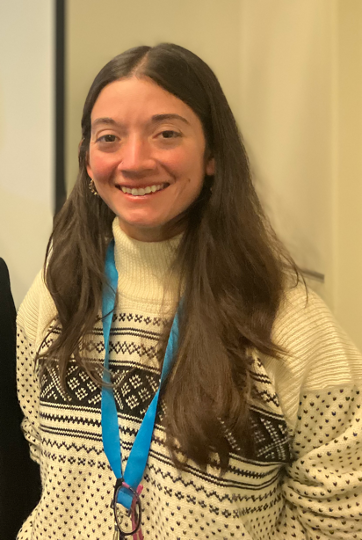
About the author:
How did you get involved in ecology?
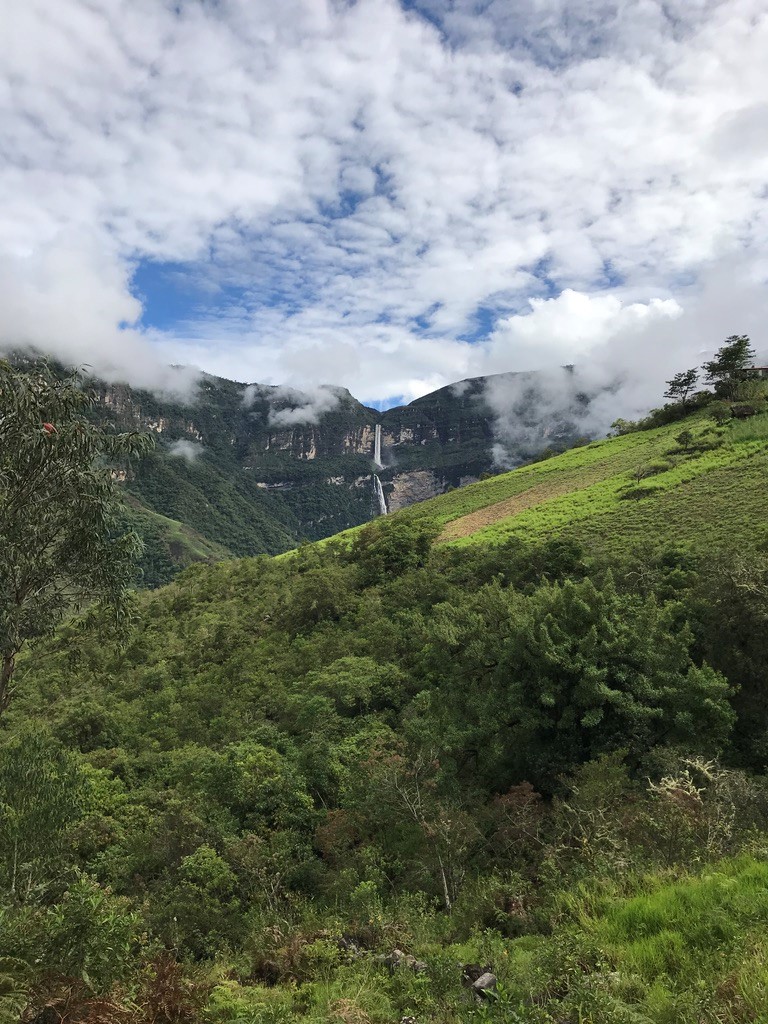
Growing up in Peru offered endless possibilities of exploring fascinating ecosystems – the Amazon Rainforest, the dessert, mangroves and wetlands, the Andean Mountain. It was a true privilege. This led me to study biology for my undergraduate, as there were no ecology career options back in Peru (and still, there are none). Biology has given me a deep understanding of life processes and ecosystems, which has been key for my conservation work. Today, I consider myself an interdisciplinary scientist, bringing perspectives from ecology, biology, social sciences, and political ecology, into my research.
What is your current position?
I’m currently a postdoctoral fellow at the School of Public Policy at the University of British Columbia. Starting this September, I will begin my Marie Sklodowska-Curie Postdoctoral Fellowship at the University of Bonn, where I’ll study how empowerment processes can foster and support the human rights of women working in fish processing facilities in Senegal.
Have you continued the research your paper is about?
Yes! Through my students, we continue to explore relational values in different conservation contexts in Peru. We are working with small-scale fishers, tourism operators, and communities living near wetlands to understand if and how these meaningful relationships exist and can become leverage points for collaboration toward nature protection.
What one piece of advice would you give to someone in your field?
Go to the field first. Get lost in the forest, talk to local people, feel the heat and the mosquitoes, look up at the trees, and listen to the wind. That experience will change how you think and feel about conservation. Also, remember that research is not just about curiosity or academic pursuit — the world needs your work, your expertise, and your perspectives. Make sure your research has a purpose that others can contribute to, feel validated by, and that can inform decision-making. And finally, find a mentor who will both challenge and encourage you — someone who might tell you that you’re a bit crazy, but that you can do it and should absolutely go for it.
Read Rocío’s shortlisted paper: ‘Not in it for the money: Meaningful relationships sustain voluntary land conservation initiatives in Peru‘.

 Relational Thinking