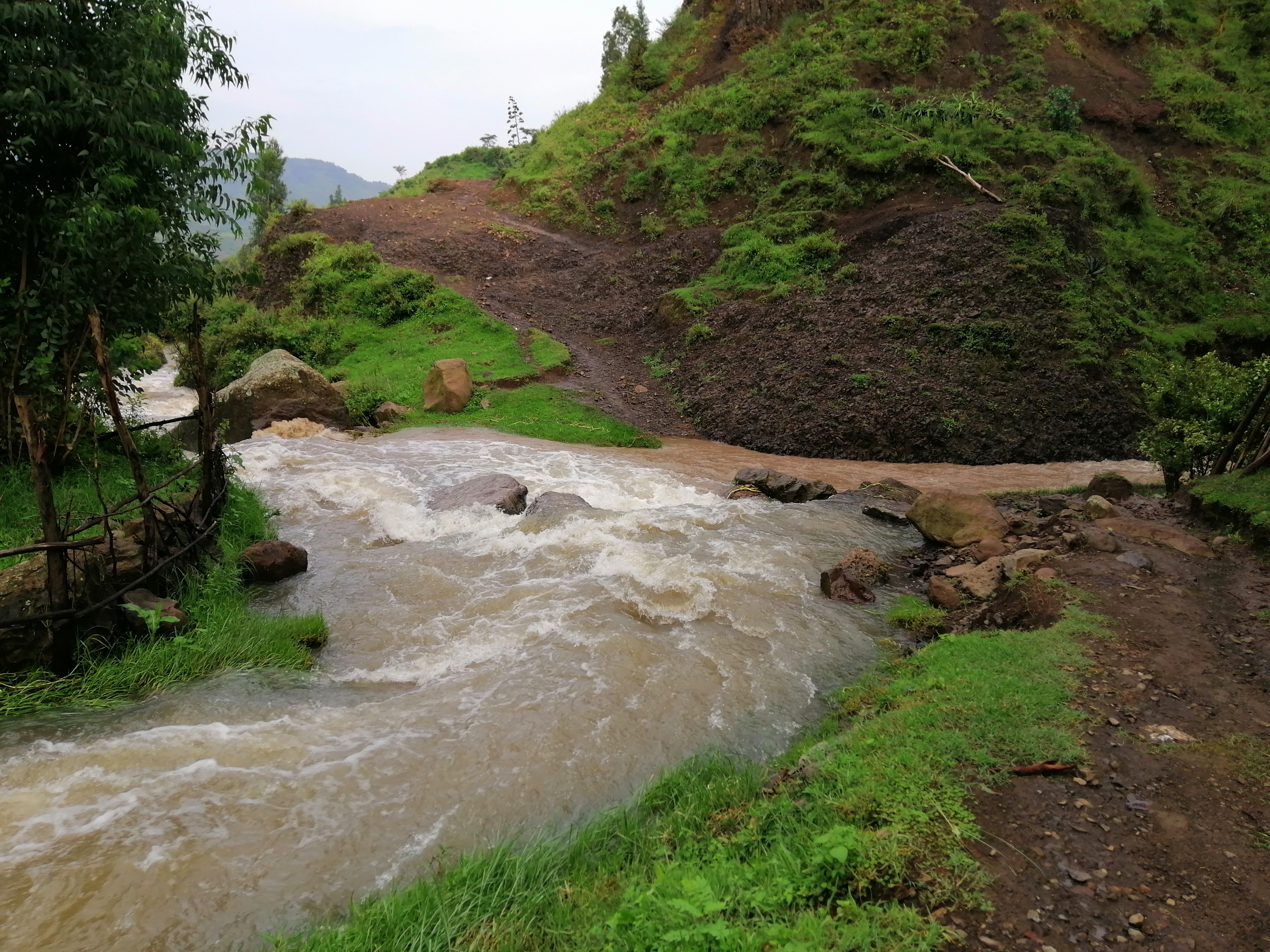
Credit: Wolde Mekuria.
By Wolde Mekuria, Wondye Admasu, Shawl Abebe, Dagmawi Negash, Tefera Getachew, Abdulkarim Hussein Seid, and Amare Haileslassie.
As climate change intensifies, small-scale agricultural producers face growing water-related challenges, increasing their vulnerability and highlighting the need for integrated and inclusive water management. We argue that effective management requires a deep understanding of the system and mapping of key stakeholders.
To address this, we conducted a study in the Borkena and Mille catchments of the Awash River basin, Ethiopia, aiming to improve agricultural water management practices and water resource planning to reduce the vulnerability of small-scale producers. We collected data through key informant interviews, focus group discussions, literature reviews, and observations. We assessed the current state of both natural and agricultural systems and their effects on small-scale producer’s vulnerability. We also performed a stakeholder analysis, mapping their roles, and power dynamics, and evaluating their influence, participation, trust levels, and experiences of exclusion or empowerment.
We found that natural and agricultural systems in the catchments are degrading, despite implementing various agricultural water management practices. A wide range of stakeholders are involved in planning and executing these practices. Stakeholders highlighted strategies such as promoting community participation, aligning plans with local needs, improving collaboration and resource access, offering capacity-building initiatives, and enhancing policy implementation to improve intervention effectiveness and reduce vulnerability. We observed a strong perceived legitimacy of stakeholders, but many had limited control over resources and weak connections with other groups. We found similarities in strategic options among stakeholders, differences in degree of influence, and moderate to considerable trust in others. We found weak coordination and cooperation in using shared resources, and many stakeholders lacked the skills required to plan and implement interventions effectively.
We argue that this lack of coordinated action could hinder the successful implementation of interventions. However, there is a strong potential for collaboration, as most stakeholders did not vary in their strategic options, and the moderate to high level of trust suggests that agricultural water management interventions could be implemented with low transaction costs.
 Relational Thinking