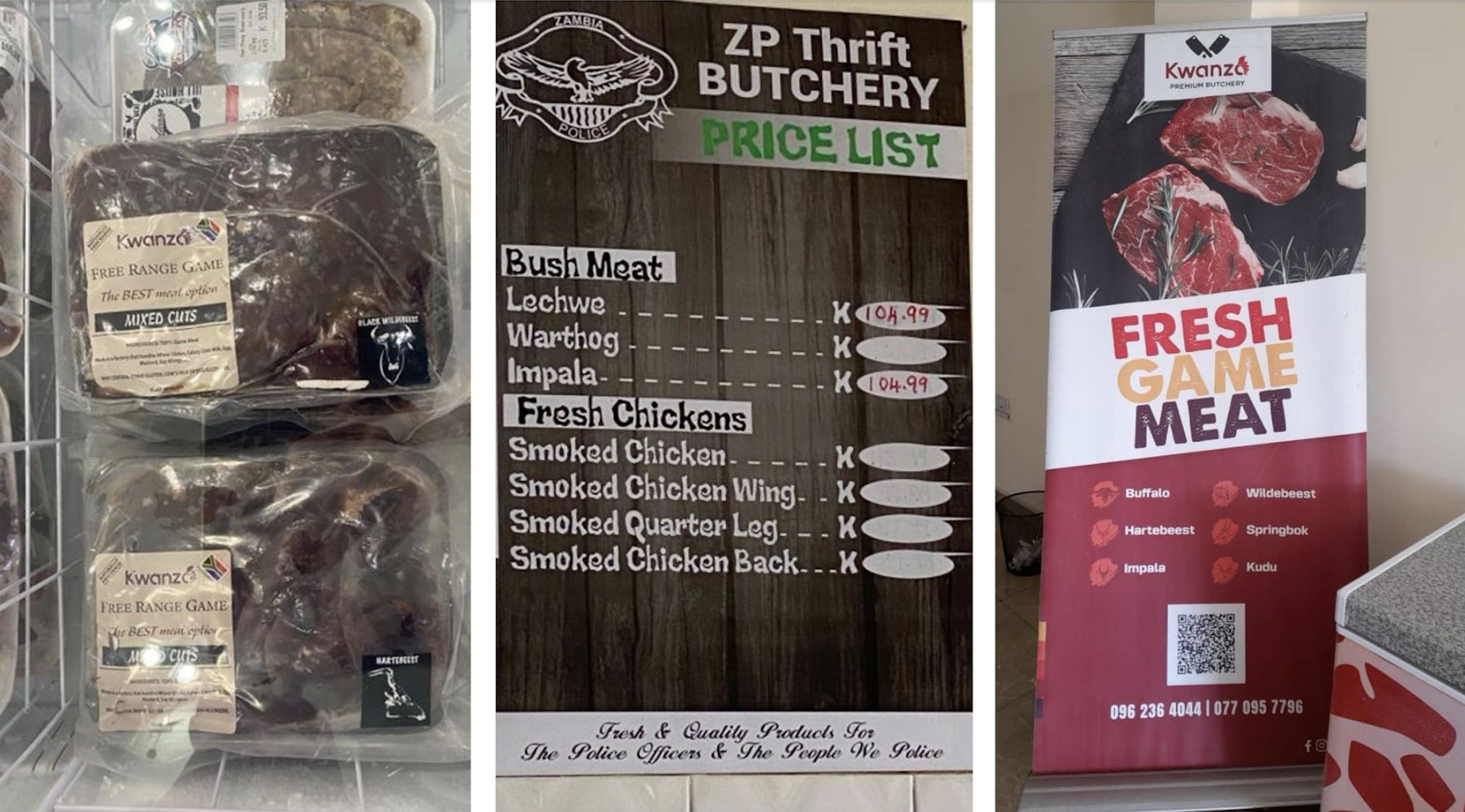
paraphernalia in Lusaka, Zambia.
By Brock Bersaglio, Charis Enns, Edgar Hichoonga, Francis Massé, Matt Sommerville, and Nathalie van Vliet.
Game meat contributes to human nutrition, food security and sociocultural practices around the world. Game meat also comes with risks, including overharvesting and disease. These risks may be pronounced where game meat travels along complex value chains from rural to urban areas. Formalising and improving regulation of the game-meat value chain is one approach to mitigating risks.
Zambia is one example of a country supporting regulation of the game-meat sector to respond to existing demand and reduce illegal hunting, mitigate public health risk and support wider socioeconomic development. We focus on the legal game-meat chain in Zambia, drawing on interviews with industry actors, game ranchers, and licensed hunters and retailers, to understand how the sector has changed, which actors are involved in what value chain activities, and barriers to participating in and benefiting from the value chain. We discuss the factor shaping uneven access to participation in and benefits from the legal game-meat value chain. We then highlight the implications for biodiversity conservation, socioeconomic development, and public health, and offer suggestions for how these may be addressed.
 Relational Thinking