Photo by Sofia Lourenço.
By Inês.T. Rosário, Patrícia Tiago, Sergio Chozas, and César Capinha.
Citizen science plays a crucial role in ecological research and nature conservation by providing valuable data, especially for studying seasonal changes in nature, such as when plants flower or insects reach adulthood. However, a challenge with citizen science data is that observations are not evenly distributed over time—some periods may have more records simply because more people are out observing. This unevenness can make it harder to study seasonal patterns accurately.
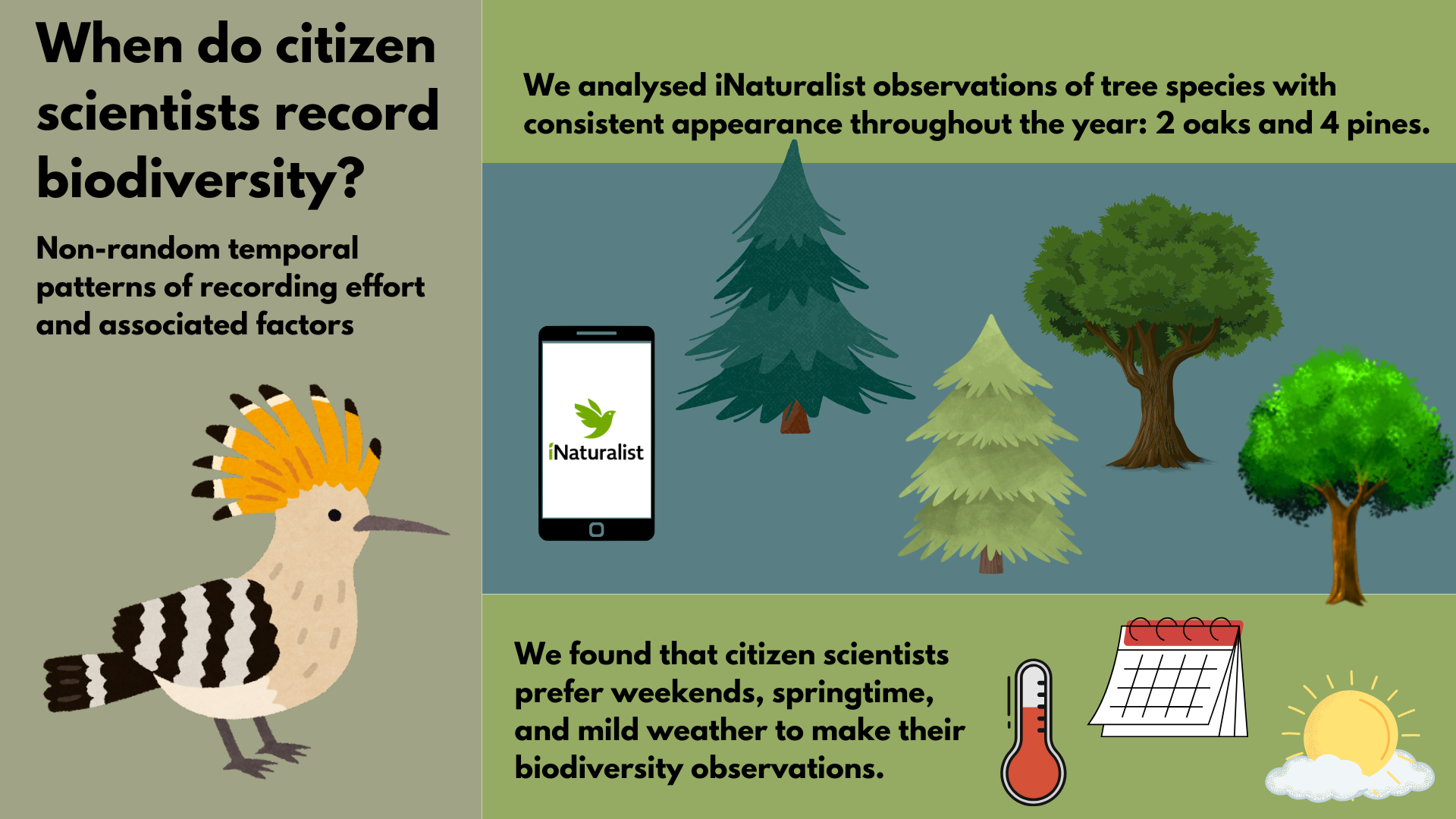
To explore when citizens are most likely to record nature, we studied six tree species in the Iberian Peninsula with minimal seasonal changes in appearance. These trees acted as a benchmark: since their appearance stays consistent throughout the year, variations in their observation numbers should primarily reflect changes in overall citizen scientist activity. We analyzed how calendar factors (for example, weekends, holidays) and weather conditions influenced recording patterns. Our findings showed that citizens recorded most frequently on weekends, Fridays, and during spring. Adverse weather, such as extreme temperatures, rain, or strong winds, were also associated with reduced recording activity, while public holidays and snow had little impact.
Understanding these patterns helps correct biases in citizen science data, improving its reliability for research. It also supports better project design, like targeting campaigns during less active periods to fill data gaps. Addressing these issues helps ensure citizen science can better support biodiversity conservation and ecological research.
 Relational Thinking