By Joon Sang Baek, Jaeyoung Myung, and Min Choe.
As our world becomes increasingly urban and digitized, children are less likely to directly experience nature. This lack of nature experience can negatively affect children’s sense of nature connection. To better understand this disconnect, we interviewed 47 urban children and 15 parents in South Korea about children’s emotions, perspectives, and experiences in nature, as well as parents’ experiences in providing nature experiences to children.
We found that children felt distant from nature, along with notable differences in perceptions between parents and children. Additionally, children expressed negative emotions and thoughts about nature, not only in direct interactions but also in virtual and vicarious interactions. Finally, children’s perspectives were mostly anthropocentric and sometimes ecological-misanthropic.
To address these issues, we propose several design opportunities:
1. Integrating Direct, Virtual, Vicarious Nature Experiences
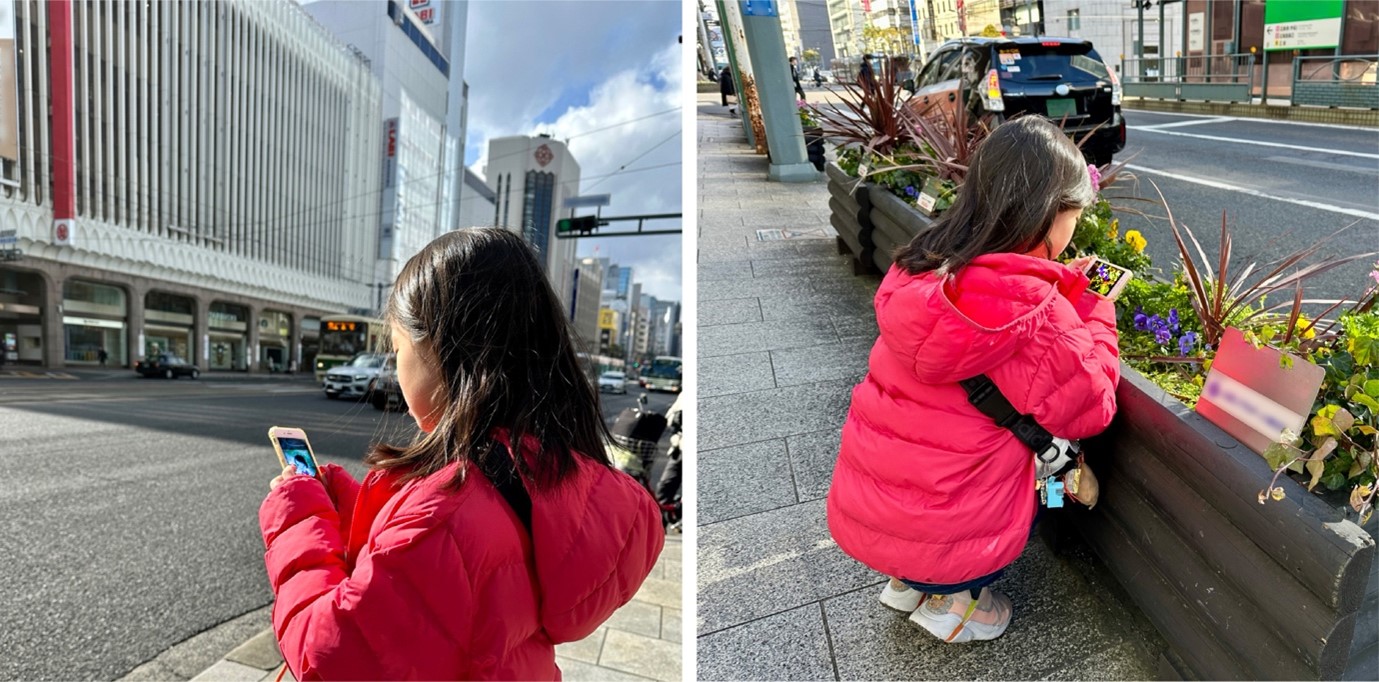
By combining direct, virtual, and vicarious interactions with nature, we can supplement children’s limited nature experiences and foster sense of nature connection. Virtual interactions with nature, including watching nature documentaries or virtual reality simulations, can complement insufficient direct nature experiences. Besides, vicarious interactions with nature like talking about nature experiences can help parents recognize gaps in their children’s lack of nature experiences and support them in creating more opportunities for children’s nature experiences.
2. Using Ludic Design to Stimulate Positive Human-Nature Interactions
Incremental and playful digital interventions can help children engage in positive nature interactions. Tailored nature interactions can reduce children’s forming negative attitudes towards nature. Through ludic design, which emphasizes unstructured, situated, and explorative play, children can connect with nature in a fun and meaningful way. These experiences can enrich children’s nature experiences and increase opportunities for new nature experiences, ultimately creating a positive cycle of nature interactions.
3. Using Speculative Design to Nurture Ecocentric Views
Speculative design can be used to encourage critical thinking about environmental issues and promote ecocentric perspectives. By imagining future scenarios and exploring the interplay between new technologies and social-ecological challenges, children can develop open-minded, reflective, and balanced thinking. This process will equip children with the skills to discern fact from falsehood, understand cause and effect, and differentiate between values and facts in today’s information-saturated world.
By implementing these strategies, we can help children develop a deeper nature connection.
 Relational Thinking