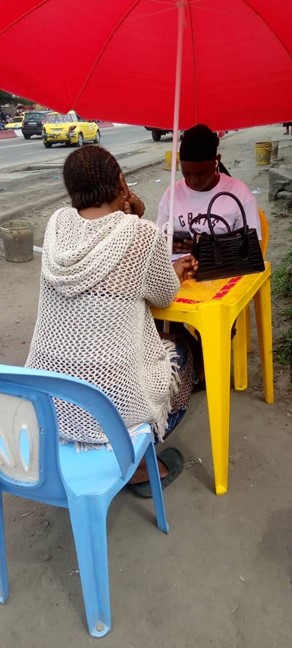
Credit: Dominique Kasongo
By Abdoulaye Cisse, Gabriel Englander, and Daniel J. Ingram.
In Central African cities, people eat wild meat for many reasons: cultural traditions, taste preferences, perceptions of it being more natural, or because wild meat is seen as a luxury that shows social status. When urban demand drives hunting to unsustainable levels, it creates both a challenge and an opportunity for wildlife conservation.
We ran two experiments in restaurants in Kinshasa, Democratic Republic of Congo:
- We showed some restaurant-goers a video discouraging wild meat consumption, while others watched an unrelated video. We then gave everyone a meal coupon to see if the video changed their food choices.
- We lowered the price of a popular chicken dish (Moambe Chicken) to see if it would reduce overall wild meat sales.
Our results hint that both approaches might help reduce wild meat consumption, but we need more research to be sure. People who saw the video about wild meat were less likely to order it, but this difference wasn’t large enough to be certain it wasn’t due to chance. When we made the chicken dish cheaper, wild meat sales went down a bit, suggesting that affordable alternatives might help.
We carefully designed our study to make sure we could trust our results. We randomly chose which video each person saw and which restaurants lowered their chicken prices on which days. This is like flipping a coin to decide who gets a new medicine in a health study. This method helps us know if any changes we see are because of what we did. We encourage more conservation researchers to use this coin-flip method in their studies, as it helps us figure out what really works to protect wildlife and can guide better conservation actions.
 Relational Thinking