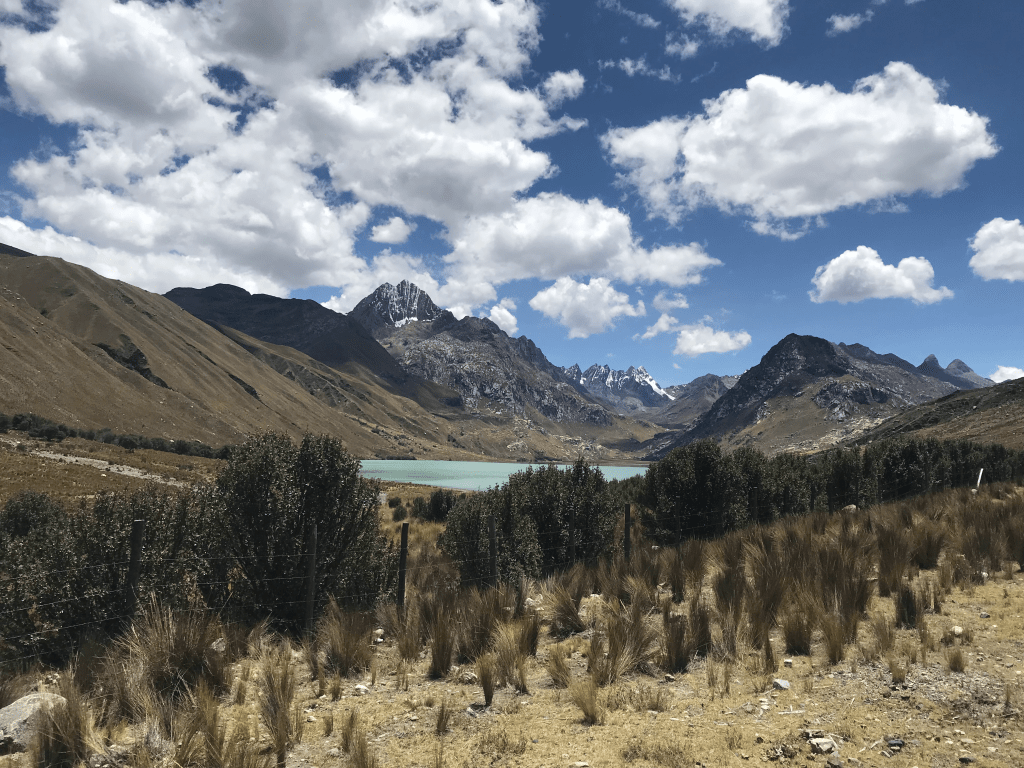
Photo by Tina Christmann.
By Tina Christmann, Isaías Cjuno-Turpo, Mayté López Aranda, Sarah Jane Wilson, Aida Cuni-Sanchez, Yadvinder Malhi, Augusto Ramirez, Vidal Rondán, Francisco Medina Castro, Marlene Mamani, Jorge Recharte, Marco Arenas, Constantino Aucca Chutas, Omar Amador Carrión Moreno, Frida Blanca Gonzalez Cabello, and Imma Oliveras Menor.
The Andes are incredibly species rich, but centuries of human over-exploitation have reduced many ecosystems such as the Andean forests. In our interactive field study, we travelled across the Peruvian Andes and visited 11 restoration sites high in the mountains. We talked to 75 people such as farmers, project managers and government actors to understand why they restore forests, what they want to achieve, and what helps or gets in the way of success.
We found that everyone involved, particularly farming communities, care most about bringing forest back to restore water resources. Many interviewees told us that the Andean forests are like ‘sponges’ that keep water in the landscape and buffer against droughts. Interviewees also value the forests for keeping the climate stable and reducing soil erosion. Overall, restoration efforts were ranked as successful across all sites with many sites visited already developed into a young forest. Social and institutional factors played a significant role in enabling success, such as community dependence on resources, the local NGOs providing support, and a project‘s design, which was participatory and guided by conservation agreements. Particularly, building long-term capacity in the community – such as by enabling communities to sustainably manage the forests and create new livelihoods – made restoration projects succeed over decades.
Andean communities prefer planting native species and useful local plants which help to retain water or improve agriculture. We also found that many interviewees don’t only want to restore forests but other ecosystems too, like the mountain grasslands and peatlands, to make sure that future water provision and their livelihoods are secured across the mountain landscapes which they inhabit. So, to make sure that restoration projects achieve success in this decade of restoration and beyond, we need to focus our efforts on improving water resources, involve communities in the process from the very beginning, and make sure that benefits last well beyond the project termination.
 Relational Thinking