By Michael Rzanny, Anke Bebber, Hans Christian Wittich, Alice Fritz, David Boho, Patrick Mäder, and Jana Wäldchen.
A recent study by Hart et al. tested the identification accuracy of five free plant identification apps, focusing on the user scenarios of trained field ecologists. The apps identified more than 800 images of over 250 plant species. On average, the results were satisfactory, but individually, the apps fell short of what other publications had previously shown. To continue exploring the accuracy of free plant identification apps, we respond to Hart et al., with the aim of helping reinterpret the results of automatic, image-based identification. After considering some factors contributing to the reported accuracy, our evaluation shows that plant identification apps can provide more than just an initial orientation or a quick result.
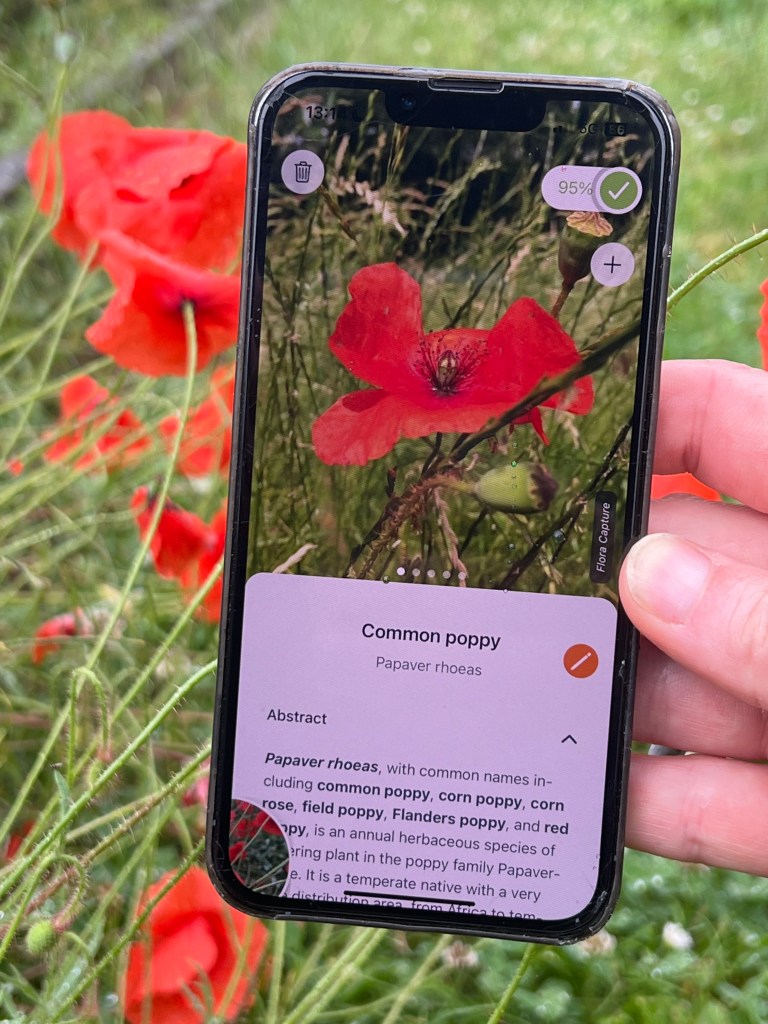
Our paper explains how we re-identified the provided test images with another plant identification app (Flora Incognita), as Hart et al. had not tested this application and previous publications under similar test conditions had already shown good to very good accuracy. Flora Incognita achieved an accuracy of over 98% on the image dataset and, therefore, performed significantly higher than the other apps tested. This led us to examine the reasons why the other apps returned the wrong identifications. It turned out that there are four reasons for a mismatch between expected and returned species identification:
- Firstly, the taxonomy, which is constantly changing. Many plants have synonymous names, and a supposedly incorrect identification is, in many cases, just a previously unknown synonym of the species.
- The second factor is human error. Mistakes happen, and it may be that the application is correct and the researchers have made the wrong identification.
- Of course, the app prediction can be wrong, either because a plant was photographed at a stage when it cannot yet be identified to species level or the image recognition algorithms fail to deliver the correct result.
- The image shows multiple species. The original label may refer to one of these species, while the app prediction refers to another.
Our re-analysis showed that the apps can be trusted to do more than you might think. In many cases where several apps gave a different result than expected one, it turned out the underlying human identification was wrong. This could indicate that AI-supported plant identification works better than expected and could be used, for example, to detect misidentifications in scientific image collections.
 Relational Thinking