For Black History Month 2024, the British Ecological Society journals are celebrating the work of Black ecologists from around the world and sharing their stories.
Piata Marques is an ecologist who sees natural wonders behind the concrete of our cities. Through those lenses he studies the interaction between people, ecology and evolution in urban aquatic ecosystems. He is currently a researcher at the University of Toronto, Canada. You can find more info about his research at https://piatamarques.wixsite.com/website. As a Black ecologist, he strives to support BIPOC students in STEM through the Odu initiative https://oduinitiative.wixsite.com/my-site.
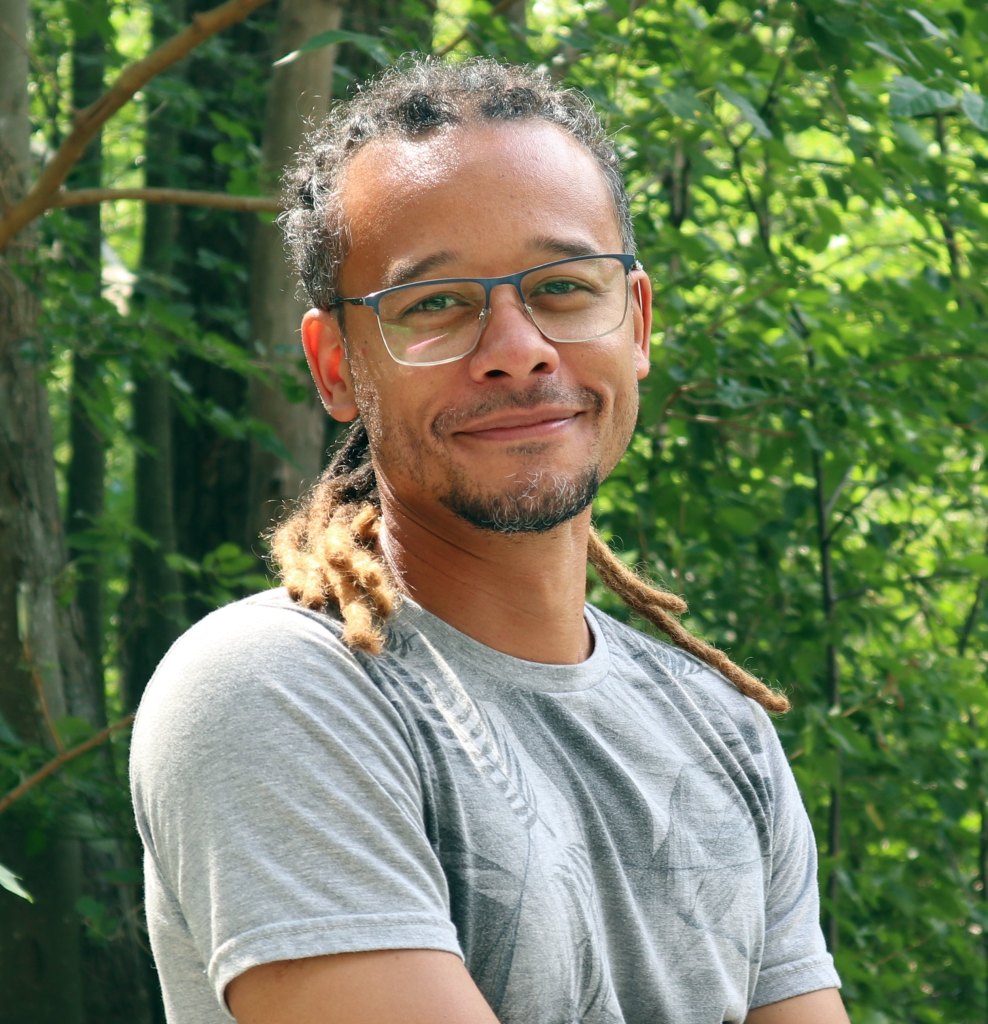
As a Black Latinx scholar, I often find myself in between providing support to students struggling with racism, while enduring myself the discomfort that structural racism brings into academia. In this position, I see my blog posts (here and here) as opportunities to report lived experiences and bring awareness to structural racism in academia. I do that hoping academia advances towards effective actions that promote diversity, equity and inclusion -DEI. In this blog post I bring you a glimpse of what racialized scholars may have to overcome when attending conferences.
As years pass, and diversity initiatives advance (slowly, but steady), it is surprising to me that some scientific conferences are still organized with little to no regard for DEI. The fact that this topic has been extensively discussed in multiple papers (e.g. Miriti 2020; McGill et al. 2021), leads me to believe that such conferences are either uninterested in promoting DEI (reinforcing structural processes that excludes minoritized groups) or they have been badly unaware.
I have recently attended an internationally recognized conference. Following a long flight, hotel check in and conference check in for name tag, there I was bright and early seated at the back row of the opening plenary. I was excited because, from my experience, opening plenaries give the tone of the conference. After a beautiful spiritual opening ceremony celebrated by an indigenous elder, the opening plenary speakers took the stage. It was not without frustration that I saw a very homogenous plenary of speakers, no visual diversity there. That made me wonder if the opening ceremony was the diversity checkmark for that conference. I was agitated, I could not stop thinking about the visible minorities, the great BIPOC, LGBTQIA+, indigenous and female scientists that I know could be on those seats.
It took me a few minutes to leave my thoughts and turn my attention to the audience. As many minoritized individuals, I have learned to read the diversity in the room. This often gives me a hint at the number of barriers I will have to overcome. It was with no surprise that I realized the overall lack of diversity on the audience. I immediately felt I did not belong there. I was shocked that an international conference on a topic of global interest was so homogenous. And, as my reading of the diversity in the room indicated, there would be some more barriers to overcome.
On the third day of the conference, some colleagues and I were approached by a white male also participating in the conference. He asked us what we thought about scientists being “activists” when he overheard a comment from us about the lack of diversity in the opening plenary. His question was followed by a storm of furtive racist and misogynistic arguments to undermine DEI actions in academia. I attempted to argue about why DEI is important by talking about some of my experiences navigating racism in academia, to which he laughed. For me, that was the end of a very exhausting argument and a grueling experience.
I left that conference deep in my thoughts. I was felling distressed and frustrated to learn that, despite all the DEI work myself, my colleagues and institutions have been developing in the last years, some conferences are still breeding ground for chauvinistic, anti-DEI discourse. This is unacceptable. We can no longer force minoritized groups to endure a hostile academic environment. How to make it better is already described in numerous published papers. Conference organizes should take responsibility and act towards DEI now. We can no longer wait.
Cited references :
- McGill BM, Foster MJ, Pruitt AN, et al (2021) You are welcome here: a practical guide to diversity, equity, and inclusion for undergraduates embarking on an ecological research experience. Ecology and Evolution. https://doi.org/10.1002/ece3.7321
- Miriti MN (2020) The elephant in the room: race and STEM diversity. BioScience 70:237–242. https://doi.org/10.1093/biosci/biz167
 Relational Thinking