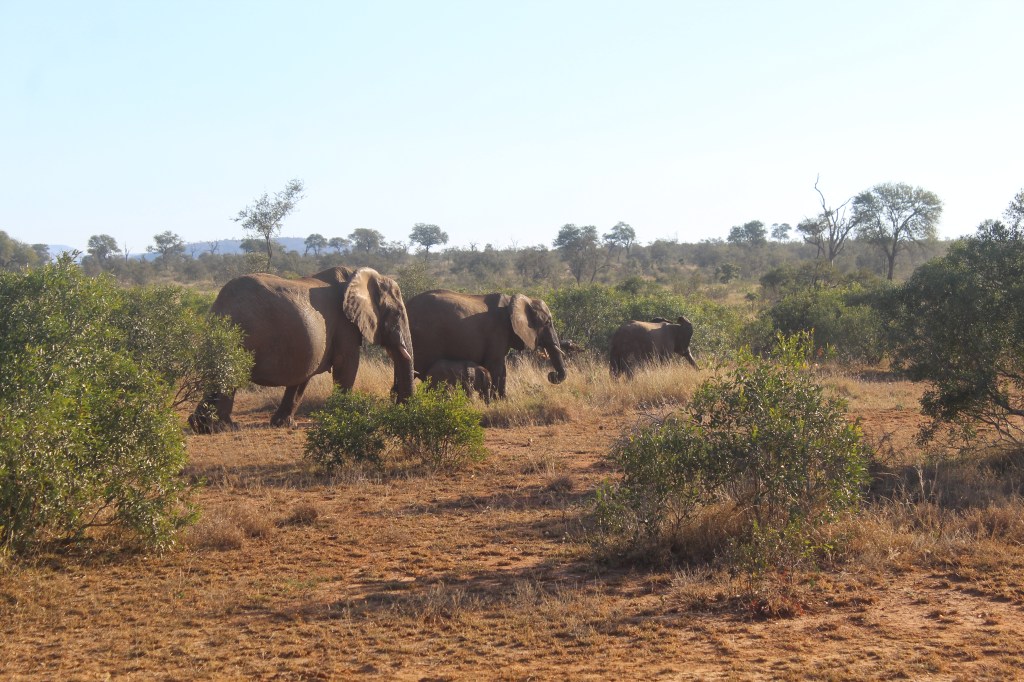
Source by author Karoline Azevedo.
By Karoline Azevedo, Fernanda Alves-Martins, Javier Martinez-Arribas, Ricardo A. Correia, Ana C. M. Malhado, and Richard Ladle.
Protected areas in sub-Saharan Africa are essential hubs for wildlife enthusiasts and vital contributors to national economies. However, despite their immense cultural, economic, and conservation value, these areas are under threat from various development pressures, which often result in authorities downgrading the protected status of the parks by decreasing legal restrictions on human uses, downsizing the parks, or even removal of the land from protected states, known as degazettement. Collectively, public area downgrading, downsizing, and degazettement is known as “PADDD”.
To understand the vulnerability of public areas, we examined 322 national parks in sub-Saharan Africa, focusing on the dynamic between development pressures that could cause PADDD, and public interest in the park. We gauged development pressure based on park management plans—documents that help managers drive these areas in harmony with the interest of people who life around the parl. We gauged public interest in the parks through Wikipedia page views.
Alarmingly, we found that even among parks that are popular on Wikipedia, fewer than 30% of these parks have or share information on management plans. This lack of strategic planning is particularly worrying, given that almost 90% of National Parks that experienced PADDD also lacked such plans. While our study didn’t find a direct connection between tourism and digital interest, tourism does appear to play a role in mitigating PADDD, alongside high levels of peace. In other words, if a park has high tourism and the country in which it is located has fewer violent conflicts, the park is unlikely to suffer PADDD. Interestingly, we observed that PADDD was more common in areas which the people most access on Wikipedia. Alongside those who in rich countries with higher external interventions.
Effective conservation strategies in sub-Saharan Africa demand a comprehensive grasp of historical, socio-economic, and cultural dynamics. Additionally, digital indicators of public awareness and interest can serve as valuable tool for the political resilience of protected areas. Looking forward, as our world becomes increasingly digital, monitoring the relationship between humans and nature in the digital sphere will be pivotal in crafting inclusive conservation strategies.
Interview with the corresponding author:
What was the inspiration for this article?
At the beginning of my PhD, I was introduced to the TROPIBIO project at the University of Porto. Among its many goals, TROPIBIO aims to enhance conservation capacity in Africa through research, collaboration, communication, and outreach concerning tropical biodiversity and conservation. Initially, we considered focusing on Lusophone African countries, but then we thought, why not broaden the scope? This led us to explore an approach that had been applied in Brazil by another member of our research group, and we decided to adapt and expand it by incorporating factors that could be relevant to the African context.
How does your article inform future research?
Conservation culturomics is becoming an increasingly popular approach in the field of conservation. Given that our world is becoming more digital and interconnected, we believe it is crucial to develop tools that can further address conservation challenges. As digital advances continue at a steady pace, our understanding and technologies in this area must keep up. We hope our work can contribute to assessment methods, decision-making, and management of natural areas and resources, ultimately supporting the success of global conservation goals.
Why did you choose People and Nature for your research?
I am part of a Federal University in northeastern Brazil that conducts impactful research and is always seeking journals committed to the dissemination of knowledge. We chose People and Nature for its credibility and impact within the scientific community. Although two of the co-authors are associate editors of the journal, they were not involved in the review process or in influencing the positive outcome of our publication in People and Nature, beyond their direct contributions to the research.
 Relational Thinking