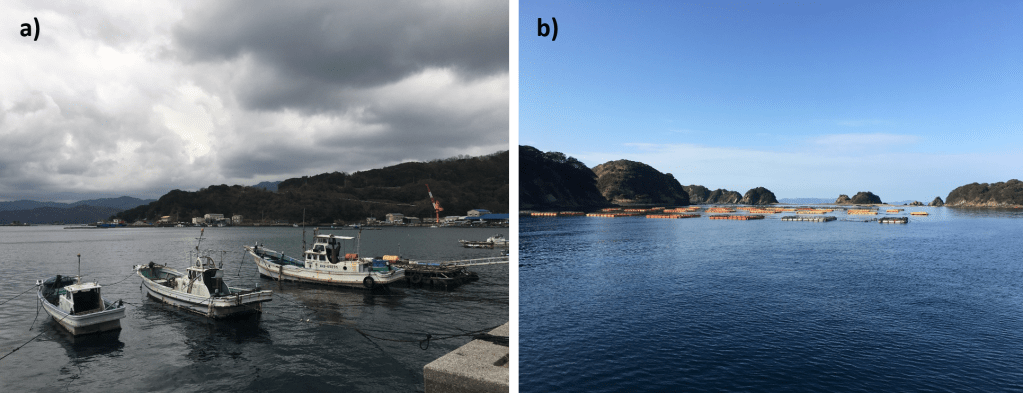
rights-based fisheries along the coast of Shikoku.
By Xochitl Édua Elías Ilosvay, Naoki H. Kumagai, Jorge García Molinos, and Elena Ojea.
Climate change is warming the oceans, causing tropical fish to move into temperate waters. This “tropicalisation” disrupts local marine life and affects coastal fishers who depend on these resources for their livelihood. This research examines how fishers along the western coast of Shikoku, Japan, adapt to these changes.
We focused on three regions with different levels of tropicalisation along the Western coast of Shikoku: the North (low tropicalisation), the Center (medium), and the South (high). By interviewing 92 small-scale fishers from 25 locations, we learned about their responses to these environmental changes. Fishers either chose to remain and keep their traditional practices, cope by making small adjustments, adapt by significantly changing their methods, or transform by completely altering their way of life.
Our findings showed that fishers in the Central region, with medium tropicalisation, were most likely to cope and adapt. In contrast, those in the Northern and Southern regions mostly chose to stay with their traditional practices. Interestingly, high tropicalisation in the South did not lead to more transformative changes, possibly because many fishers had already left the industry due to previous impacts, as seen in a population decline over the past 30 years.
This study highlights how different levels of tropicalisation affect fishers’ responses, showing a complex relationship between climate change impacts and their ability to adapt. It provides important insights into the challenges faced by coastal communities in a changing climate and underscores the need for tailored support to help them navigate these shifts.
 Relational Thinking