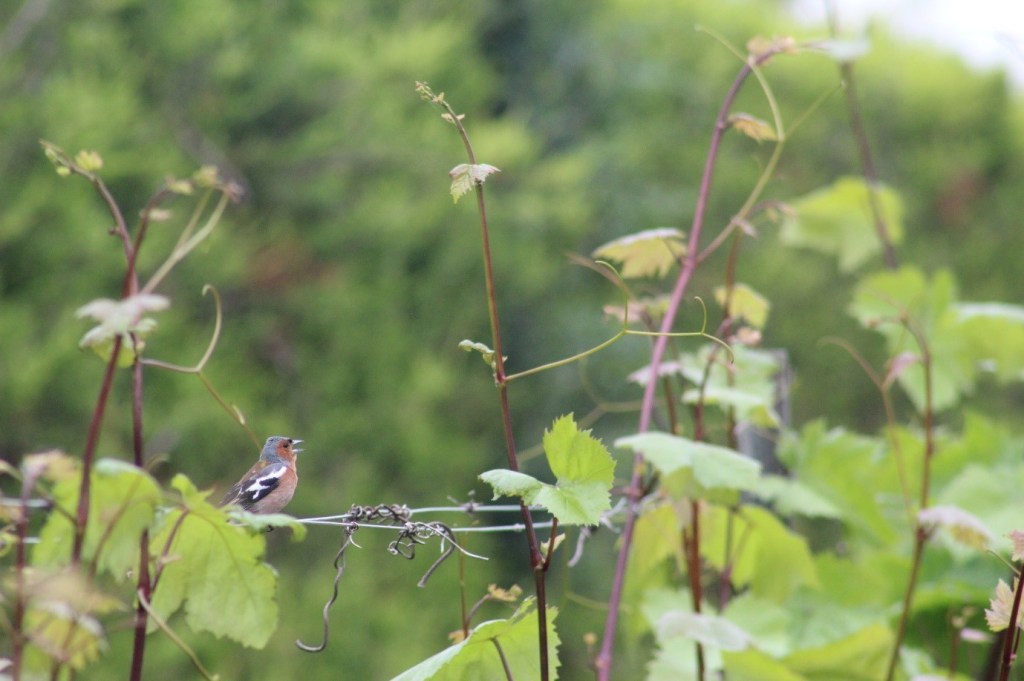
Photo credit: Natalia Zielonka.
By Natalia B. Zielonka, Victoria Tubman, Lynn V. Dicks, and Simon J. Butler.
Have you ever paid attention to the sounds around you when out for a walk? Perhaps you noticed the sound of traffic, wind or some chirping birds? Sounds are all around us and collectively they form ‘soundscapes’, which play an important role in our experience of the outside world. However, unprecedented biodiversity declines are silencing natural soundscapes, whilst the sounds of ever-increasing urbanisation are becoming dominant. Together, these changes are decreasing our opportunities to engage with nature. Experts have found that lack of access to nature is linked to poorer mental and physical health.
To understand the direct contributions of sounds to our experience of nature, we studied soundscapes in English vineyards and measured their effect on vineyard visitors’ experience of tours. Typically, agricultural landscapes are associated with limited wildlife, and they are under mounting pressure to promote biodiversity. Our study investigated the wider-reaching benefits that conservation initiatives in vineyards could bring. To mirror what soundscapes with more bird song may sound like, we hid speakers in vineyards along tour routes which played additional birdsongs and created ‘enhanced soundscapes’, that were louder and more diverse. At the end of tours, we collected responses from visitors through a survey to measure their tour experience.
Vineyard visitors who experienced our enhanced soundscapes reported improved tour experience, and showed stronger agreement with statements that the sounds in the vineyard were appealing and made them feel engrossed. This resulted in our visitors feeling freer from work, routine and responsibility, and being more relaxed and optimistic during the tours. This demonstrates that soundscapes composed of richer birdsong help us have a mindful experience of nature, which benefits our wellbeing, and it highlights the importance of sounds in nature engagement.
As biodiversity is under threat and human lives become increasingly urban and disconnected from nature, it is more important than ever to conserve biodiversity and to create new and accessible opportunities to experience nature. Our findings demonstrate how delivering bird conservation in vineyards could simultaneously enhance our experience of spending time in nature, elicit positive emotions and benefit our wellbeing.
 Relational Thinking