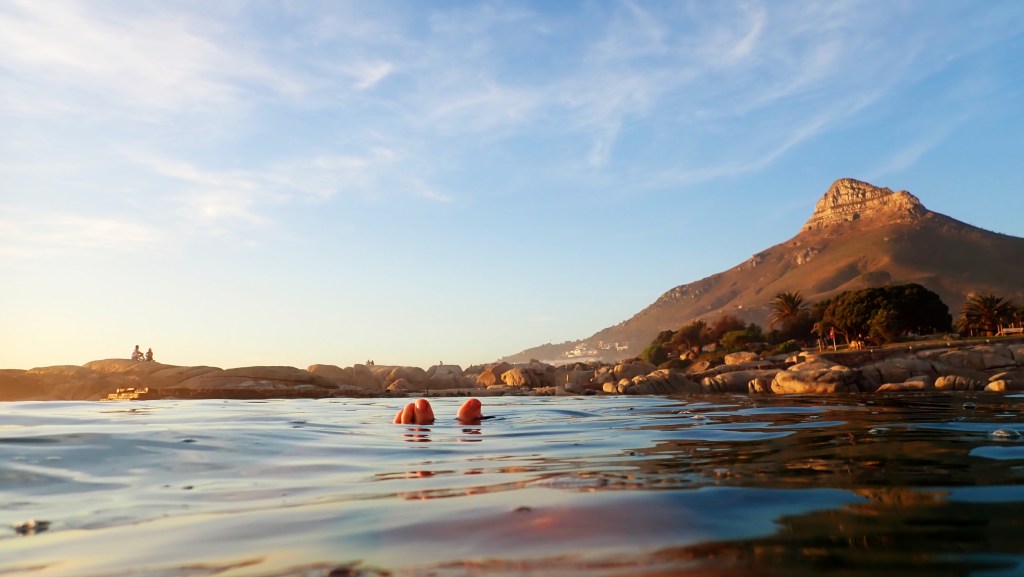
Credit: Mia Strand.
By Buchan, P.M., Glithero, L.D., McKinley, E., Strand, M., Champion, G., Kochalski, S., Velentza, K., Praptiwi, R.A., Jung, J., Márquez, M. C, Marra, M.V., Abels, L.M., Neilson, A.L., Spavieri, J., Whittey, K.E., Samuel, M.M., Hale, R, Čermák, A., Whyte, D., West, L., Stithou, M., Hegland, T.J., Morris-Webb, E.S., Flander-Putrle, V., Schiefer, P., Sutton, S., Onwubiko, C., Adeoye, O., Akpan, A., and Payne, D.L.
Marine citizenship – people exercising their right to be involved in marine decision-making and taking responsibility for the ocean – is an important policy area for marine sustainability. Although knowledge about the marine environment and people’s values are linked to people valuing the ocean and wanting to take care of it, there is a known gap between knowledge and values and people actually taking action. Marine identity potentially fills this gap and understanding it will help to effectively encourage marine citizenship. Our study will inform future research into marine identity, supporting the goal of the UN Ocean Decade Challenge 10 to restore society’s relationship with the ocean.
A diverse group of marine researchers and practitioners came together in 2022 to discuss our shared and different understandings of marine identity. The discussion took place online enabling people from all over the world to join, and was supported by participants sharing images (photovoice method) responding to the question “What is marine identity?”.
We found marine identity included common themes such as traditions and customs; dependency upon the ocean for recreation, livelihood, health and sustenance; an important of the physical nature of the ocean; and elements of the theory of identity process.
We also found differences, for example, negative ways the ocean can form part of identity, particularly for coastal communities or livelihoods at risk of extreme weather. And there were variations in relation to the kind of marine identity for people living inland, on rivers, or at the coast.
We agreed upon a broad definition of ‘An identity rooted in how the ocean as a place supports the sense of self’. It is to recognise that there are multiple types of marine identity, because it comes from a wide range of social and physical relationships with the ocean. We give case study examples of some of these forms demonstrating that individual marine identities are deeply affected by the behaviour of others that qualify these identities.
In sharing our findings, we support the renaming of Challenge 10 to “restore society’s relationship with the ocean”. Some groups need not change their behaviours towards the ocean at all, while other damaging or otherwise negative behaviours ought to be identified and targeted.
 Relational Thinking