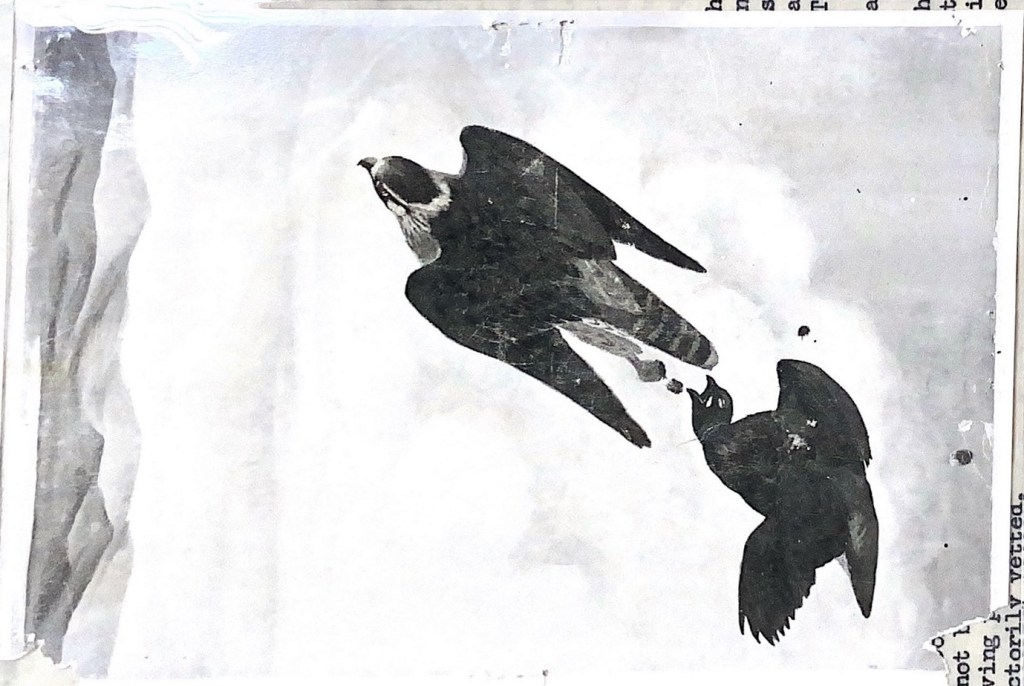
Image from KV4/10, The National Archives.
By Brandon Mak.
Conservation practices and wildlife laws are important ways to inform how people relate to specific animals. The peregrine falcon is a highly protected bird that people in the UK cherish and its protection may inform that relationship. However, sometimes conservation policies shift in a way that contradicts social norms of species protection. For instance, recent exceptions that weaken peregrine conservation policies conflict with the broad social norms in support of peregrine conservation.
To make sense of these events, we need to know how the species’ cherished status became the norm, and other ways British society related to the falcon. Here, I reviewed 150 years of developments in UK wildlife legislation surrounding the peregrine, including the politics and events that influenced the policy. My research found that implementing wildlife policies created ‘winners’ and ‘losers’ in the process. Pigeon fanciers’ interests were drowned out by ornithologists’ who were interested in conserving peregrines, which hunt pigeons. But when pigeons were used as messengers in war, pigeon fanciers’ interests in controlling peregrines were elevated and mainstreamed, resulting in peregrine culls, which protected the messenger pigeons. Meanwhile, the need to stop enemy messenger pigeons leaving Britain paved the way for the use of trained raptors, which led to policies permitting the capture of wild peregrines for use in falconry during and after the war. However, post-war peregrine population crashes combined with global environmental movements affected domestic wildlife policy and placed peregrine protection on the pedestal. While ecologically successful, this alienated pigeon racers and falconers and further cemented public perception that peregrine protection was the only norm.
One lesson of this history is that when implementing conservation policies, one must consider the social implications: who wins and who loses? Policy changes may also become controversial when there is a mismatch between communities surrounding conservation philosophies, such as preservation for a species’ sake versus equitable models reflecting human interests. Such factors underlying conservation conflicts become evident through historical approaches, promising constructive ways forward to understanding and managing conflicts with wildlife.
 Relational Thinking