By P. Priadka, B. Moses, C. Kozmik, S. Kell, and J.N. Popp.
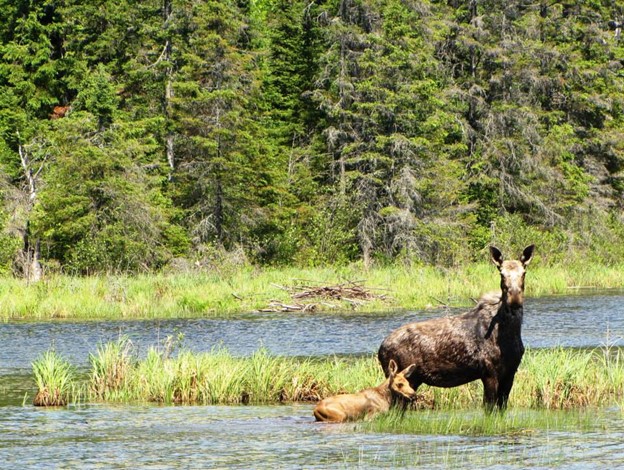
The benefits of weaving different knowledge systems to address biodiversity decline is being recognized globally. Our study employed a “Two-Eyed Seeing” approach, blending Anishinaabe ecological knowledge and western scientific literature to offer a comprehensive understanding of the factors impacting mooz (Anishinaabe word for moose) decline. Moose decline poses significant threats to Indigenous communities, affecting food sovereignty, cultural traditions, and overall well-being.
We wove information collected during interviews with 66 participants from three Anishinabek communities and a review of 52 western scientific studies, revealing a convergence of perspectives on key factors driving moose decline. Both knowledge systems highlighted the impact of climate change and disease/parasites on moose and offered unique insights into those effects. Western science identified the importance of spring onset and green-up on recruitment success, while Anishinaabe knowledge emphasized the timing of the rut. Anishinaabe knowledge further highlighted the influence of hunting practices on moose populations, while scientific studies focused on habitat disturbance and predation. Challenges related to reconciling spatial scales in knowledge systems were evident, emphasizing the importance of considering factors at both community and management unit levels.
Overall, weaving knowledge systems yielded a nuanced and wholistic understanding of factors contributing to moose population decline. Our study showcases the value of weaving diverse knowledge systems in ecological research, particularly when dealing with declining species of cultural importance. A collaborative approach not only contributed to a better understanding of species decline but can also support sustainable conservation practices that respect both Indigenous and western-science perspectives.
 Relational Thinking