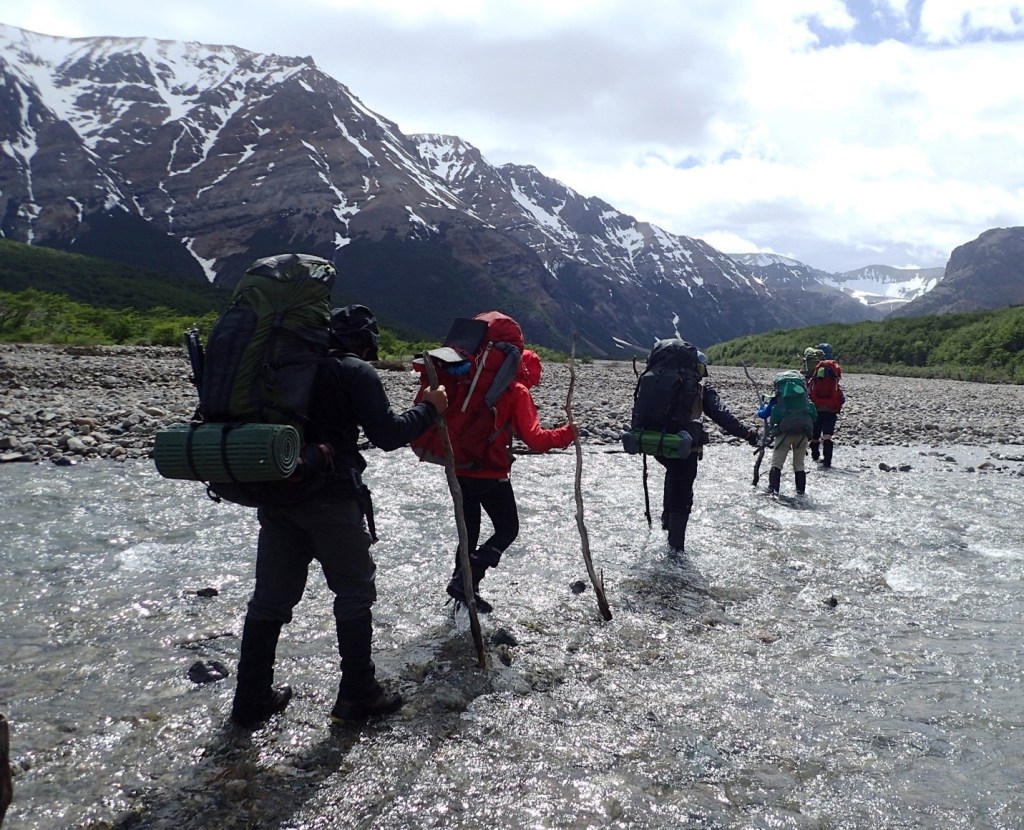
Raymus8, CC BY-SA 4.0 <https://creativecommons.org/licenses/by-sa/4.0>, via Wikimedia Commons
By Garrett Hutson, Julia Baird, Christopher D. Ives, Gillian Dale, Jennifer Holzer, and Ryan Plummer.
We wanted to find out what aspects of outdoor adventure education programmes promote pro-environmental behavioral intentions among participants. One of the most common transferable outcomes of outdoor adventure education is the ability to serve in a leadership role. As humans continue to drive the planet on an unlivable trajectory, research is urgently needed to identify the design features of education programmes that create and sustain both nature connections and actions of care for the planet.
Using an online survey, we collected 202 responses from NOLS (formerly the National Outdoor Leadership School), a global outdoor adventure education programme which facilitates wilderness expeditions across the world for the purposes of developing outdoor skills and leadership. We focus on an open-ended question, “What aspects (if any) of your NOLS experience do you think will help you engage in environmentally sustainable behaviours in the future?” Our results showed the aspects of the programme that helped to promote pro-environmental behaviour intentions were the building of conservation and environmental issue awareness, the practice of minimum impact techniques, and engagement in waste and food management. These programme aspects were produced through different types of learning related to structural, environmental, interpersonal, and intrapersonal factors.
An exciting finding from our study is that all types of learning contributed relatively equally to building environmental awareness. This finding indicates that awareness is being reinforced in diverse ways in an educational context and contributes to a clear relationship between learning mechanisms and environmental awareness that until now has not been clearly established. As a go-between, building environmental awareness alone may not directly result in pro-environmental behaviour. However, among motivated individuals who self-identify as leaders, this study showed that well-designed programmes that increased awareness of environmental issues can activate latent potential for action. Overall, this article makes an important contribution through highlighting the links between different types of learning and the formation of individual pro-environmental behaviour intentions needed to protect the health of the planet within an education leadership development context.
 Relational Thinking