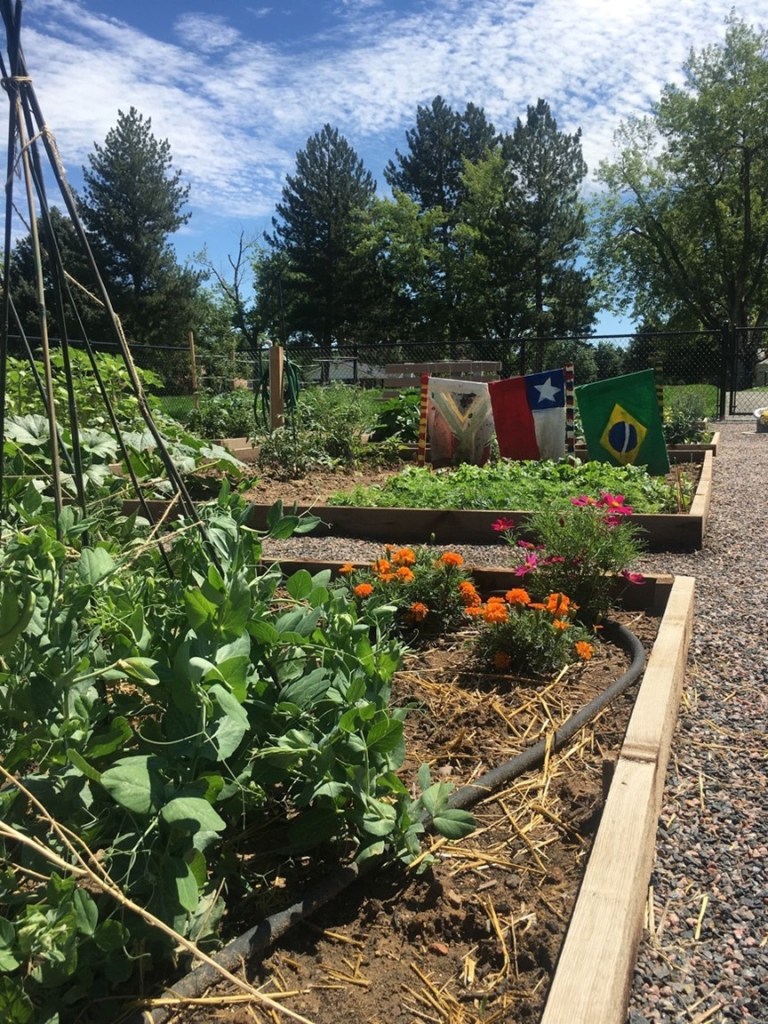
Photo credit: Eva Coringrato.
By Katherine Alaimo, Eva Coringrato, Kristin Lacy, James R. Hébert, and Alyssa W. Beavers.
Community gardening has gained significant attention in recent years as a way to improve public health. It offers numerous benefits such as encouraging healthier behaviors, improving mental and physical health, and increasing access to green spaces. Our study aimed to identify key aspects of gardening that are meaningful to people, help them stay involved in gardening, and contribute to their mental and social wellbeing.
We conducted qualitative interviews with 34 adults who were new to community gardening and took part in a randomized controlled trial undertaken in collaboration with Denver Urban Gardens in Denver, Colorado, USA. Our analysis of the qualitative interviews revealed several important findings. New gardeners found fulfillment in growing their own food and being physically active in the garden. In addition, gardeners were in relationship with their gardens as active participants and experienced what we termed a “gardening triad,” consisting of: (1) a sense of responsibility for their gardens, and nurturance and love toward their plants, (2) feelings of pride and a sense of accomplishment, and (3) feeling connected to nature, which included appreciation, restoration, and wonder. The elements of this “gardening triad” were valuable to participants and motivated them to continue gardening. In addition, the “gardening triad” contributed to various social and emotional benefits including forming new and reinforcing existing social relationships; finding purpose and meaning; gaining self-confidence and feelings of self-worth; experiencing joy and relaxation; and managing mental health conditions. Gardening with others, whether fellow gardeners, leaders, or friends and family, enhanced these positive effects.
Understanding how gardening enhances health and wellbeing is important, particularly when designing nature-based health programs. Gardening, as an avenue for improving wellbeing, should be supported widely.
 Relational Thinking