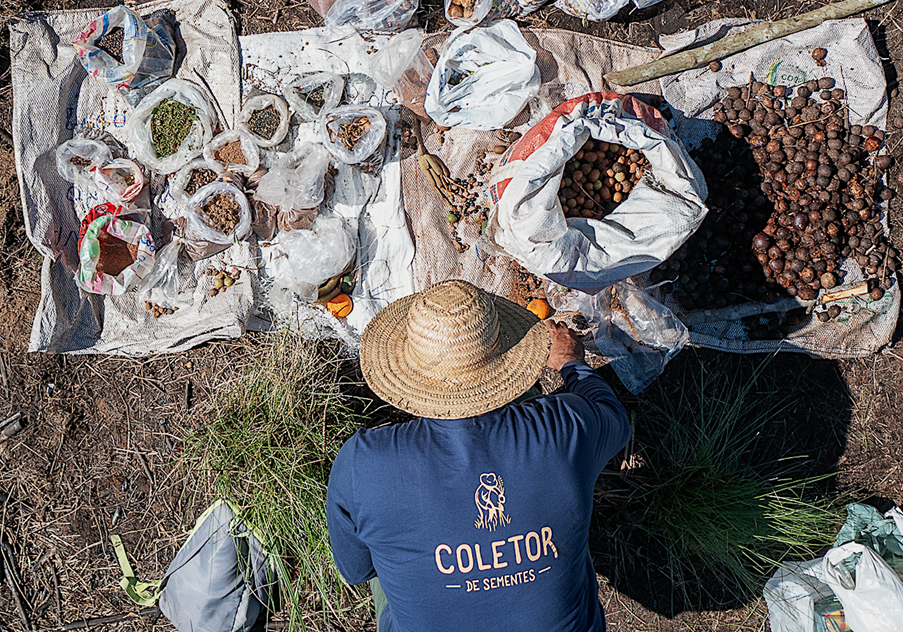
Photo: Andre Dib.
By Padovezi, A; Adams, C. Chazdon, R.; Mendonça, M. A.; Secco, L.; Campos-Filho, E. M.; Sampaio A.B.; Damasceno, E.; Albuquerque, N.; Santarem F.; Camargo, M.E.; Pinã-Rodrigues, F.
We live in a time where people from diverse backgrounds and countries are joining forces to restore social and ecological landscapes to tackle the impacts of climate change and biodiversity loss. Our shared belief in the value of nature and our urgent need for a fairer and sustainable future fuel this movement. However, restoring landscapes is no small feat. It requires collaboration and overcoming challenges like weak governance, limited funding, and disorganised supply chains. Native seeds play a crucial role in the endeavour to restore landscapes, especially when natural ecological regeneration is not possible. This is why Native Seed Collector Networks are important players. These networks have been instrumental in producing and distributing native seeds, improving the supply chains for ecological restoration efforts.
Our research focused on Native Seed Collector Networks in Brazil. We discovered that these networks are at the forefront of social-ecological innovation. They have successfully connected local ecological knowledge with other systems and practices, resulting in social innovations that manifest through collective actions. By doing so, these networks enhance the effectiveness of restoration initiatives and bring tangible benefits to local communities.
These seed networks also empower marginalised groups, strengthen the relationship between humans and nature, and increase social participation in decision-making processes concerning landscape use. We learned that when traditional communities such as Indigenous, Geraizeiros, and Kalungas exercise their agency and collaborate with other key actors, they can break free from old patterns and drive towards transformative change.
Furthermore, we have noticed that public organisations play a crucial role in creating an enabling environment for social-ecological innovators. Experimentation and partnerships across different sectors are vital for overcoming challenges and finding innovative solutions in complex social-ecological systems.
In Brazil, social innovations in Native Seed Collectors Networks are catalysing transformative change through the forest and landscape restoration chain. By sharing knowledge, encouraging active participation and promoting collective action, these networks empower marginalised communities and contribute to the United Nations Decade of Ecosystem Restoration goals.
Recognising the socially innovative role of these networks can lead to expanded partnerships and increased funding sources. Ultimately, this will strengthen the global restoration effort and help to build a more sustainable future.

Photo: Mariana Siqueira.
 Relational Thinking