Credit: George Holmes.
By George Holmes, Katherine Fox, and Gabriel Rowland.
Around the world, conservationists are reintroducing species to their former habitats. Part of this is about transforming these landscapes by restoring ecosystem processes such as grazing or predation. In most cases, governments approve of these reintroductions. In some cases, frustrated conservation activists undertake the reintroductions without approvals. Yet, reintroduced species can disrupt farming, forestry and other land uses by predating on livestock or harming vegetation, causing tension with land managers. This tension can lead to substantial local opposition. We wanted to understand how local land managers might react to species reintroductions, what they did, why, and what this might mean for successful reintroductions.
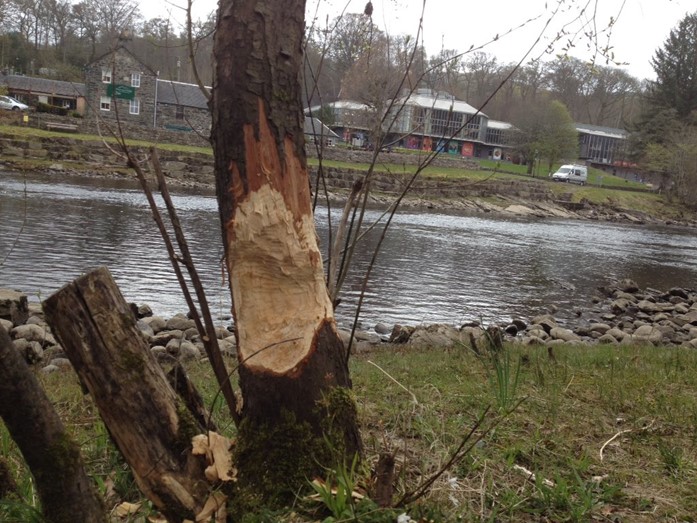
We studied the recent unapproved reintroduction of beavers to Scotland, using different surveys of local land managers. We found that there was widespread killing of beavers, and destruction of their dams, despite the fact the government recently make killing and dam destruction illegal. Yet, as beavers breed quickly, their population was still expanding. We found that whilst there was some support for beaver reintroduction, many landowners opposed them because they disrupted the landscape with tunnelling, damming and eating trees. But opposition was about more than just these material impacts and economic costs. People also opposed the way that beaver reintroduction disrupted their ability to control the land, their sense of care towards the landscape, and their relationships with government agencies responsible for conservation.
Our work shows that local opposition has the potential to harm reintroduction efforts. If beavers didn’t breed so fast, then their killing might have eradicated the population. We also show that opposition is not just about the financial cost of these species coming back and their impact on land uses, but also the way they interact with people’s values, identities and relationships. Our work shows that if we want successful species reintroductions, we need to work closely with land managers, particularly understanding how bringing species back might interact with their values and relationships.
 Relational Thinking