By Constantina Alina Hossu, Martina Artmann, Tomomi Saito, Martina van Lierop, Cristian Ioja, and Stephan Pauleit.
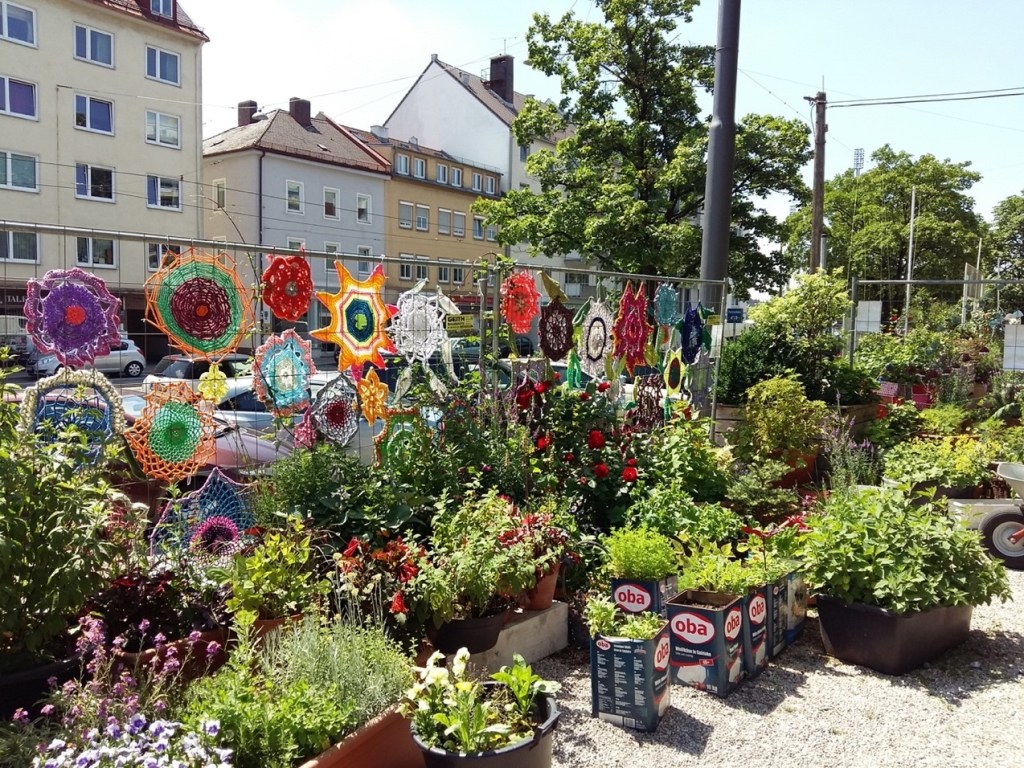
Urban green spaces (i.e., parks, forests, community gardens, greenways, streams) are places where people connect and interact with each other through different activities. What determines their engagement in such activities (i.e., greening/carrying of the public space, cleaning of waste, planting of new vegetation, gardening) from where they can benefit of nature and social connection still lacks a systematic understanding. Therefore, we assessed the values (i.e., people’s beliefs about the importance of urban green spaces protection) of residents of Munich in order to find out the ways in which they value urban green spaces.
The city of Munich (the third-largest city in Germany) has a variety of urban green spaces (i.e., meadows, forests, public parks, urban gardens) which are supported by its favorable location along the Isar River. However, given the pressure on open and green spaces due to high demand for residential housing market, the city of Munich is an interesting case to investigate why its residents engage to protect and increase the green spaces.
We used a questionnaire distributed digitally, on fliers, and in-person among Munich’s active residents for the protection of urban green spaces. Using statements measuring different types of values, i.e., biospheric (nature oriented), altruistic (society oriented), egoistic (self-oriented), hedonic (comfort oriented) and relational (people-nature oriented), residents were asked to rate them according to the importance these play for them.
We found that Munich’s active residents take actions that benefit urban green spaces for nature related reasons and to a lesser extent for the well-being of other people and the oneself satisfaction. Furthermore, the values focused on the relationships between people and nature (relational values) may function as enablers of change for more responsible behaviors towards urban nature.
This study advocates for an investment in multiple valuations of urban green spaces and actively engaging urban residents in protective activities which may assist in mitigating the extinction of people-nature contact in cities.
 Relational Thinking