In celebration of the shortlisted papers for the Rachel Carson Prize 2023 for Early Career Ecologists, we’re delighted to introduce you to some of our shortlisted individuals and papers.
When you offer people to write letters to trees: lessons learned about multiple values of nature.
@TatianaGladkikh
About the paper:
What is your shortlisted paper about and what are you seeking to answer with your research?
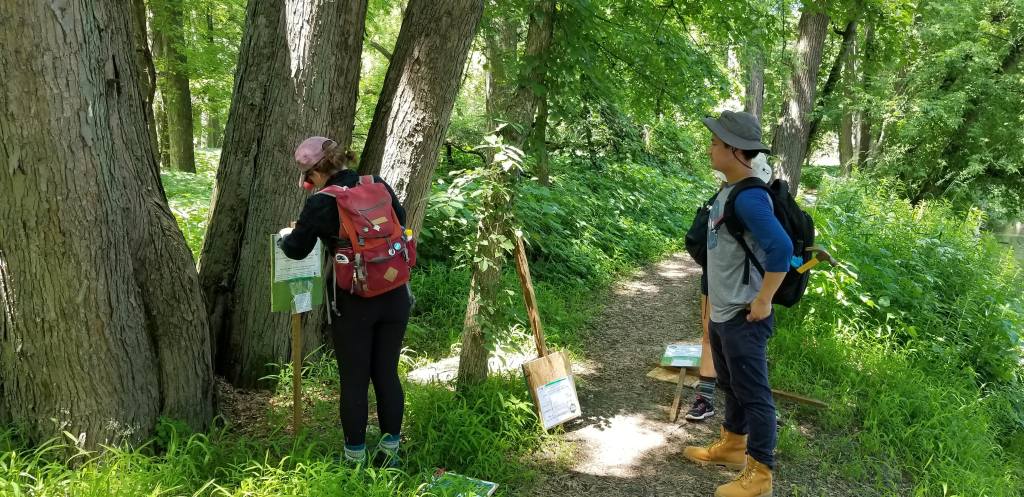
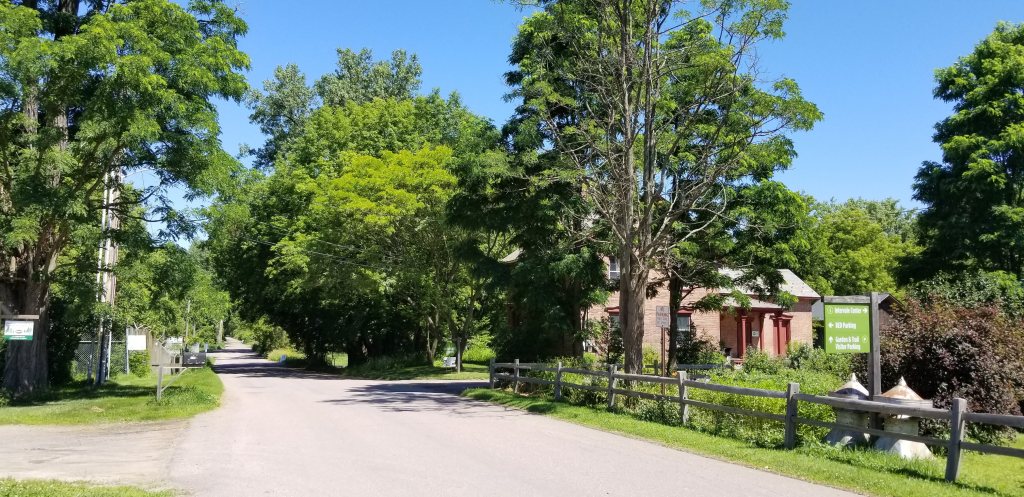
My Ph.D. adviser and I came across a news article that discussed an unexpected result from a city project. The city of Melbourne assigned emails to trees to collect data on problems but, unprompted, people began writing letters to trees that abounded with relational values! We got curious to see how this project might develop when we intentionally ask people to write to trees – and this is how this study and paper happened. We partnered with a local agricultural non-profit, the Intervale Center, in Burlington, VT, USA to develop the project and installed ten signs across multiple trees at the Intervale. We intentionally placed some signs in the agricultural part of the Intervale and some in the forested area to examine whether people might engage differently with trees based on the location and species. We used relational framing to our data collection prompt but left if open-ended to give people flexibility to discuss whatever topic they wanted. Our main research question was to explore the utility of this method for studying multiple values from nature. We also wanted to see whether and what relational values might emerge, especially given the relational framing of the prompt. Ultimately, we were curious to see how people might engage with this playful format of research and what data might emerge.
What is the broader impact of the research? (outside of your specific species/study system)
Letter-writing has been used in other fields, and our findings contribute to the discussion on the benefits and drawbacks of this method. We also contribute to the discussion on the non-human personhood and kinship interactions between humans and non-humans. These interactions are common among diverse Indigenous groups but are seldom discussed in the context of Western Judeo-Christian culture. We hope our findings encourage future work on values to provide space for these expressions of human–nature relationships.
I also hope this work can provide insight for environmental communication and ways we talk about conservation. As our letters show multiple examples of relational expressions when people talk about the natural world, perhaps there is potential for using this framing when discussing the importance of conservation.

Did you have any problems collecting your data?
Data collection for this project was relatively slow: we had the signs for slightly over a year and collected 45 letters, about three letters per month on average. Not all visitors of the Intervale Center found the signs appealing – to some, they felt intrusive in the natural areas; others found them too “Disney-like” or misleading about the trees.
Were you surprised by anything when working on it?
I was surprised by the different ways people engaged with the study. Almost half of letters addressed the tree directly. Sometimes, a letter was composed by the whole family visiting the Intervale and included questions to a tree from all family members, adults and children. Some people wrote jokes and tree-related puns, discussing, for instance, tree’s “wooden personality.” Others wrote letters explicitly addressing the researcher, asking specific questions about tree species, or providing recommendations for improving the study. This study is a great example of the role of open-ended questions in research: one standard prompt can result in a wide range of answers and help researcher get a better understanding on the different perspectives around an issue.
What is the next step in this field going to be?
The results of our study suggest several paths for future work. Our study shows potential for using relational prompts in data collection, but we need to continue exploring framings that can resonate with broader audience and not come off as “Disney-like.” We also see the relevance of gratitude in the context of human-nature relationships, as several participants thanked the trees for the benefits they provide. Future studies should examine this value in more detail. I will be curious to see how this project might play out in other contexts, across locations and types of species. I also wonder how the research might develop if the researchers respond to the questions included in the letters. In our study, we didn’t systematically respond to the questions participants asked. I wonder if there’s a way to design this project that can collect information on values and at the same time foment environmental learning and provide a way for people to ask questions, interact with the researchers or land managers, and learn more about the natural area.

What are the implications of your research for policy or practice?
The results of this study suggest that letter-writing can be an affordable and engaging way for land managers to collect data and promote environmental education on their natural sites. They also show the potential of this method for studying multiple values from nature. Research on relational value is growing but remains a relatively novel field. Our findings show that letter-writing can support elicitation and assessment of this complex values’ category.
Beyond exploring the utility of letter-writing method in the environmental field, the findings support the results from previous studies on the diversity of values people hold towards nature. Participants spoke about material and nonmaterial benefits they receive from trees; some also discussed ecosystem disservices such as mosquitos. The results illustrate the relevance of relational values to understanding human-nature interactions. Participants expressed love and gratitude towards trees; some addressed a tree as “my friend.” The results of this study are just a snapshot of how people relate to the natural world, but they point to nuances and complexity in this interaction that goes beyond one-way flow of benefits from ecosystems to people or the expression of nature’s importance in dollars and cents. We need to continue employing diverse methods and approaches to documenting values from nature so that we can strive for more comprehensive decision-making around the natural world.
I also hope the findings from this study can inform ways to leverage environmental stewardship and support for conservation. As I mentioned, many letters included relational language about human-nature interactions, hinting at the potential of applying relational framing to public discourse on the environmental. Inspired by the findings from this study, I examined this question in another research project (https://doi.org/10.1111/cobi.13910) and found that people tend to select relational values (vs instrumental or intrinsic) as the main reason for protecting nature. I see potential for land managers and decision makers to resonate with a wider audience by incorporating relational values in their communication.
About the author:

How did you get involved in ecology?
I have always been interested in environmental protection, probably because I spent all my childhood summers in the Siberian countryside, walking in the forest and nature-gazing. Yet, it wasn’t until my master’s that I became directly working in the environmental field. My mentor was an ecologist and needed social scientists to conduct a study on conservation practices among coffee farmers in Puerto Rico. That project was my introduction to the fascinating interaction between the social and environmental fields and led me to pursue doctoral research in the human dimensions of environmental science.
What do you like to get up to in your spare time, hobbies etc

During my master’s research, I got to visit over 100 coffee growers in Puerto Rico who were kind to always offer me a cup of their coffee. Since then, I have really enjoyed good and sustainably grown coffee. On the weekends, my husband and I often like to go on quests to find and try new coffee shops or visit coffee farms to sample some of the locally produced goodies. In addition to my gastronomic adventures, I really enjoy hiking and I have been attempting to knit a blanket.
Have you continued this research, what’s your current position?
I currently work as an environmental researcher in a local company in Puerto Rico. My work often relies on collecting data from stakeholders and on local knowledge to document values associated with natural areas and ways to incorporate them in the management of these resources. I’ve continued to explore different methods and techniques to involve stakeholders in environmental decision-making and facilitate data collection on multiple values.
I’ve also continued my work on multiple values from nature. We’re currently working on a study that seeks to understand the costs of climate change inaction to Puerto Rico. In the study, I am leading the assessment of the non-monetary values, discussing the diverse effects of climate change in Puerto Rico and the challenges associated with trying to represent these effects in monetary ways.
Do you feel there have been any barriers to progressing in your scientific career (e.g. discrimination, funding, etc)?
I have been very fortunate in my career path with the mentors and colleagues I have encountered along the way. I’ve been able to pursue research topics I am interested in and ones that resonate with me ethically. The challenges I’ve encountered relate more to the application of my work. As probably many social scientists can relate, I often find it a challenge to stress the importance of social science and qualitative data to the decision-makers. Understandably, decision-making frequently needs large scale, generalizable data, or some monetary metric to incorporate into their cost- benefit analysis. However, such decisions can overlook nuances of human-nature relations that should be considered to achieve inclusive, comprehensive environmental management. I’m actively working to incorporate non-monetary and multiple values in my projects, but I also recognize the predominant weight given to the economic data. I don’t have a perfect solution to this challenge beyond continuing to persist and communicate the importance of considering different types of data and multiple values in the decision-making process.
One piece of advice for someone in your field:
Our work relies a lot on asking other people to share their time, knowledge, and experience. Foment meaningful interactions between researchers and participants and find a tangible way to thank your research participants for their time. It could range from having gift cards or snacks during focus groups to sharing information, contacts, and resources. It is important to acknowledge the privilege and power we have as researchers, and we should strive to give back and contribute.
 Relational Thinking